
Geography Observations: Recording Learning Outside the Classroom
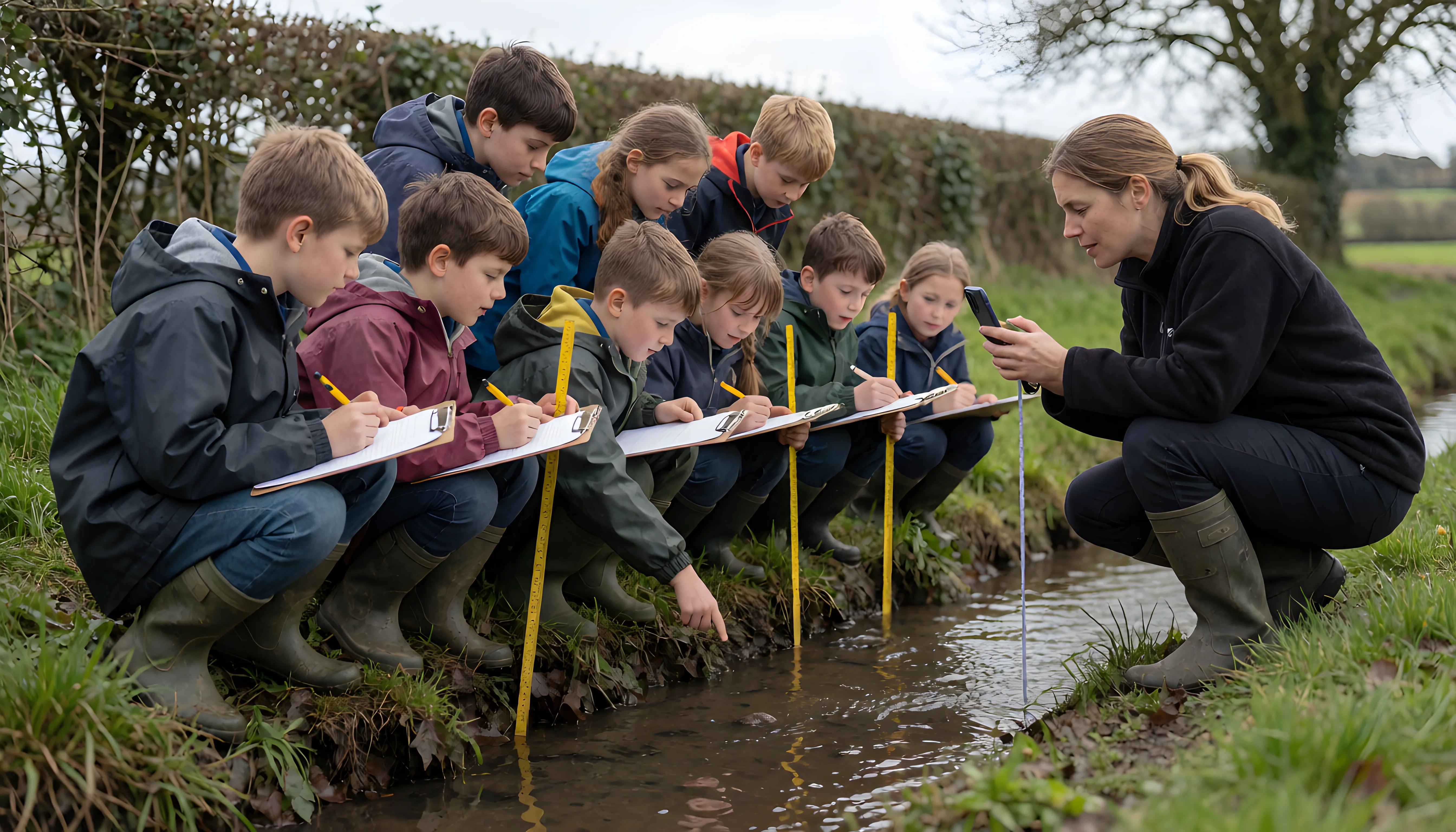
There is a particular kind of tiredness that settles over a class on the coach home from a field trip. Wellies are caked, clipboards are curled at the corners, and somewhere at the bottom of a rucksack is a tally chart that has been rained on twice. The learning that happened on that riverbank, or on that walk down the local high street, was some of the richest of the whole term. The record of it is, more often than not, patchy.
Fieldwork sits right at the heart of primary geography. At Key Stage 1, children are expected to use simple fieldwork and observational skills to study the geography of their school and its grounds. By Key Stage 2, they should be observing, measuring, recording and presenting human and physical features using a range of methods. The expectation is unambiguous. Gathering the evidence, while also counting heads and finding the toilets, is the genuinely difficult bit.
Why fieldwork evidence goes missing
Ask most geography leads where their outdoor learning evidence lives and you will usually get a slightly sheepish answer. Some of it is on paper worksheets in a tray. Some of it sits in photographs on a teaching assistant's phone, where it will stay until the storage fills up. A great deal of it is in the teacher's head, and it stays there until report season, by which point the detail has softened into a general sense that the trip went well.
The problem is not teacher effort. It is that the tools we hand staff for recording learning quietly assume a desk, a keyboard and a quiet moment. Fieldwork offers none of those. You cannot type a thoughtful observation while holding a metre stick in the wind, and you certainly cannot do it while a Year 4 child is explaining, urgently and brilliantly, why the river runs faster on the outside of the bend.
Voice notes: the recording tool that works with muddy hands
This is where voice-recorded observations change the maths of a field trip. A teacher presses record, speaks for thirty or sixty seconds about what a child has just said or done, and moves on. The note is automatically transcribed, so it becomes searchable text rather than an audio file nobody ever listens to again. In Parent Portal, those micro-observations accumulate over weeks and months into a longitudinal picture of how each child thinks.
What makes voice so well suited to geography is that it captures reasoning rather than just outcomes. A photograph shows a child pointing at a cliff. A voice note captures them hypothesising about why the rock is crumbling there and not six metres further along. That is geographical enquiry in its natural state, and it almost never survives the journey onto a worksheet.
The best fieldwork evidence is rarely the completed worksheet. It is the thirty seconds where a child explains their thinking out loud, before anyone has tidied it up.
Voice works best alongside visual evidence, and a field trip generates plenty of that. The trick is making sure photographs do more than decorate a display board once everyone is back in the classroom.
Photos and video that link straight to the curriculum
Photo and video observations let staff tag individual children or whole groups, add a caption while the context is still fresh, and link the moment directly to a curriculum objective. A photograph of a child using a compass on the school field stops being a nice picture and becomes assessment evidence against a specific skill. For nurseries and early years settings, the same tool maps onto Development Matters and the Early Learning Goals, which matters enormously when so much of early geography happens in the garden rather than at a table.
An approval workflow sits behind all of it, so observations are reviewed by staff before they reach parents. Anyone who has taken thirty five children to a country park will understand why a quick check before publishing is worth having.
Add the trip to the school calendar so automated reminders reach families in good time.
Build a custom form for permissions, medical notes and dietary needs instead of chasing paper slips.
Collect the trip payment through the app, then send reminders only to those who have not yet paid.
Check every staff device is charged and signed in, so observations can be recorded in the moment.
Once the evidence is held in one system rather than scattered across phones and trays, something genuinely useful happens to the term that follows.
From the riverbank to the learning profile
Every observation feeds into the child's learning profile. Across a year, that profile might hold voice notes from a local area walk in the autumn, photographs of fieldwork sketches in the spring, and video from a river study in the summer. AI-powered progress analysis then reads across that history to surface patterns, strengths, areas for development and suggested next steps, which tells you far more than any single assessment grid ever could.
The payoff arrives at the end of term. Rather than starting report comments from a blank box, staff can lean on an AI report writing assistant that works from evidence already recorded, producing specific, personalised comments grounded in what the child actually did and said outdoors. That same evidence base turns parents' evening preparation into a matter of reviewing rather than reconstructing.
Bringing parents along on the trip
Parents typically hear remarkably little about fieldwork. A child says it was good, possibly mentions the coach, and that is the full debrief. Sharing approved observations changes that completely: a parent sees their child measuring stream depth, reads the caption explaining what they were investigating, and suddenly has something concrete to ask about at teatime. Class group messaging lets a quick update from the site reassure families during a long day out, and automatic translation means EAL families get exactly the same experience as everyone else.
Report writing in July took a fraction of the time it used to.
Geography lead, two-form entry primary school, West Yorkshire
That shift, from reconstructing evidence after the fact to capturing it as it happens, is the real argument for digital observation tools in outdoor learning.
Less admin, more geography
The wider point for school leaders is that fieldwork is usually limited by workload rather than by enthusiasm. Permissions, payments, risk documentation, parent queries and evidence gathering all land on the same handful of people, and the simplest way to protect their time is to stop running those jobs through five separate systems. Bringing communication, custom forms, payments, document storage and observations together into one piece of school admin software removes a surprising amount of friction from the planning of every single trip.
Good school communication tools should not merely report that learning happened outside the classroom. They should make recording it the easiest part of the day. If your geography curriculum deserves better than a soggy worksheet, it is worth seeing how Parent Portal handles observations before the next trip hits the calendar.
Comments