
Building Subject-Specific Reports From Daily Observations
There is a particular kind of quiet that settles over a staffroom in the last three weeks of term. It is the sound of thirty teachers trying to remember what a child did in September. The reports are due, the template is open, and the honest answer to how is she getting on in science? sits somewhere between a half-memory of a brilliant question about shadows and a photograph on a phone that has since been deleted. Nobody goes into teaching to write reports, but writing them badly feels worse than writing them slowly. The problem is almost never effort. It is that the evidence was never captured in a form that could be sorted by subject.
Why report comments end up sounding the same
Ask any school leader to describe the reports they proofread each July and you will hear the same complaint: the comments are warm, accurate and interchangeable. Child A has made good progress in maths and should keep practising her number bonds. It is not laziness. When a teacher sits down with a blank box and a vague sense of a child's year, the brain reaches for the safest general statement it can defend. Specific detail is the first thing lost to memory, and specific detail is the only thing parents actually remember reading. The fix is not a better template or a longer deadline. It is changing when the evidence gets written down.
Capture the evidence while it is still happening
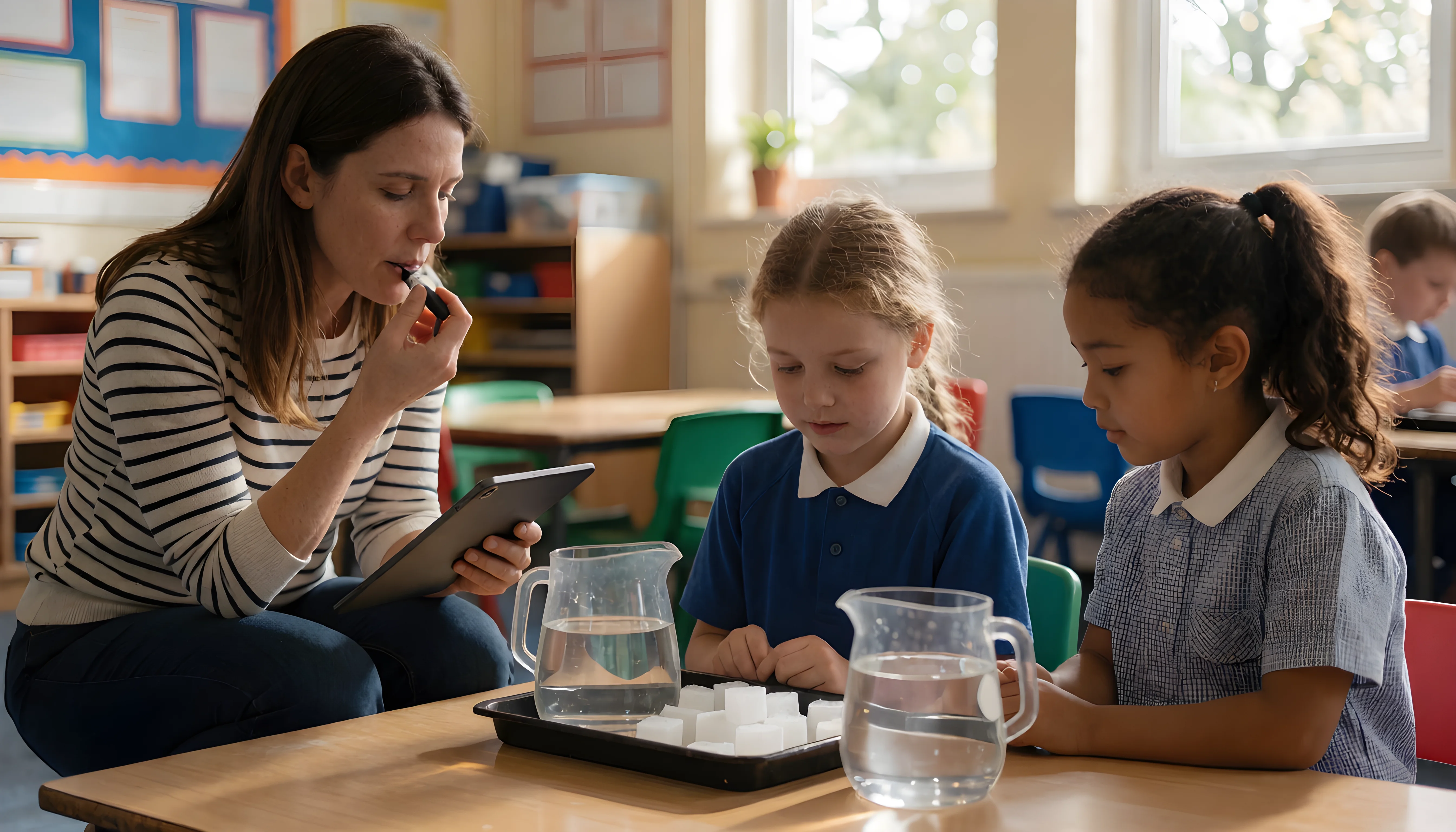
A teaching day produces dozens of small moments worth recording and almost no time to record them. This is why paper observation books tend to die by October. A thirty-second voice note does not. In Parent Portal, teachers record short voice observations as they move around the room — Jacob has just explained to his partner why the ice melted faster near the radiator — and the platform transcribes them automatically. Photos and short videos work the same way, with a caption and the children tagged.
The step that matters for reports is the one that comes next: linking that observation to a curriculum objective. Early years practitioners tag to Development Matters and the Early Learning Goals; Key Stage teachers tag to National Curriculum objectives. From that moment, the note is no longer a nice memory. It is filed evidence that knows which subject it belongs to.
A term of notes becomes a subject-by-subject picture
Individually, a tagged voice note is worth very little. Accumulated across twelve weeks, the same notes become something a report comment can stand on. Every child has a learning profile holding their full observation history, so the question changes from what do I remember about Ava? to what does the evidence say about Ava in writing? Parent Portal's progress analysis reads across those accumulated observations and surfaces the patterns — emerging strengths, areas that have stalled, sensible next steps, and the way a particular child prefers to learn. Teachers get an organised summary per child rather than a shoebox of fragments, sorted by the objectives they were already tagging against.
Record a thirty to sixty second voice note while the moment is fresh.
Tag the child or the group.
Link it to the Development Matters statement, Early Learning Goal or National Curriculum objective it evidences.
Everything after that — transcription, filing, progress tracking against age-related expectations — happens without you.
Drafting the report with the teacher still in charge
When reports come round, the AI report writing assistant works from that evidence rather than from a bank of generic phrases. It reads a child's accumulated observations and progress records and drafts comments specific to them, subject by subject, because the underlying notes were tagged by subject all along. The difference shows immediately. Instead of Ava has made good progress in science and enjoys practical work, the draft offers something closer to Ava predicted that the ice nearest the radiator would melt first, explained her reasoning to her partner, and is beginning to talk about evidence when she describes what she has found out. One of those sentences a parent keeps.
What comes back is a starting point, not a finished report. Teachers edit, cut, add the thing only they would know, and sign it off. This is the honest way to reduce teacher workload in a reporting week: not by shortening the comments, but by removing the blank page, which is where the hours have always gone.
The hard part of report writing was never the writing. It was trying to remember a whole year in a single week.
Parents stop being surprised by the report
There is a side effect worth naming. Because observations are shared with families through the term, once a teacher has reviewed and approved them, the report stops being the first time a parent hears anything concrete. A parent who has already seen a photograph of their son's bridge-building and heard a voice note about his reasoning reads the science comment as confirmation rather than news. Parents' evenings change too: teachers arrive with pre-meeting reports pulling observations, progress data and behaviour records into one place, and leave with an AI-generated summary of what was agreed. That steady drip of shared evidence is what genuine parent engagement looks like in practice — a running conversation rather than one annual transmission.
Now I open a child's profile and a term of tagged observations is already sitting there, sorted by subject.
My comments are better and I got my holiday back.
Year 4 teacher, two-form entry primary
Making it consistent across the school
For school leaders, the gain is less about individual teachers and more about evenness. An approval workflow means no observation reaches a parent without being reviewed, so quality control sits inside the process rather than landing on a deputy head in July. Because the same tool carries nursery keyworker notes, early years tagging and Key Stage objectives, a child's evidence trail follows them up the school instead of restarting each September. It also helps that reporting is not a separate system. The platform carrying messages, announcements and the school calendar holds the observations as well, so leaders are not bolting a reporting add-on onto their school communication tools and their school admin software — it is one login, one audit trail, one place where a child's record lives. Everything is held in a UK GDPR compliant platform with no setup fees and no per-user charges, which matters when you are rolling something out to every class at once rather than piloting it with the willing.
None of this removes the professional judgement at the heart of a good report. It simply stops that judgement being rationed by memory. Schools working this way are not writing fewer reports; they are writing them from evidence gathered thirty seconds at a time, across a whole term, by teachers who never had to stop teaching to collect it. If reports in your school are still a feat of recall, the real problem sits upstream of the report.
Comments