
Using Blogs and Pages to Share School Success Stories
Every school is full of good news. The Year 2 child who finally cracked blending. The reception class who grew carrots and ate them in a salad they made themselves. The Year 6 pupil who stood up and read a poem in assembly. Most of those moments live and die in the classroom they happened in.
That matters more than sentiment. The stories a school tells about itself shape how parents feel each morning, how prospective families judge you against the school down the road, and how staff feel about where they work. Blogs and pages give those stories somewhere permanent to live, and the habit is easier to build than most schools expect.
Why Success Stories Are More Than Nice to Have
Parent engagement is usually measured in event attendance and survey replies, but it begins somewhere simpler: do parents feel they know what happens in your school? A family who reads a short post about the Year 4 coast trip, sees the rock pool photographs and learns what the children were studying has a far richer picture than one who only ever receives messages about dinner money and INSET days.
There is a leadership layer too. A live news feed and a set of well written pages are evidence of a school that knows its own strengths. They help at admissions, they give governors something concrete, and they quietly demonstrate community engagement. Communication that only carries requests and reminders teaches parents to open your messages with a sigh.
What Actually Counts as a Success Story
The usual barrier is a definition problem. Staff hear success story and picture a county trophy, and since those arrive twice a year, nothing gets written. Widen the definition and the problem reverses: you will have more material than you can publish.
A success story is any moment where learning, kindness or effort became visible. A nursery child who settled without tears. A class who filled a food bank trolley. A reading group whose scores moved. A new outdoor area finished by parent volunteers on a Saturday. Small, specific and true beats grand and vague every time.
The schools parents speak warmly about are rarely the ones with the most achievements. They are the ones that notice the small ones out loud.
Blogs and Pages Do Two Different Jobs
Blog posts are timely. They are dated, they sit in a feed, and they capture what happened this week: a trip, a visitor, a fixture, a class assembly. Their value is freshness, and nobody minds that last year's post has drifted down the list.
Pages are evergreen. A page about your forest school provision, your approach to early reading, or a typical day in reception should still read well in two years. Pages are what a prospective parent finds at nine in the evening while deciding where to apply. Strong school sites use both: pages for the promise, posts for the proof. Mixing the two up is why so many school websites manage to feel out of date and strangely empty at the same time.
Build Stories from What Teachers Already Capture
This is what decides whether the habit survives. If a post means a teacher at seven in the evening facing a blank screen, it will not happen in week six of a long term. Stop treating storytelling as a separate task and treat it as a by-product of work that is already being done.
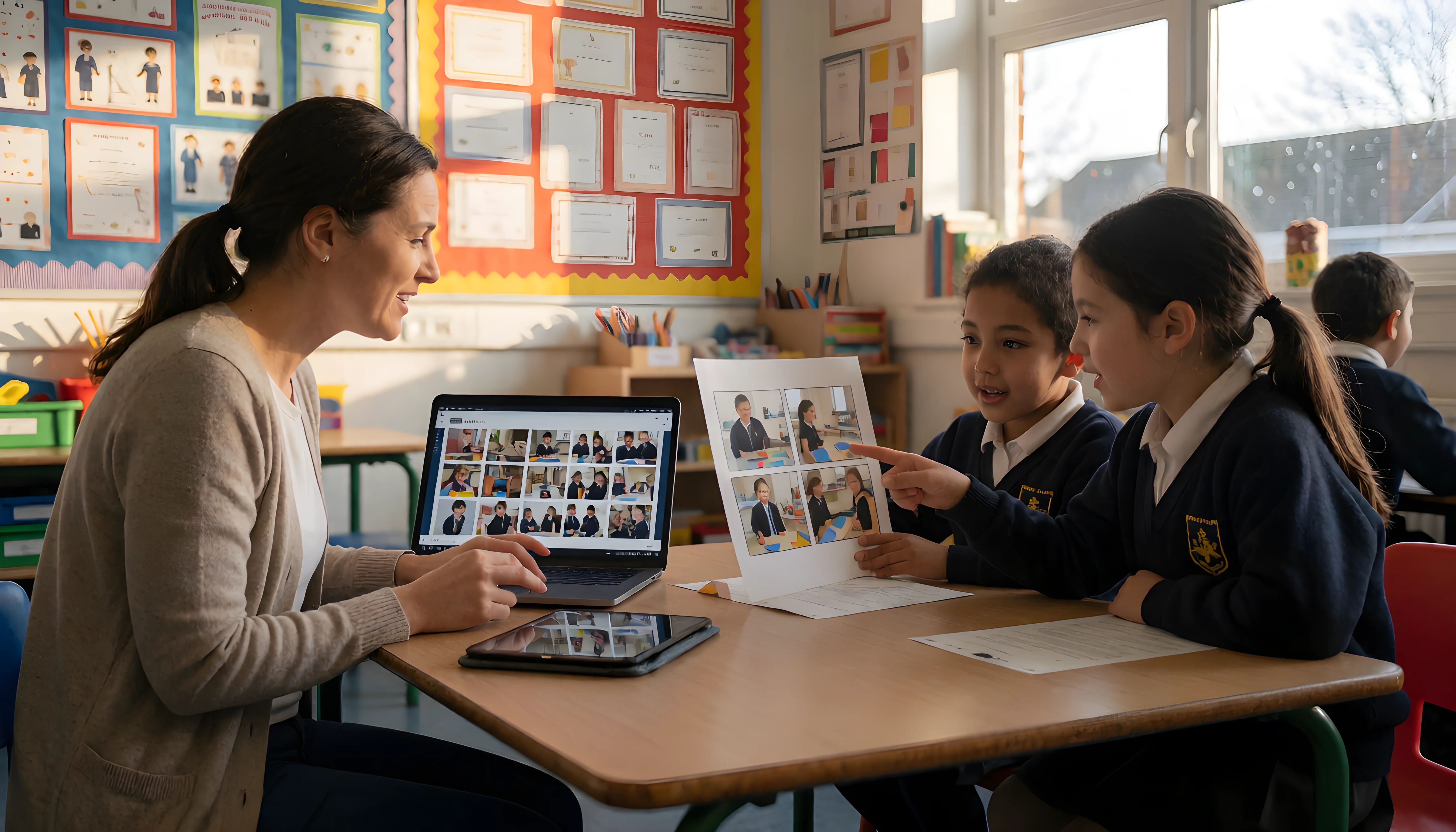
The raw material usually exists. In Parent Portal, teachers record short voice observations as they move around the room, capture photo and video observations tagged to children and linked to curriculum objectives, and award reward points for effort as it happens. By Friday a class has a week of evidence sitting ready. Choosing three images and writing two lines of narrative is a ten minute job rather than an evening's work, and the result is grounded in real learning instead of written to fill a space.
This week's photo and video observations, filtered by class.
Your reward and house point data, which shows who has had a brilliant week.
Achievements and certificates already shared with parents.
Each one is evidence you collected anyway. The story is there; you are only choosing the frame.
Consent, Safeguarding and Publishing with Confidence
Nothing stops a school sharing faster than one photograph published that should not have been. Build the safety net first and staff will relax into the habit. Keep photo permissions current through digital forms rather than a paper slip collected in September and filed in a cupboard, so whoever writes a post can check consent in seconds instead of asking around the staffroom.
An approval step matters just as much. Observations in Parent Portal are reviewed and approved before parents see them, which gives you a natural quality gate: is this child cleared, is the caption accurate, does it name anyone it should not? UK GDPR also expects you to know where images live and who can reach them, which is a good argument for your own secure school drive over a staff member's camera roll.
Reaching Every Family, Not Just the Engaged Ones
A post nobody reads has engaged nobody. Publishing is half the job; distribution is the other half. A push notification announcing a new post does more for readership than any amount of polish, and targeting matters: send the Year 3 residential write-up to Year 3 families rather than the whole school, and open rates stay healthy instead of slowly training people to ignore you.
Think about the families who find English hard going. Automatic translation and multi-language access mean an EAL parent reads the same story as everyone else, in a language they are comfortable with. Those families are the least likely to come to a coffee morning and the most likely to feel outside the gates, and a story about their own child is the warmest way in.
Now class teachers build a post from their observations every Friday in about ten minutes, and parents look for it.
The surprise has been how families talk about us. They mention things they have read, not just things they have been asked to pay for.
Deputy headteacher, two-form entry primary school
A Rhythm That Survives a Busy Term
Start small and protect it. One post a week for the whole school is plenty, and far better than six in September followed by silence until Easter. Put classes on a rota so each contributes once a half term, which turns a weekly demand into a termly one for any individual teacher, and give the publishing slot a named time in the staff calendar, because anything without a time does not happen.
Spend one twilight a year on the pages: refresh the photographs, update the staff names, rewrite the paragraph on early reading that no longer matches your practice. Keep an archive too, because this year's posts are next year's prospectus copy and governor report evidence.
Schools are rarely short of good news. They are short of a system for noticing it, a safe route to publish it, and a protected weekly moment to press send. Put those three things in place and the story your school tells will finally sound like the school your staff already know it is.
Comments