
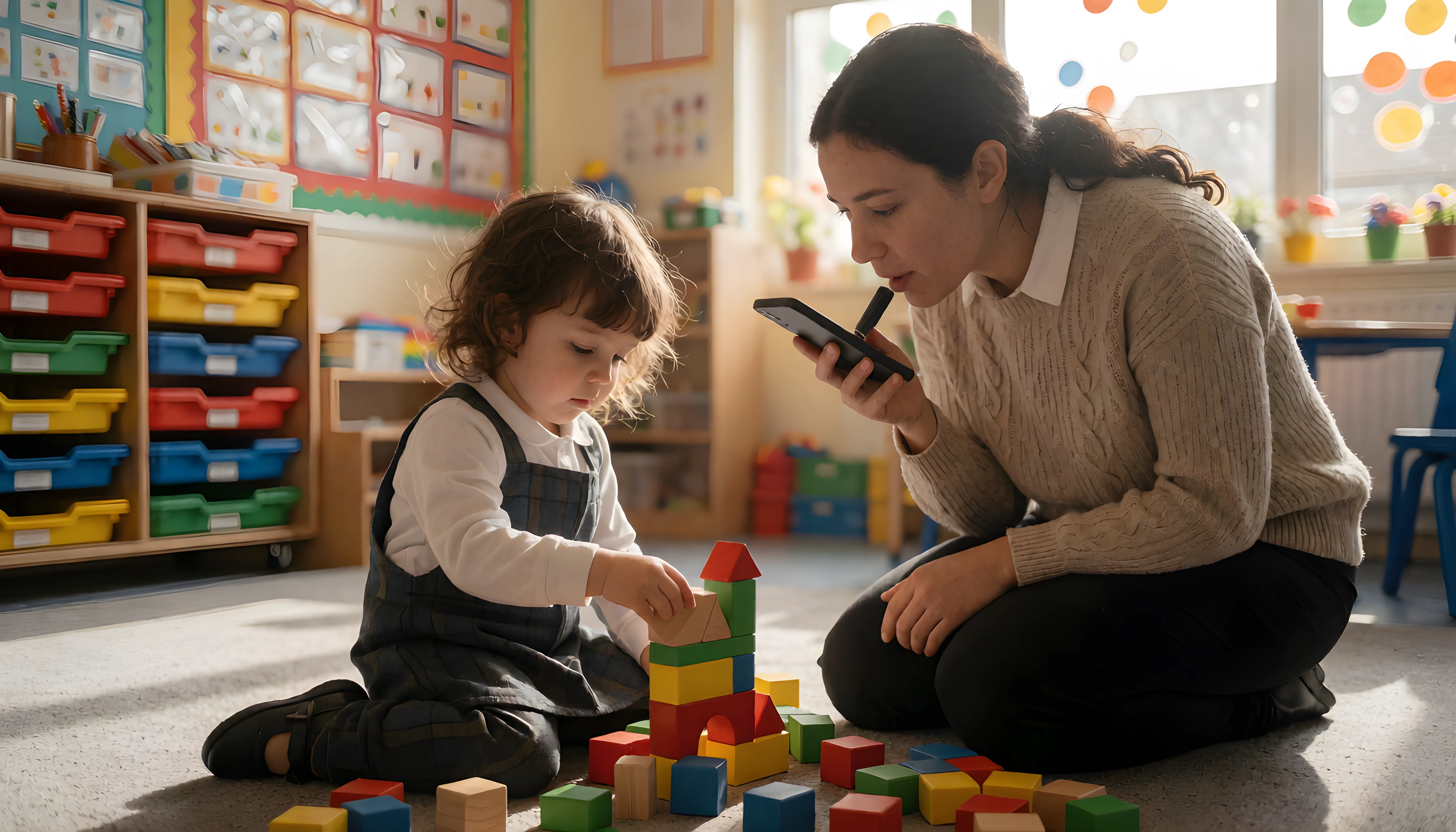
The Rise of Micro Observations: Small Moments, Big Impact
Ask a Reception teacher about the best part of their day and you will rarely hear about a lesson plan. You will hear about a moment. The child who finally counted past ten without pausing. The two who sorted out a row over the sand tray on their own. The quiet one who narrated a whole story to a puppet.
The problem has never been noticing those moments. It has always been capturing them before the next thing happens. That tension sits at the heart of primary and early years assessment, and it explains why micro observations have become one of the biggest shifts in practice since the edtech 2025 wave of AI-assisted tools reached schools. Rather than writing one long observation proving a child's development, teachers capture many small pieces of evidence as the day unfolds and let the picture build itself.
What a micro observation actually is
A micro observation is a deliberately small record of a single learning moment: a thirty to sixty second voice note, a photograph with a one-line caption, or a short video clip. It does not try to summarise a child or a half-term. It captures one thing a child said, tried, struggled with or mastered, as it happened.
The format matters more than it appears. Speaking for forty seconds while a child is still mid-activity costs almost nothing. Writing the same thing up at the end of the day costs a great deal, and by then the language the child used has usually gone. In Parent Portal, voice-recorded observations are transcribed automatically, so a spoken aside becomes searchable written evidence without anyone typing it up.
Why the long written observation is fading
For years, observation practice drifted towards volume. Learning journeys grew thick with printed photographs and laminated commentary, much of it written for inspectors rather than for the child or the family. Reforms to the Early Years Foundation Stage framework pushed the other way, reducing the expectation to evidence everything in writing and asking settings to trust professional judgement.
Plenty of settings read that as permission to observe less, which was never the intention. Micro observations offer the better reading: keep the noticing, lose the paperwork. For leaders weighing up school admin software, that distinction matters. The goal is not fewer observations. It is observations that cost minutes rather than evenings.
A useful voice note names the child, says what they did, and quotes what they said.
Three or four short captures a day beats one long written observation a month.
If a capture takes longer to record than the moment took to happen, it is too big.
Lightweight capture only works if the fragments go somewhere useful. A hundred unsorted voice notes on a staff phone is not assessment. It is a backlog.
Small moments, a longitudinal picture
This is where the approach earns its keep. One micro observation is modest evidence. Forty, gathered across a term and linked to Development Matters statements, Early Learning Goals or National Curriculum objectives, become something a written observation cannot easily produce: a timeline. You see when a child's independent writing began to appear, which contexts their talk flourishes in, and which objectives have never once been captured.
One observation tells you what a child did on a Tuesday. Two hundred tell you who that child is becoming.
Those gaps are often the most valuable output. When observations gather in one place, Parent Portal's AI progress analysis reads across the whole set and surfaces patterns no teacher can hold in their head for thirty children at once. Strengths, next steps and learning preferences come back as a summary the teacher reviews and edits, not a verdict handed down. It is a second pair of eyes on evidence the teacher gathered themselves, which is a far more defensible use of AI than asking a model to invent judgements.
What this changes for parents
The other half of the story is parent engagement, the half that surprises schools. Parents have always been told their child is doing well. What they rarely get is evidence of the ordinary day. A clip of their four-year-old explaining why the tower kept falling over does more for a family's confidence than any newsletter.
Sharing is not automatic, and should not be. Observations pass through an approval workflow, so a teacher or lead decides what goes home and nothing reaches a parent unreviewed. Approved captures arrive as a push notification and sit in the child's learning profile. For families with English as an additional language, automatic translation delivers the caption in a language they read, removing one of the oldest barriers in school communication tools.
Making it work without adding workload
Any new practice that does not reduce teacher workload will be abandoned by half term, and rightly so. Micro observations survive because capture happens inside the lesson rather than after it. The habits are small: keep the device in a pocket, record in the moment rather than from memory, and resist the pull towards fuller notes because they look more professional. They are not. They are just slower. It also helps to rotate focus, giving each teacher or keyworker a few named children each day so the quieter ones are not missed.
Now I talk for thirty seconds, it transcribes itself, and I tag it against Development Matters before the children move on.
The real surprise was report season. Instead of staring at a blank comment box, I had a term of evidence waiting.
Reception teacher, two-form entry primary school
For leaders, that last point is where the saving becomes measurable.
From daily notes to reports and consultations
Report writing is the annual reckoning for any assessment system. Where micro observations have accumulated, the evidence is already there, linked to objectives and in the child's words. Parent Portal's AI report writing assistant drafts personalised comments from that record, which teachers then shape into their own voice. Editing drafts built from real evidence rather than composing thirty comments from scratch is a difference measured in days.
Parents' evenings benefit in the same way. Pre-meeting reports pull a child's observations, progress data and behaviour records into one view, so a teacher arrives at a ten-minute consultation prepared rather than improvising. Afterwards, AI-generated summaries capture the agreed actions, so the targets a family leaves with are written down where both sides can find them.
Small moments, big impact
The shift towards micro observations is not really a technology story. It is a return to something teachers have always known: the truest evidence of learning is fleeting, specific and easy to miss. What has changed is that capturing it no longer costs an evening. The technology's only job is to make noticing cheap and remembering automatic.
If your current approach produces thick folders nobody reads, it is worth seeing what a lighter model could do for your staff and families. Observations, parent communication, reporting and administration all sit in one platform at parentportal.com.
Comments