
How Cloud Storage Supports Voice Observation Systems
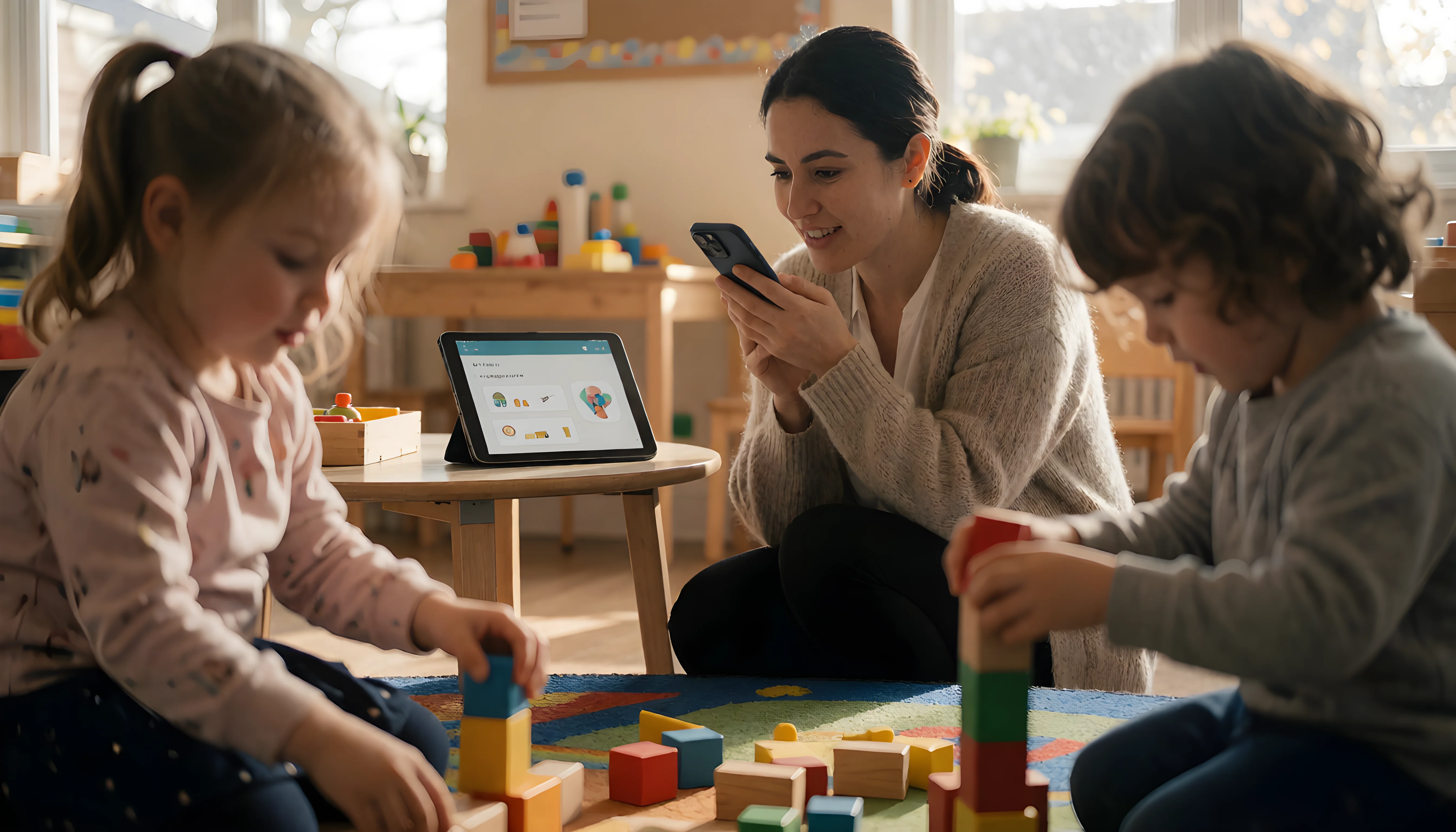
Ask any early years practitioner what the most useful change to their week has been in the last few years, and a surprising number will say the same thing: they stopped writing observations down. Instead of scribbling on sticky notes during carpet time and typing them up at half past five, they talk. Thirty seconds of voice, captured in the moment, while the learning is still happening in front of them.
Voice observation is one of the genuinely teacher-friendly innovations in UK primary and early years practice. But it only works because of something far less glamorous sitting underneath it: cloud storage. Audio is heavy, sensitive and cumulative. Without somewhere reliable to put it, voice observation is a nice idea that collapses within a term. This post looks at how cloud infrastructure actually supports voice-recorded observations, and what school leaders and admins should understand about it before rolling anything out.
Why voice observations create a storage problem
A written observation is a few hundred bytes of text. A thirty-second voice note is thousands of times larger. Now multiply that: one teacher recording six observations a day, across a thirty-child class, over thirty-eight weeks. Then do it for every class in the school, every year, with the expectation that you can pull up a child's full learning history whenever a parent, a moderator or an Ofsted inspector asks.
That is not a filing problem. That is an infrastructure problem. Schools that have tried to manage voice observations on staff devices quickly discover the cracks. Recordings sit on one teacher's phone or iPad and never reach anyone else. A tablet is wiped over the summer and a term of evidence disappears with it. A member of staff leaves and nobody can access what they captured. Storage fills up and recordings stop saving silently, which is the worst possible failure mode because nobody notices until the evidence is needed.
Cloud storage solves this by changing where the recording lives. The device becomes a microphone, not an archive. The moment a teacher finishes speaking, the audio is uploaded to secure cloud storage, indexed against the right child, and made available to everyone with legitimate access — regardless of which device they are holding.
Where is our audio physically stored, and is it within the UK or EU?
Who can access recordings, and is that access logged?
What happens to a child's recordings when they leave the school?
Is there a storage cap, and what happens when we reach it?
Can we export our own data if we change platform?
Those five questions separate a system your school will still be using in five years from one you will be migrating away from in eighteen months. They are also the questions that tend to get skipped during an enthusiastic demo, so write them down before the meeting.
From audio to insight: what the cloud makes possible
Reliable storage is the baseline, not the benefit. The real value appears once the audio is in a central location where other processes can reach it.
Automatic transcription. A voice note is fast to create but slow to search. Once audio sits in the cloud, it can be transcribed automatically, turning spoken observation into text that is searchable, taggable and linkable to curriculum objectives. In Parent Portal, a teacher's thirty-second recording becomes a written observation that can be linked to Development Matters statements, Early Learning Goals or National Curriculum objectives without the teacher typing a word.
Longitudinal progress tracking. Individual observations are anecdotes. Hundreds of them, held together over time, are evidence. Because cloud-stored observations accumulate against a single student learning profile rather than scattering across devices, you can see a child's trajectory from September to July — and the patterns that no single moment reveals.
AI-powered analysis. This is where centralised storage genuinely changes the job. When every observation for a child is in one accessible place, AI can analyse the whole set to surface strengths, gaps, learning preferences and suggested next steps. The same body of evidence then feeds report writing, producing personalised end-of-term comments grounded in what was actually observed rather than in a bank of generic phrases.
The point of recording the moment is not the recording. It is being able to find it, three terms later, when it finally means something.
Sharing with parents. Cloud storage is also what makes parent engagement practical. A recording held on a teacher's device reaches nobody. A recording in the cloud can be approved, captioned and pushed to a parent's phone the same afternoon, alongside the photo or short video that goes with it. That immediacy is the difference between parents hearing about school in July and being part of it all year.
Security, safeguarding and GDPR
Voice recordings of children are personal data, and in some cases they touch on safeguarding. School leaders are right to be cautious here — but caution should point towards proper cloud infrastructure, not away from it.
A well-designed cloud system gives you things that device-based storage cannot: role-based permissions so staff see only the children they teach, full audit trails of who accessed what and when, an approval workflow so observations are reviewed before parents see them, encryption in transit and at rest, and defined retention and deletion policies that you control. Compare that to a recording sitting in an unlocked app on a personal phone that goes home every night. The cloud is not the risk. The unmanaged device is.
For UK schools, the practical requirements are a data processing agreement, clarity on data location, two-factor authentication for staff accounts, and session timeouts on shared devices. Any platform handling children's voice data should offer all four as standard, built around UK GDPR rather than retrofitted to it.
Everything lands in one place, I can pull up any child's history in seconds for moderation, and I am no longer chasing staff for notes trapped on an iPad.
My team got their evenings back and I got an evidence base I actually trust.
— Deputy Head, two-form entry primary, West Midlands
What this means for workload
The workload case for voice observation is straightforward. Speaking is roughly four times faster than typing, and crucially it happens during the day rather than after it. But those savings only materialise if the teacher never has to think about the file afterwards — no transferring, no renaming, no uploading, no wondering whether it saved.
That invisibility is the mark of good cloud infrastructure. The teacher taps record, speaks, taps stop, and moves on. Everything else — upload, transcription, tagging, storage, backup, parent notification — happens without anyone's attention. When schools say a system has reduced teacher workload, what they usually mean is that the system stopped asking teachers to do its filing.
Looking ahead
Across edtech 2025 and into the coming year, the clear direction of travel is consolidation. Schools are tired of running an assessment tool, a messaging app, a payments system and a shared drive that know nothing about each other. Integrated platforms where observations, parent communication, reports and consultations draw on the same underlying data are winning because the join-up is where the time savings live.
Cloud storage is the quiet foundation of all of it. Get it right and voice observation becomes the easiest part of a teacher's day, with a rich, secure, searchable record of every child's learning building up behind the scenes. Get it wrong and you have a drawer full of recordings nobody can find. The technology to do this properly is mature, affordable and already in use in primary schools and nurseries across the UK — the decision left to make is simply whether your evidence lives somewhere it can be trusted.
Comments