
How to Handle Sensitive Observations in Parent Communication
The Power and Problem of Observation
In modern education, particularly in the early years and primary stages, observation is everything. It’s how we move beyond test scores to see the whole child: how they interact, how they problem-solve, how they manage their emotions. Sharing these moments with parents is a cornerstone of effective parent engagement. When a parent receives a photo of their child mastering a new puzzle or a quick note about a kind act, it strengthens the home-school bond. But what happens when the observation isn’t so straightforward? What do you do when you notice a child is consistently isolated in the playground, struggling with emotional regulation, or showing early signs of a learning difficulty? These are ‘sensitive observations’, and handling them with skill and empathy is one of the most challenging, yet crucial, aspects of a teacher's role. Striking the right balance between informing parents and causing undue alarm requires a thoughtful approach, backed by the right processes and tools. This is not about simply sending a message; it's about starting a collaborative conversation aimed at supporting the child.
What Makes an Observation 'Sensitive'?
A sensitive observation isn't just about 'bad behaviour'. It’s any observation that might be difficult for a parent to hear or that points towards a potential challenge the child is facing. This can span several areas: social and emotional observations, such as a child struggling to make friends or showing signs of anxiety; behavioural patterns, like frequent frustration or difficulty following class routines; or academic and developmental flags, where a child is falling behind their peers in a specific area. The key is that these are often patterns, not isolated incidents. A single squabble over a toy is a normal part of development. A consistent inability to share or interact positively over several weeks, however, becomes a sensitive observation that warrants a conversation. Approaching these topics requires us to shift our mindset from one of reporting a problem to one of inviting a partner—the parent—to help us understand and support their child. The goal is always positive and proactive support, not judgment.
Building a Foundation of Trust First
You can’t have a difficult conversation without a foundation of trust. If the only time a parent hears from you is when there’s an issue, they will naturally become defensive. The most effective school communication strategies are built on a bedrock of regular, positive interactions. This is where modern school communication tools like Parent Portal become invaluable. By making it easy to share 'wins'—a quick photo of a great piece of work, a video of a successful science experiment, or a message celebrating an act of kindness—you build a bank of positive emotional capital. When parents are used to seeing you as a champion for their child, they are far more likely to see you as an ally when a more difficult topic needs to be discussed. This proactive communication reduces teacher workload in the long run, as it transforms potentially confrontational meetings into productive, collaborative planning sessions. It establishes a partnership before one is ever explicitly needed.
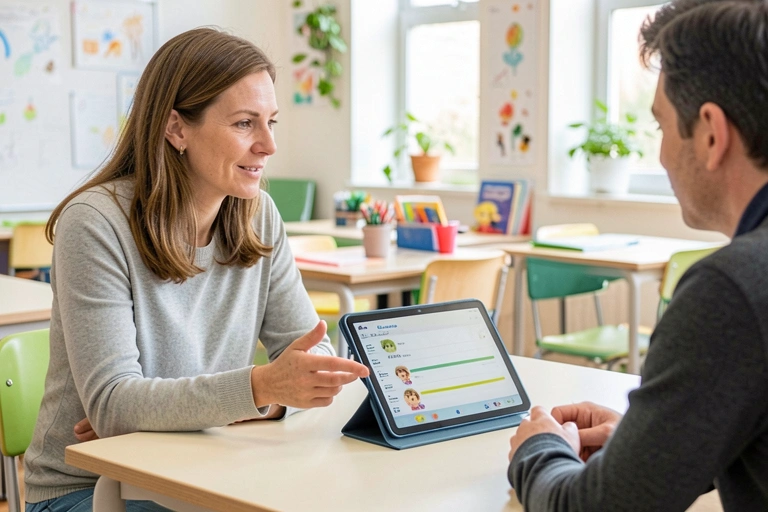
True parent engagement isn't just sharing the highlights; it's building a partnership to navigate the challenges together.
With that trust in place, you can approach sensitive topics with a much greater chance of a positive outcome. The conversation becomes part of an ongoing dialogue about their child’s journey, rather than a sudden, alarming alert.
A Step-by-Step Guide to Sharing Sensitive Information
Once you've identified a sensitive pattern, a structured approach is essential. Acting on impulse or sending a hastily worded message can do more harm than good. A professional, considered process protects you, the parent, and most importantly, the child. Here’s a practical workflow: 1. Record, Reflect, and Review: The first step is to capture what you're seeing objectively. Tools like Parent Portal’s voice-recorded observations are perfect for this. You can record a quick 30-second audio note describing the event in your own words, which is then transcribed. The crucial next step is to not share it immediately. Use a feature like the Observation Approval Workflow. This internal checkpoint gives you a moment to breathe and reflect. Is this a one-off, or is it a pattern? Review the child’s Student Learning Profile to see past observations and data. This context is vital for deciding if and how to proceed. 2. Choose the Right Forum: A sensitive issue should never be broached for the first time via a quick text message or a note in a homework diary. These formats lack the nuance required and can be easily misinterpreted. Instead, use your communication platform to schedule a proper conversation. A simple message like, "Hi [Parent's Name], I’ve made a few observations about how [Child's Name] is settling into group activities that I’d love to share. Are you free for a quick phone call or video chat tomorrow?" This respects the parent's time and signals that the topic deserves focused attention. Platforms that integrate online booking for parents' evenings or even offer virtual video consultations make this process seamless. 3. Frame the Conversation Collaboratively: When you do speak, structure is key. Start with a positive observation or a general strength. Then, move to the concern using objective, non-judgmental language. Instead of "Your son is being disruptive," try "I've noticed that during carpet time, Jack is finding it difficult to stay focused, and I wanted to see if you've noticed anything similar at home." Present your observations as evidence, not accusations. The goal is to open a dialogue, so ask questions: "What do you think might be causing this?" or "What strategies work well for him at home?" This turns the discussion into a problem-solving session with the parent as an expert partner. After the meeting, tools like an AI-Generated Meeting Summary can document the key points and agreed actions, ensuring clarity for everyone.
1. Record Objectively: Capture what you see and hear without judgment.
2. Review for Patterns: Use student profiles to check if it's an isolated event or a recurring issue.
3. Schedule a Dedicated Time: Don't ambush a parent at pick-up time. Book a call, video meeting, or in-person chat.
4. Frame Collaboratively: Use "I've noticed..." statements and ask for the parent's perspective.
5. Agree on Next Steps: Work together on a simple plan and agree on a follow-up date.
The Critical Line: Observation vs. Diagnosis
One of the most important boundaries for any educator to maintain is the line between observation and diagnosis. Your role is to be an expert observer of children's behaviour and development in your classroom. It is not your role to diagnose conditions like ADHD, dyslexia, or autism. When sharing sensitive observations, you must stick to the facts. Describe the behaviour, not the suspected condition. For example, instead of saying, "I think she might be dyslexic," you should say, "I've noticed that she consistently reverses the letters 'b' and 'd' in her writing and seems to find reading tasks more tiring than her peers." By presenting objective evidence, you empower the parent to take the next step, which may involve speaking to the school's SENCO or their GP. This protects you from professional overreach and ensures the child gets access to the correct support pathway. Your observation is a vital piece of the puzzle, but it is not the whole picture.
Technology as Your Professional Partner
Navigating these complex interactions is a high-level professional skill. The right technology doesn't replace that skill but supports and enhances it. An integrated school administration software like Parent Portal provides the framework for professional excellence. For instance, if a safeguarding concern arises from an observation, it must be handled differently. Parent Portal’s secure Safeguarding Concern Logging feature ensures that such information is recorded with a strict audit trail and is only accessible to Designated Safeguarding Leads, completely separate from general parent communications. This built-in distinction is vital. For less critical—but still sensitive—concerns, the platform provides the context. Before a meeting, a teacher can review all observations, attendance data, behaviour rewards, and past homework submissions in one place. This holistic view, a cornerstone of effective EdTech in 2025, allows for a more informed and empathetic conversation. Ultimately, these tools help reduce teacher workload not by cutting corners, but by streamlining best practices, ensuring that every sensitive conversation is built on a foundation of solid evidence, professional reflection, and a spirit of true partnership.
Comments