
Why Homework Submission Rates Matter and How to Improve Them
The Unseen Costs of an Empty In-tray
It’s a familiar scenario in every school. The deadline for a homework task passes, and as you check for submissions, you’re met with a patchwork of completed work, excuses, and radio silence. Chasing missing homework can feel like a thankless, administrative chore. But the problem runs much deeper than just an empty in-tray. Low homework submission rates are a red flag, signalling potential issues with student understanding, engagement, and the vital connection between home and school.
When homework isn’t completed, it’s not just about a missed deadline. It represents a missed opportunity to reinforce classroom learning, a gap in our understanding of a child’s progress, and a breakdown in the communication chain that is so crucial for effective education. For teachers, the administrative burden of chasing, re-explaining, and tracking missing work adds significant pressure to an already demanding role. For parents, a lack of clarity around homework can lead to frustration and a feeling of being disconnected from their child’s learning. In this article, we’ll explore why homework submission rates are a critical metric for any primary school and outline how modern school communication tools can help you not just improve the numbers, but transform your entire approach to home learning.
Beyond Compliance: Why Every Submission Matters
Viewing homework purely as a measure of compliance misses the point. Each completed task is a valuable piece of a much larger puzzle, providing insights that benefit students, teachers, and parents alike. When submission rates are low, we lose more than just a marked piece of paper.
First and foremost, we lose a vital tool for consolidating learning. Homework provides the space for children to practice new skills, apply knowledge independently, and build crucial habits of self-discipline and responsibility. It’s the bridge between the guided learning of the classroom and the independent application that demonstrates true understanding. When that bridge is consistently broken, learning gaps can widen quickly.
Secondly, it creates a significant drain on teacher time, directly impacting teacher workload. The hours spent sending reminder emails, speaking to children at break time, and managing submissions arriving in different formats—from a crumpled sheet in a bag to a photo sent to a personal email—is time that could be spent on planning, differentiation, and direct teaching. This inefficient workflow is a major contributor to teacher stress and burnout.
Improving your homework process is not about adding another task to your plate; it is about sharpening the tools you already use to make them more effective and far less time-consuming.
Finally, low submission rates often point to a communication breakdown. Do parents know what the task is? Are they clear on the deadline? Do they have the resources to support their child? When a school relies on printed sheets or verbal instructions passed on by young children, the message often gets lost. This creates a barrier to parent engagement, leaving parents feeling helpless or, worse, unaware that there’s a problem until parents' evening.
Diagnosing the Problem: The Common Barriers to Homework Submission
To fix the problem, we must first understand its roots. Low submission rates are rarely due to a single cause; they’re often a result of several interconnected barriers that can be effectively dismantled with the right systems in place.
A primary culprit is the simple lack of a single source of truth. A homework sheet handed out on a Friday can easily be lost by Monday. Instructions explained at the end of a busy day can be forgotten by the time a child gets home. This creates a cycle of confusion for both students and parents. Another significant barrier is engagement and accessibility. A one-size-fits-all worksheet may not inspire a child or cater to their specific learning needs. Some tasks may inadvertently require resources—like a printer, specific craft supplies, or reliable internet access—that aren't available in every home.
- Sarah Jones, Headteacher
This is where technology can play a transformative role. By moving away from fragmented, paper-based systems towards an integrated digital platform, schools can address these barriers head-on, creating a homework environment that is clear, engaging, and supportive for everyone involved.
A Modern Solution: How to Systematically Improve Homework Rates
Improving homework submission isn’t about implementing stricter rules; it’s about removing friction. By making the entire process seamless for teachers, visible to parents, and engaging for students, you create a positive feedback loop that encourages participation. This is where a comprehensive platform like Parent Portal becomes an essential piece of your school’s strategy.
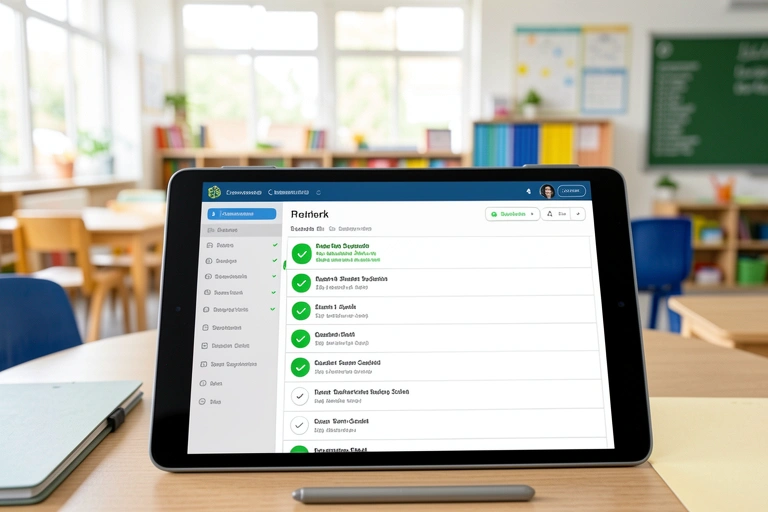
The first step is to establish a Digital Homework Hub. With Parent Portal’s homework management feature, teachers can create and assign tasks in minutes. All instructions, due dates, and attached resources are in one central, accessible place. The ‘lost homework sheet’ becomes a thing of the past. Parents receive a push notification the moment homework is assigned, giving them full visibility. They can view the task on their phone or computer, meaning they are empowered to support their child effectively.
Next, it’s time to boost engagement with better content. Rather than spending hours searching for resources, teachers can use Parent Portal’s AI-Generated Homework Tasks. Imagine creating a differentiated reading comprehension exercise or a set of maths problems tailored to three different ability groups in under a minute. Our AI tools, including the `Comprehension Generator` and `SPAG Tools`, empower teachers to create high-quality, relevant, and engaging homework that inspires children to learn, all while dramatically reducing preparation time.
1. Complete Visibility: Parents and teachers see all assigned tasks, deadlines, and submissions in one place.
2. Effortless Submission: Children can submit work by simply taking a photo or uploading a file through the app.
3. Drastically Reduced Admin: Automated tracking shows teachers who has submitted at a glance, eliminating manual checklists.
4. Enhanced Communication: Built-in messaging allows parents to ask for clarification directly and securely.
Finally, the process of submitting and tracking work needs to be just as simple. With Parent Portal, students can submit their work with a photo upload, file attachment, or simple text response. For teachers, the platform provides an instant overview of who has and has not submitted, ending the need for manual tracking in spreadsheets or mark books. This single feature alone returns countless hours to teachers, allowing them to focus on what they do best: teaching.
Closing the Loop: The Power of Feedback and Partnership
Getting the homework submitted is only half the battle. The real learning happens when students receive timely, constructive feedback. An integrated system makes this final, crucial step easier than ever. Teachers can provide written comments and grades directly on the submitted work within the Parent Portal app. Parents can see this feedback alongside the original task, helping them understand their child’s strengths and areas for development.
For even greater efficiency, teachers can leverage the AI Feedback Generator. This tool analyses student work and suggests constructive, encouraging comments that highlight successes and offer clear next steps, ensuring every child receives personalised feedback even when time is tight. This immediate feedback loop reinforces learning and shows students that their effort is valued.
Ultimately, by using a platform that connects all the dots—assignment, communication, submission, and feedback—you transform homework from a source of friction into a powerful driver of parent engagement. When parents are included in the process, they become genuine partners in their child's education. They are better equipped to provide support, celebrate successes, and work with you to address challenges. This collaborative approach doesn't just improve homework submission rates; it builds a stronger, more supportive school community for the long term, laying the foundation for better academic outcomes and reduced teacher workload. It's the future of home learning, and it's already here.
Comments