
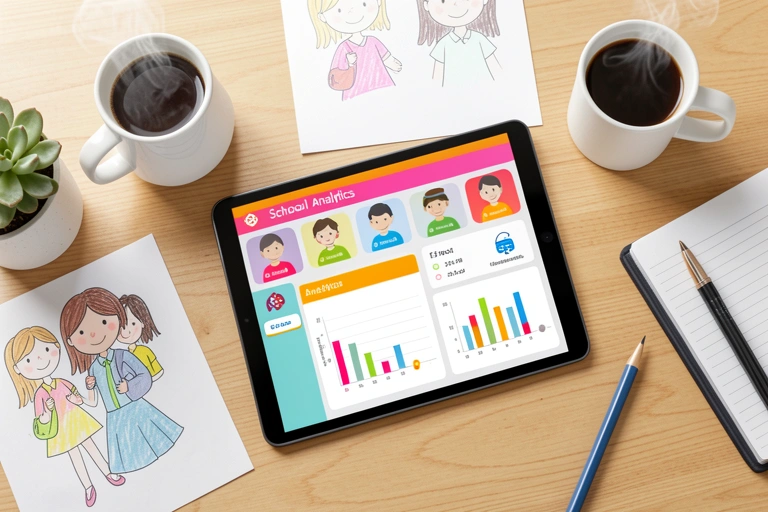
5 Ways to Use Data to Improve Your School
In the world of modern education, data is no longer a scarce resource. From attendance records and assessment scores to behaviour logs and communication history, schools are swimming in information. But collecting data is the easy part. The real challenge—and the greatest opportunity—lies in transforming this raw data into actionable insights that drive meaningful school improvement. Too often, data becomes a burden, an administrative task performed for its own sake rather than a tool for positive change. It can lead to increased teacher workload without a clear benefit to student outcomes.
The key is to move from data collection to data intelligence. It’s about asking the right questions and using the right tools to find answers that enhance teaching, deepen parent engagement, and streamline school operations. Let’s explore five powerful ways you can harness data to build a better, more effective school for your entire community.
1. Go Beyond Spreadsheets: Capture Rich, Qualitative Data
For years, school data has been dominated by numbers: test scores, attendance percentages, and progress levels. While useful, this quantitative data only tells part of the story. It shows the 'what' but rarely the 'why' or 'how'. To truly understand a child's learning, we need to capture the rich, contextual moments that happen every day in the classroom. This is where qualitative data becomes invaluable.
Instead of relying solely on static spreadsheets, think about building a dynamic, longitudinal picture of each child's development. Modern tools allow teachers to capture learning as it happens. A quick 30-second voice note recording a child's breakthrough in explaining their reasoning, a photo of a group collaborating on a project, or a short video of a student mastering a new physical skill—these are powerful data points. When these micro-observations are linked to curriculum objectives, like the EYFS framework or Key Stage goals, they become a treasure trove of evidence-based insight that informs planning and assessment in a way a simple grade never could.
2. Use Data to Personalise, Not Just Standardise
Data is frequently used to group students by attainment, which can be an efficient but blunt instrument. True data-driven teaching uses information to unlock a deeper understanding of each student's individual needs, preferences, and potential. The goal is to personalise the learning journey, providing targeted support where needed and offering greater challenges to those who are ready.
This is where the accumulation of qualitative and quantitative data pays off. When you have a rich history of observations for each child, powerful patterns begin to emerge. This is a task perfectly suited for AI analysis. An AI-powered system can analyse thousands of observation data points to identify a child's preferred learning styles, highlight areas where they consistently excel, and suggest specific next steps or interventions. This moves beyond simple tracking and empowers teachers to differentiate their instruction effectively, creating a more inclusive and responsive classroom. This is a prime example of how to reduce teacher workload by automating complex analysis, freeing up educators to do what they do best: teach.
The goal of data isn't to rank children, but to understand them. When we truly understand a child's learning journey, we can build the path that's right for them.
By shifting the focus from standardisation to personalisation, you create a culture where every child's unique trajectory is valued and supported. It’s about using data to open doors, not to place students in boxes.
3. Turn Data into Meaningful Conversations with Parents
For parents, school data can often feel intimidating or opaque. A single grade on a report card, delivered without context, can cause anxiety and confusion. Effective parent engagement hinges on transforming data into a story—an ongoing narrative of their child's progress, achievements, and challenges. Sharing data should be a conversation, not a declaration.
This means sharing the small wins and learning moments throughout the term, not just the final summary. When a parent receives a photo of their child proudly displaying their artwork or a notification celebrating their contribution to a class discussion, they feel connected and informed. This continuous stream of information provides crucial context for more formal data-sharing events like parents' evenings. When parents can book appointments online and teachers can prepare by reviewing a complete history of observations, the resulting consultation is far more productive and collaborative. Using tools that can even generate AI summaries of these meetings ensures that both parties leave with a clear, shared understanding of the targets and actions agreed upon.
Sharing small, regular updates—like a photo from a science experiment or a voice note of a child reading—is often more impactful than a single end-of-term report.
4. Use Administrative Data to Streamline School Life
Data isn't just for the classroom; it's also the lifeblood of an efficient school office. From attendance and payments to club bookings and communications, administrative tasks are data-heavy and time-consuming. By implementing modern school admin software, you can automate much of this data collection and analysis, freeing up valuable time and resources.
Take attendance, for example. A digital register that feeds into a central system does more than just record presence. It allows you to run instant attendance analytics, spotting patterns of absence for an individual, a class, or a year group that might indicate a wider wellbeing or safeguarding issue. Similarly, an integrated payment system for trips, clubs, and dinner money eliminates the need for staff to manually chase payments and reconcile accounts. The system automatically tracks who has paid and can send targeted reminders, improving cash flow and drastically reducing administrative overhead. This smart use of operational data is a cornerstone of a well-run school.
When your administrative data is organised, accessible, and automated, your support staff can focus on higher-value tasks that directly support students and teachers, rather than getting bogged down in paperwork.
5. Use Data to Support Staff, Not Just Scrutinise Them
Perhaps the most crucial cultural shift is in how data is used to support staff. For too long, data has been perceived as a tool for scrutiny and performance management, contributing to teacher stress and burnout. The future of edtech in 2025 and beyond lies in using data as a supportive assistant—a way to enhance professional practice and, most importantly, improve teacher wellbeing.
Think of the hours spent on report writing. An AI Report Writing Assistant that uses the rich observation data collected throughout the term to generate unique, evidence-based, and personalised comments is a game-changer. It doesn't replace the teacher's professional judgement; it augments it, saving countless hours. The same applies to lesson planning. An AI tool can generate a complete, differentiated lesson plan based on a teacher's input about the topic and the class's specific needs, providing a fantastic starting point. This is how data serves the teacher, not the other way around. By embedding these supportive tools into daily workflows, you use data to directly reduce teacher workload and foster a culture of professional growth rather than judgement.
The Future of School Data is Smart, Not Hard
The path to school improvement is paved with good data, but only when it is used intelligently. By moving beyond spreadsheets to capture rich observations, personalising learning, turning data into parent-friendly conversations, streamlining operations, and supporting staff wellbeing, you unlock its true potential. This isn't about working harder or collecting more information; it's about working smarter with the right school communication tools.
Platforms like Parent Portal are designed for this new era, integrating everything from voice-note observations and AI-powered analysis to attendance management and parent communication into one seamless system. By embracing an intelligent approach to data, you can build a more responsive, efficient, and supportive environment for students, parents, and staff alike.
Comments