
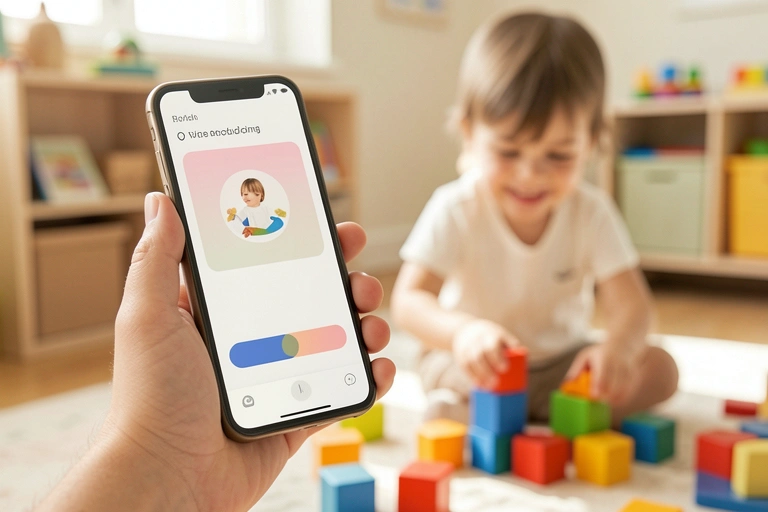
Voice Recording in Nursery Settings: Capturing Early Years Development
The Sound of Learning: A New Era for Early Years Observation
In the vibrant, dynamic world of a nursery, learning isn't a scheduled event; it's a constant, unfolding tapestry of fleeting moments. A sudden question, a burst of imaginative storytelling, a negotiation between friends over a toy. These are the golden nuggets of early years development. For decades, practitioners have strived to capture these moments with pen and paper or clunky tablet notes, often feeling like they are documenting the magic rather than participating in it. But what if we could capture the very essence of these moments—the child's own voice—instantly and unobtrusively? This is the transformative power of voice recording in nursery settings, a tool that is revolutionising how we observe, assess, and understand early development.
Traditional observation methods, while valuable, often miss the nuance. A written summary can state that a child described their drawing, but it can't capture the excitement in their tone, the specific vocabulary they chose, or the thoughtful pauses in their explanation. By embracing technology that allows for quick, voice-recorded observations, we move from simply documenting milestones to preserving the authentic process of learning itself. This isn't just about creating a more colourful scrapbook; it's about gathering richer, more meaningful data that reduces teacher workload and provides unparalleled insights into a child's world.
Beyond the Written Word: Why Voice Matters in EYFS
The Early Years Foundation Stage (EYFS) framework places huge emphasis on communication and language. It's a prime area of development that underpins all others. Capturing a child's spoken words directly is the most powerful way to assess this. A 30-second voice note can reveal so much: their expanding vocabulary, their grasp of sentence structure, their ability to express ideas, and their confidence in communicating. These are insights that are often lost in translation when an educator has to stop, recall, and type out a summary. It's the difference between reading the script and watching the performance.
Furthermore, these voice clips offer a window into a child's cognitive and social-emotional world. You can hear the logic in their problem-solving as they talk through building a tower, the empathy in their voice as they comfort a friend, and the burgeoning creativity in the stories they invent. For children with English as an Additional Language (EAL), hearing their progress in their own voice over time is an incredibly powerful tracking tool. By accumulating these authentic 'micro-observations', educators build a longitudinal profile that is rich with qualitative, evidence-based detail, far surpassing what a simple checklist could ever provide.
1. Record: Use your phone or tablet to record a quick 30-60 second voice note of a learning moment.
2. Transcribe: Our AI automatically transcribes the audio into text.
3. Tag: Link the observation to individual children, add photos, and tag specific EYFS or curriculum objectives.
4. Share: After a quick review, share the observation directly with parents, who receive a notification in their app.
This streamlined process means practitioners can capture high-quality observations in seconds, without ever disengaging from the children. The 'clipboard barrier' is removed, allowing educators to remain present and responsive, fostering a more natural and supportive learning environment. This is a core principle of effective EdTech: it should enhance human interaction, not replace it.
Reducing Workload and Unlocking Deeper Insights with AI
One of the most significant challenges in early years education is the mountain of paperwork associated with observation and assessment. The pressure to document progress can detract from the primary role of an educator: to teach and nurture. Voice recording technology directly tackles this issue. What used to take several minutes of typing and tagging can now be accomplished in under a minute, giving staff back valuable time to spend with the children. The integration of AI takes this efficiency to the next level.
A platform like Parent Portal doesn't just store these voice notes; it analyses them. Over time, the AI can identify patterns in a child's language, highlight recurring themes in their play, and track their progress against age-related expectations. It can generate automated summaries for teachers, flagging strengths and potential areas for development. This powerful analysis transforms a collection of individual moments into a coherent developmental narrative, empowering teachers to plan next steps with a level of insight that would be impossible to achieve manually. It's a prime example of how school admin software can evolve into a genuine teaching assistant.
Hearing your own child explain their drawing in their own words is infinitely more powerful than seeing a photo with a caption.
This deeper understanding isn't just for educators. Sharing these moments creates a powerful and emotional connection for parents. When a parent receives a push notification and gets to hear their child proudly counting to ten or explaining a game to a friend, it provides a unique and moving glimpse into their day. This fosters incredible parent engagement and builds a strong, collaborative partnership between home and school. It moves communication beyond newsletters and generic updates into something truly personal and meaningful.
This level of connection is vital for building a supportive community around each child. Parents feel more involved and better equipped to continue the learning conversations at home, creating a seamless educational journey. It reinforces their trust in the setting and validates the incredible work that practitioners do every single day.
- Sarah, Nursery Manager
Of course, with any technology involving children, safeguarding is paramount. A professional school communication platform must be built with security at its core. Features like observation approval workflows, which require a teacher to review a recording before it's shared, and secure access controls, ensuring only relevant staff and verified parents can see the data, are non-negotiable. Everything must be fully GDPR compliant, with secure, UK-based data storage, giving school leaders complete peace of mind.
The Future of Nursery Management is Authentic
As we look towards the future of EdTech, the focus is shifting towards tools that are not only efficient but also authentic. Voice recording in early years is the epitome of this trend. It prioritises the unique voice of the child, enhances the professional judgment of the educator, and deepens the connection with parents. It's a simple concept with profound implications for reducing teacher workload, improving the quality of assessment, and strengthening the entire school community.
By embedding this technology within a comprehensive platform that also handles messaging, payments, attendance, and more, schools can streamline their entire operation. The result is a more connected, efficient, and insightful nursery environment where technology works in the background to support the all-important human connections that lie at the heart of great early years education. Capturing the sound of learning is no longer a futuristic idea; it's an essential tool for any forward-thinking nursery setting.
Comments