
Positive Behaviour Management in the Digital Age
Classroom management has always been a cornerstone of effective teaching, but the strategies we use must evolve with the world around us. In an era defined by digital connection, the traditional methods of managing student behaviour—think wall charts, marbles in a jar, or sad faces next to names—are beginning to show their age. They can be administratively heavy, lack immediacy, and often fail to connect with the most important partners in a child's education: their parents. It's time to embrace a more dynamic, supportive, and integrated approach. This is where Positive Behaviour Management (PBM) in the digital age comes in, transforming how we nurture, recognise, and celebrate student conduct.
Rethinking Discipline: The Core of Positive Behaviour Management
Positive Behaviour Management isn't about ignoring challenging behaviour; it's a fundamental shift in philosophy. It moves the focus from punishment and consequences to teaching and reinforcement. Instead of reacting to misbehaviour, PBM proactively cultivates a supportive environment where expectations are clear, and positive actions are consistently and meaningfully recognised. The goal is to build students' intrinsic motivation and self-regulation skills, creating a school culture founded on respect, encouragement, and mutual trust. This approach doesn't just lead to quieter classrooms; it fosters greater student wellbeing, boosts academic engagement, and helps build a community where every child feels seen and valued.
Why Traditional Behaviour Systems Are Falling Short
Many of us will remember the sun and cloud chart or the traffic light system. While well-intentioned, these analogue methods have significant limitations in a modern school setting. They are often public, which can lead to feelings of shame for students who are struggling, rather than providing the support they need. They are also incredibly labour-intensive for teachers, who spend precious time updating charts, tallying points, and communicating issues to parents, often long after the event has occurred. This disconnect means that opportunities for timely praise or intervention are missed. Furthermore, these systems rarely provide a holistic view of a child's behaviour over time, making it difficult to spot patterns, understand triggers, or measure the impact of support strategies. They exist in a silo, separate from academic progress and pastoral care.
The goal of classroom management is not to control students, but to create an environment where they can learn to control themselves.
So, how do we bridge the gap between the principles of PBM and the practical realities of a busy school day? The answer lies in leveraging technology to create a system that is immediate, consistent, communicative, and—most importantly—positive. School communication platforms are no longer just for newsletters and absence reporting; they are powerful tools for embedding a positive school culture.
Digital Tools: The Secret Weapon for Modern Behaviour Support
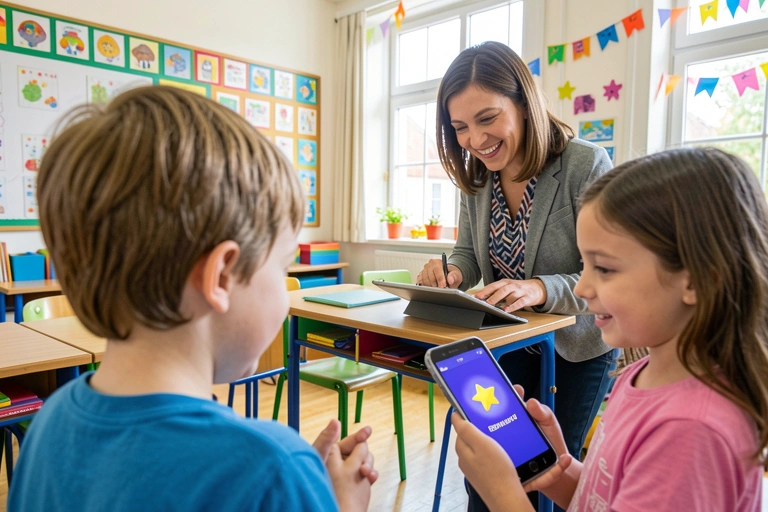
Imagine being able to recognise a student's act of kindness the moment it happens, with a simple tap on a tablet. Imagine that recognition being instantly visible to the student, their class, and their parents. This is the power of digital behaviour management. By moving away from paper and posters, schools can implement a system that is both more efficient and more effective. Parent Portal's Behaviour, Rewards & Wellbeing features are designed to do exactly this. The Digital Rewards System allows teachers to award points to individual students or whole classes for everything from academic effort to positive social skills. This creates a live, dynamic record of achievement that moves with the child throughout their day. When combined with House Points & Competitions, it also builds a wonderful sense of camaraderie and collective responsibility, turning individual achievements into a shared success story.
You can award points for demonstrating school values, such as:
- Showing resilience on a challenging maths problem.
- Helping a classmate tidy up without being asked.
- Excellent listening and contribution during carpet time.
- Being a kind and inclusive friend in the playground.
- A significant improvement in effort or focus.
This instant feedback loop is incredibly powerful. For students, it provides immediate validation that their positive choices are noticed and valued. For teachers, it streamlines the process of recognition, freeing them up to focus on teaching and building relationships. And for the school as a whole, it creates a consistent language of praise that reinforces the desired culture in every classroom.
Engaging Parents as Partners in Positive Behaviour
One of the most significant advantages of a digital behaviour system is its ability to transform the school-home partnership. Too often, communication about behaviour is reactive and negative—a phone call home about an incident or a note in the planner. This can put parents on the defensive and frames the conversation around problems, not progress. Digital tools completely flip this dynamic. When a teacher awards a reward point on Parent Portal for fantastic effort in reading, the parent can receive a real-time push notification. Suddenly, the conversation at the dinner table isn't "How was school?" followed by a shrug, but "I saw you got a reward for your amazing reading today, tell me all about it!" This simple, positive interaction reinforces the school's praise, builds the child's self-esteem, and makes parents feel connected and proud. By sharing successes through Achievement Celebrations, schools actively involve parents as cheerleaders in their child's educational journey.
- Sarah Jones, Headteacher, Oakwood Primary
This constant stream of positive news builds a huge bank of goodwill and trust. When a more challenging conversation is needed, it takes place against a backdrop of established partnership and shared celebration, making it far more constructive. It helps parents see the whole child, not just the moments of difficulty.
Less Admin, More Impact: Streamlining Your School's Operations
Implementing an effective PBM strategy shouldn't add to teacher workload—it should reduce it. The beauty of an integrated platform like Parent Portal is that it brings everything together, saving time and increasing impact. A teacher can take the Digital Register, send a message to a parent, assign homework, and award a reward point all from the same device in a matter of minutes. This efficiency is critical. It means less time spent on paperwork and more time spent with students. Moreover, integrated school admin software provides powerful insights. By having attendance, behaviour, and academic data in one place, school leaders can easily identify patterns. For example, a dip in attendance might correlate with behavioural challenges, flagging a need for pastoral intervention. This holistic view, which includes everything from Student Learning Profiles to Safeguarding Concern Logging, ensures that behaviour is understood within the wider context of a child's experience at school, enabling more targeted and effective support.
Building a Positive School Culture for 2025 and Beyond
As we look towards the future of education, or 'Edtech 2025', the focus is rightly on creating learning environments that are responsive, supportive, and holistic. Positive Behaviour Management is not a trend; it's a vital component of a modern, compassionate educational philosophy. By harnessing the power of digital tools, schools can implement PBM strategies more effectively than ever before. They can build a vibrant culture of praise, forge stronger partnerships with parents, improve student wellbeing, and dramatically reduce teacher workload. A platform like Parent Portal provides the integrated school communication tools and management systems needed to turn this vision into a daily reality, creating a school where every child is empowered to thrive.
Comments