
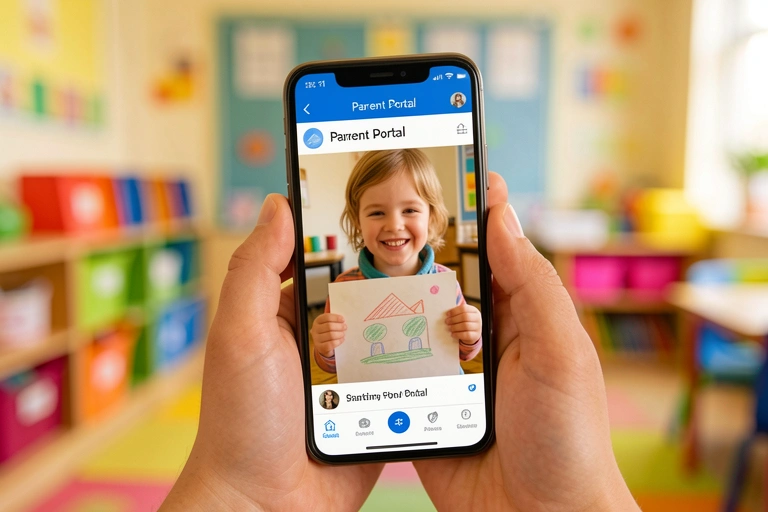
The Power of Specificity: Micro Observations Make Parents Feel Seen
Every teacher and parent knows the familiar end-of-day exchange. "What did you do at school today?" asks the parent, hopeful for a glimpse into their child's world. "Nothing," comes the all-too-common reply. This communication void can be frustrating. Parents are eager to be involved, but they often lack the specific hooks needed to start a meaningful conversation. The weekly newsletter, while valuable, speaks to the collective. The twice-yearly parents' evening is a vital but infrequent checkpoint. The real, day-to-day magic of learning often gets lost in between.
This is where the power of specificity comes in. To truly engage parents and make them feel like valued partners in their child's education, we need to bridge that daily gap. The solution lies in capturing and sharing the small, fleeting, yet significant moments of progress, curiosity, and collaboration that make up a school day. We call these micro-observations, and they are the key to unlocking a new level of parent engagement and building unbreakable home-school bonds. Modern school admin software is no longer just for administration; it's for connection.
Moving Beyond the Vague: The Rise of Micro-Observations
So, what exactly is a micro-observation? It’s a small, frequent, in-the-moment snapshot of a child’s world at school. It’s not a formal assessment or a lengthy report. It’s the 30-second voice note a teacher records about how a child finally grasped a tricky maths concept. It's the quick photo of two children collaborating successfully on a tower. It’s the short video of a student asking a wonderfully insightful question during story time. These observations capture the process of learning, not just the final product.
Parent Portal was designed with this principle at its core. We understood that teachers are incredibly busy, and any new initiative must enhance, not impede, their work. Our observation tools are built for speed and impact. A teacher can record a 30-60 second voice note describing a learning moment faster than they could ever type it. This audio clip is then automatically transcribed and can be shared directly with the parent. Sharing a photo or video with a quick caption takes mere seconds. Crucially, these aren't just 'nice' updates; they are powerful data points. Teachers can tag observations to specific curriculum objectives, from Development Matters in EYFS to the National Curriculum in Key Stages, building a rich, longitudinal picture of each child's development over time.
Every child's day is a story filled with tiny, significant chapters. Our job as educators is to help parents read them.
By making observation capture this easy, we shift the focus from cumbersome documentation to authentic celebration of progress. It’s a move away from generic feedback toward a personalised stream of evidence that shows a child's unique journey. This consistent flow of information empowers parents and provides teachers with a wealth of qualitative data that is both meaningful and easy to gather.
From "Nothing" to "Tell Me About the Sand Volcano!"
Imagine the difference from a parent’s perspective. Instead of receiving a generic notification that says, "Leo had a good day," they receive a specific observation through the Parent Portal app. It might be a photo of Leo and a classmate working in the sandpit, with a caption from the teacher: "Leo was fantastic at problem-solving today! He and Sarah worked together to figure out why their sand volcano kept collapsing, deciding to build a wider base. He was so proud of the result!"
This single, specific update does several things. First, it provides the parent with an immediate, positive conversation starter. The evening's question changes from "What did you do?" to "Tell me all about your sand volcano with Sarah! How did you make it work?" This invites a detailed response and shows the child that their efforts at school are seen and valued at home. Second, it makes the parent feel that the teacher really knows their child. This isn't a blanket statement; it's a specific, personal insight. This level of detail builds immense trust and reassures parents that their child is understood and supported as an individual. It transforms the school communication tool from a simple noticeboard into a window into their child’s world.
- Sarah Jones, Headteacher, Oakwell Primary
This deepens the home-school partnership in a way that periodic reports simply cannot. When parents feel this connected, they become more engaged, more supportive of the school's initiatives, and more confident in the education their child is receiving. It’s a profound shift from passive information consumption to active, enthusiastic partnership.
Specificity Without the Strain: Reducing Teacher Workload
At this point, teachers and school leaders might be thinking, "This sounds wonderful, but it also sounds like a lot more work." This is the most critical point: with the right tools, it isn't. In fact, embracing micro-observations can dramatically reduce teacher workload in other areas. The key is leveraging technology to work smarter, not harder. This is where Parent Portal's integrated AI teaching assistant tools become a game-changer.
Think of each voice note, photo, or video observation as a small deposit into a child's learning bank. Individually, they are valuable moments. Collectively, they become an incredibly rich dataset. Our AI-Powered Progress Analysis engine gets to work on these deposits. It automatically analyses accumulated observations to identify patterns, highlight strengths, flag potential areas for development, and even suggest next steps for teachers. A teacher’s 30-second effort is compounded by AI to provide deep, actionable insights without hours of manual analysis.
Our AI Report Writing Assistant analyses hundreds of micro-observations per child to generate unique, evidence-based report comments in seconds.
It pulls directly from teacher voice notes and progress records to create personalised narratives.
This can save teachers an average of 15 hours per term on report writing alone, freeing them to focus on what they do best: teaching.
The biggest return on investment comes during report writing season. That dreaded, time-consuming task is transformed. Instead of trying to recall specific examples for 30 different children from months ago, teachers can use our AI Report Writing Assistant. It synthesises all the micro-observations for a student and generates personalised, evidence-based report comments. The teacher’s role shifts from originator to editor, reviewing and refining AI-generated comments that are already rooted in the specific moments they captured throughout the term. This single feature represents a monumental step forward in reducing teacher workload and improving the quality and personality of school reports.
The Future is Specific
As we look towards edtech in 2025 and beyond, the trend is clear: a move away from one-size-fits-all systems and toward personalised, intelligent, and efficient platforms. The future of parent engagement isn't about more communication; it's about more specific communication. Generic updates no longer meet the expectations of today's parents, who are used to personalised, on-demand information in every other aspect of their lives.
By embracing micro-observations, schools can offer a level of specificity that makes every parent feel like their child is the most important child in the school—because in that moment of observation, they are. Platforms like Parent Portal provide the comprehensive school admin software and school communication tools necessary to deliver this experience without creating an unsustainable burden on staff. It's about using technology to amplify the human connections that lie at the heart of great education. When a parent feels seen, a child feels valued, and a teacher feels empowered, the entire school community thrives.
Comments