
How to Stop Losing School Trip Permission Slips
The Familiar Panic of the Permission Slip Pile
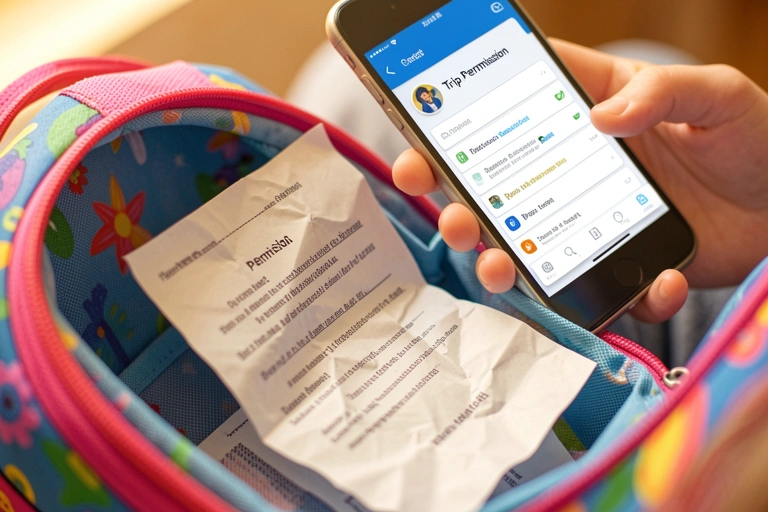
It’s a scene played out in every primary school across the country. A teacher stands over a desk, a colourful but chaotic pile of paper in front of them. Some are neatly filled out permission slips for the upcoming museum trip. Others are crumpled, stained with what one hopes is jam, and missing a signature. A separate, worrying pile contains handwritten notes from parents promising the form is “in the other bag”. Beside this, a small collection of coins and crumpled banknotes sits in a tray, a fraction of the total amount due. This is the administrative reality of organising a school trip, a process powered by paper, hope, and a whole lot of chasing.
For parents, it’s a similar story of last-minute panic. The frantic search for the form the night before it’s due, the hunt for the right change, and the nagging feeling that you’ve forgotten to include crucial medical information. In the ecosystem of school communication, the humble permission slip has become a major source of friction for staff and parents alike. But what if it didn’t have to be this way?
The Hidden Costs of a Paper-Based Process
The reliance on paper for something as critical as a school trip comes with significant, often unmeasured, costs. The most obvious is the drain on teacher workload. Teachers and administrative staff spend countless hours printing, distributing, collecting, and chasing forms. They become data-entry clerks, manually typing names into spreadsheets, cross-referencing payments, and following up with families one by one. This is valuable time that could be spent on planning, teaching, and supporting student development.
Beyond the time cost, there are tangible financial and security implications. The expense of paper, ink, and photocopying adds up over a school year. More importantly, a paper system is fraught with risk. A slip containing sensitive medical information or emergency contact details can easily be lost or misplaced, creating a potential safeguarding issue. Manually handling cash and cheques is inefficient and leaves room for error, making reconciliation a time-consuming nightmare for the school office. This entire process puts a huge strain on school administration, diverting focus from more strategic tasks.
The goal is not simply to digitise paper, but to completely redesign the process for efficiency, security, and superior parent engagement.
The traditional method is fundamentally broken. It creates unnecessary work, introduces financial and security risks, and acts as a barrier to effective communication. In an era where every other aspect of our lives is managed digitally, it’s time for school administration to catch up. The solution lies in embracing a unified platform that transforms this archaic workflow into a seamless digital experience.
From Chaos to Control: How Digital Forms Change Everything
Imagine a different scenario. A teacher creates a digital permission form for the museum trip in minutes. They attach the cost of the trip as a payment item and link to the school calendar event. With a single click, a notification is sent directly to every parent’s smartphone. Parents open the app, read the trip details, give their consent with a digital signature, and pay online instantly. Their child’s name automatically appears on the “attending and paid” list, visible to the teacher in real-time. No paper, no cash, no chasing. This isn’t a futuristic dream; it’s precisely what modern school communication tools are built to do.
1. Create a Custom Form: Use the form builder to create a digital permission slip. Include all necessary fields like consent, medical information, emergency contacts, and dietary requirements.
2. Attach a Payment Item: Link the trip cost directly to the form using the integrated payment system. Parents can pay securely by card in seconds.
3. Notify Parents Instantly: Send the form and payment request to the relevant class or year group with a push notification. Parents are alerted immediately on their phones.
4. Track Everything in Real-Time: Monitor responses from a central dashboard. See exactly who has given consent, who has paid, and who needs a gentle nudge, then send automated reminders to only those who haven't responded.
Using a platform like Parent Portal centralises the entire process. The information parents submit is stored securely against their child’s profile, eliminating the risk of lost data. Teachers and admin staff get a live, accurate view of permissions and payments without ever touching a spreadsheet. This simple shift from paper to digital has a profound impact on school efficiency and significantly reduces the administrative burden on everyone involved.
Boosting Parent Engagement Through Simplicity
A surprising benefit of digitising processes like trip permissions is a dramatic improvement in parent engagement. When hurdles are removed, participation increases. Parents no longer need to find a pen, hunt for the form, or remember to get cash from an ATM. They can respond to a request in 60 seconds from their phone while waiting for a kettle to boil. This convenience is transformative.
An integrated system also means all communication happens in one predictable place. The trip announcement, the calendar date, the permission form, and the payment request are all housed within the same app. Parents receive timely reminders and can easily access all the information they need without searching through emails or crumpled notes. This reliability builds trust and fosters a stronger home-school connection, making parents feel more informed and involved in their child's school life.
This level of simplicity and efficiency demonstrates that the school values parents' time. By making administrative tasks effortless, schools can free up communication channels to focus on what really matters: conversations about learning, progress, and wellbeing.
Preparing for EdTech 2025: A Future-Proof Strategy
Adopting digital tools for trip management is more than just a quick fix; it's a strategic move towards a more efficient and resilient school. As we look towards EdTech 2025, the trend is clear: integrated platforms that combine communication, learning, and administration are the future. A system that handles permission slips can also manage parents' evenings, homework assignments, attendance, and daily communication, creating a single source of truth for the entire school community.
Choosing the right platform means looking for features that support your entire school. Parent Portal, for example, is built with UK GDPR regulations at its core, ensuring data is always secure. It offers multi-language support for EAL families and allows multiple carers to link to a child's account, accommodating modern family structures. With UK-based support and no hidden setup fees, the transition is smooth and cost-effective. By investing in comprehensive school admin software now, schools can not only solve today's problems but also lay the groundwork for a future where technology works to reduce teacher workload and enhance the educational experience for all.
Comments