
Reading Homework: Assignment and Tracking Through Digital Platforms
The Paper Trail Problem: Why Traditional Reading Records Fall Short
For generations, the school reading record has been a staple of primary education. A folded piece of card tucked inside a well-loved book, it’s a familiar symbol of the home-school connection. Yet, for all its tradition, the paper-based system is fraught with challenges. Teachers spend countless hours each week chasing missing records, deciphering hurried parental scrawls, and manually logging minutes read. The information gathered is often superficial—a simple signature or a date, offering little insight into a child's actual reading experience. Did they struggle with a word? Did they love the story? These crucial details are lost in the paper shuffle.
This administrative burden is a significant contributor to teacher workload, taking time away from planning and teaching. Furthermore, the system creates a communication gap. Parents may feel disconnected from the process, unsure of how best to support their child's reading journey. The crumpled, tea-stained reading record represents a missed opportunity for meaningful dialogue and genuine progress tracking. It’s a system crying out for a modern, efficient, and more insightful alternative.
Streamlining Homework Assignment in the Digital Age
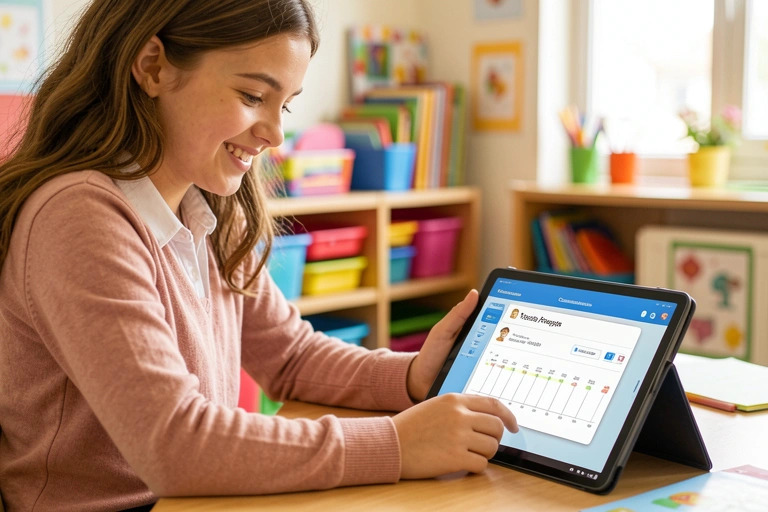
Imagine a world without the weekly pile of reading records. Digital platforms like Parent Portal are making this a reality by transforming how reading homework is assigned and managed. Instead of a one-size-fits-all instruction, teachers can use a dedicated Homework Management tool to create and assign tasks with precision and creativity. This moves beyond simply noting pages to read. Teachers can attach links to online texts, suggest specific comprehension questions, or even share a video demonstrating a phonics sound their class is focusing on that week.
The real power lies in differentiation. With just a few clicks, a teacher can assign a specific set of high-frequency words to one group, a challenging chapter book to another, and a picture-based sequencing task to a third. The platform's AI-Generated Homework Tasks take this even further. A teacher can use the Comprehension Generator to instantly create age-appropriate questions for any text, saving hours of preparation time. This level of customisation ensures every child receives reading homework that is perfectly matched to their ability, fostering confidence and encouraging progress. The assignment appears instantly in the parent's app, complete with a due date and all necessary resources, eliminating any confusion about what's expected.
The goal isn't just to track pages read, but to cultivate a genuine love for reading by making it a shared, visible, and celebrated journey.
By moving assignments online, schools create a clear, consistent, and accessible record. It's the first step in closing the communication loop and turning reading homework from a chore into a targeted and effective learning opportunity.
Beyond the Signature: Meaningful Tracking and Observation
Once the homework is assigned, how do we track it meaningfully? A digital platform goes far beyond a simple tick-box exercise. With Parent Portal, parents can easily confirm homework is complete, upload a photo of a written task, or even share a short video of their child reading a passage aloud. This provides teachers with rich, qualitative evidence of a child's progress at home. But the insights don't stop there. The platform integrates homework tracking with powerful in-school observation tools.
A teacher walking around the classroom can use their device to make a quick Voice-Recorded Observation, capturing a 30-second audio clip of a child reading fluently during a guided session. These micro-observations are automatically transcribed and added to the student's digital profile, building a comprehensive picture of their development over time. When linked to curriculum objectives, such as Development Matters or National Curriculum goals, this data becomes incredibly powerful. The platform’s AI-Powered Progress Analysis can then identify patterns, highlighting a child's growing confidence with digraphs or a persistent difficulty with comprehension, suggesting next steps for the teacher.
This holistic approach connects the dots between home and school. The reading log is no longer an isolated document but part of a dynamic, longitudinal record of learning. Teachers can see the impact of a home reading task on in-class performance, making assessment more accurate and planning more responsive.
Fostering a Home-School Partnership in Reading
True parent engagement is about more than just informing; it's about empowering parents as partners in their child's education. Digital tools are uniquely placed to build this partnership. With Parent Homework Visibility, a parent can see exactly what reading task has been set, what the learning objective is, and what teacher feedback has been given. There's no more second-guessing at the school gates.
Communication becomes seamless. If a parent is unsure about a task, they can use Instant Messaging to send a quick, direct question to the teacher. In turn, a teacher can send a message of encouragement, celebrating a child's effort. This consistent, low-stakes communication builds trust and ensures everyone is on the same page. Furthermore, the platform's Digital Rewards System can be used to gamify reading. Teachers can award house points for consistent reading effort, creating a positive feedback loop that motivates children and allows parents to share in their success. When a notification pops up celebrating their child's achievement, it reinforces the value of reading at home and strengthens the sense of community.
— Sarah, Year 2 Teacher
This creates a supportive ecosystem around each child. Parents feel informed, involved, and equipped to help, turning the kitchen table into an extension of the classroom and significantly boosting a child's chances of success.
The Next Chapter for Reading Homework
The transition from paper trails to digital platforms represents a fundamental shift in how we approach reading homework. It’s about moving away from burdensome administration and towards meaningful engagement. By leveraging tools like AI-powered assistants, integrated communication, and dynamic progress tracking, schools can create a system that works for everyone. Teachers are freed from the drudgery of paperwork, giving them more time to focus on what they do best: teach. Parents become active, confident partners in their child's learning. And most importantly, children are supported by a connected and responsive network, helping them to not only learn to read but to develop a lifelong love for it. The future of education technology, or 'edtech 2025', isn't about replacing traditional methods, but enhancing them. Platforms like Parent Portal provide the tools to build stronger communities, reduce teacher workload, and unlock the full potential of every student, one page at a time.
Comments