
Voice Recognition in Noisy Classrooms: Technical Solutions
The Sound of Learning: A Challenge for Technology
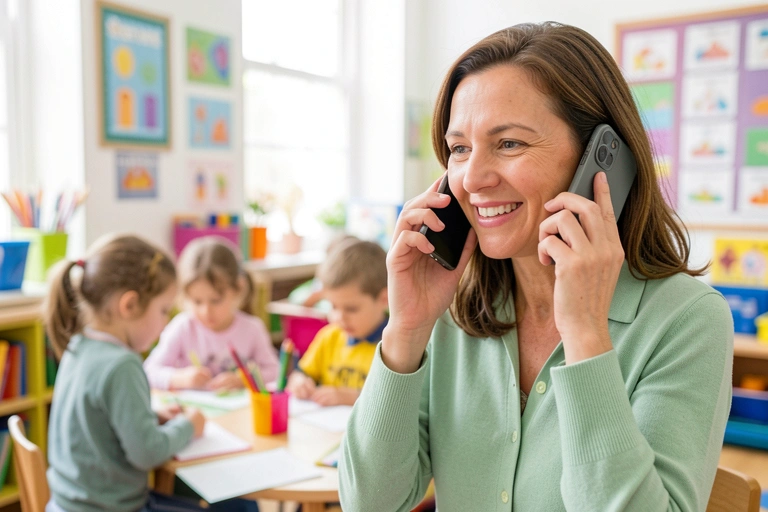
Walk into any primary school classroom, and you’ll be met with a symphony of sound. It’s the sound of active learning: the excited chatter of children collaborating on a project, the scrape of chairs, the rustle of paper, and the teacher’s guiding voice weaving through it all. This vibrant, sometimes chaotic, soundscape is a sign of an engaged classroom. But for a teacher trying to capture a significant learning moment, that beautiful noise presents a huge technical challenge. How can you possibly record a meaningful voice observation of one child's breakthrough when surrounded by a dozen other conversations? Traditional recording devices would capture an unusable mess of background noise. This is where modern educational technology, or EdTech, has made incredible leaps. The question is no longer if voice recognition can work in a noisy classroom, but how it achieves such remarkable clarity.
Behind the Curtain: The Technology That Tames the Chaos
The ability for a platform like Parent Portal to accurately transcribe a 30-second voice note recorded in a busy Early Years setting isn’t magic—it’s a combination of sophisticated hardware and intelligent software working in perfect harmony. These systems are designed from the ground up to tackle the unique challenge of the classroom environment.
First is the hardware itself, specifically the microphones in modern smartphones. Many devices now include multiple microphones that work together as an array. This allows the software to use a technique called beamforming, where it can create a directional ‘beam’ of listening, focusing on the speaker's voice while actively ignoring sounds coming from other directions. It’s like having super-hearing that can pinpoint the source you want to capture, treating the rest as background ambience.
Next, powerful noise cancellation algorithms get to work. These aren't just simple filters; they are often driven by AI. The software analyses the entire soundwave, identifies the consistent frequencies of background noise—like the hum of an interactive whiteboard or the general hubbub of the room—and digitally subtracts it from the recording. More advanced systems use deep learning models that have been trained to distinguish human speech from thousands of other types of sound, effectively isolating the teacher's voice with incredible precision.
Finally, the core of the system is the AI transcription model. In the past, speech-to-text software was brittle and needed near-perfect, silent conditions to work. Today’s models are completely different. They have been trained on millions of hours of audio data from a huge variety of real-world scenarios, including busy cafes, city streets, and, yes, even classrooms. This training makes them robust and ‘fluent’ in understanding speech even when it’s competing with background interference. They learn to predict words and phrases in context, allowing them to fill in gaps and make sense of speech that a human might even struggle to decipher from a low-quality recording.
The most authentic learning doesn't happen in silence; it blossoms amidst the buzz of discovery and collaboration.
By combining these technologies, what reaches the transcription engine is a clean, isolated voice signal, ready to be converted into accurate text. This turns a seemingly impossible task into a seamless part of a teacher's daily workflow, making tools like voice-recorded observations not just a novelty, but a cornerstone of efficient school communication and assessment.
From Classroom Buzz to Actionable Insight
So, what does this process look like in practice for a teacher? Imagine an EYFS teacher observing a child who has just successfully built a complex tower for the first time. Instead of scrambling for a pen and paper or an iPad to type on, they simply open the Parent Portal app.
They record a quick 30-second voice note: "Samir just demonstrated fantastic problem-solving skills. His initial tower kept falling, but he realised he needed a wider base. He carefully rearranged the blocks and told his friend, 'It needs to be stronger at the bottom.' Great resilience and communication." While they speak, the technology is already working. The microphone focuses on their voice, the algorithm strips out the sound of other children playing nearby, and the AI model transcribes the speech. Within moments, the observation appears as text in the app, ready for the teacher to quickly review, tag with a Development Matters objective, and share directly with Samir's parents. This whole process takes less than a minute, capturing a rich, evidence-based moment that would have otherwise been lost or reduced to a brief, hand-written note lacking context.
Capturing voice observations can be up to 5x faster than typing.
This frees up valuable teacher time to focus on teaching, not admin.
Parents feel more connected when they hear the context of their child's learning moments.
It's a simple change that transforms the observation process from a chore into a powerful communication tool.
The Impact on Teacher Workload and Parent Engagement
The single biggest challenge facing the education sector is teacher workload. Technology should be a solution, not another burden. This is where tools built on effective voice recognition truly shine. By drastically cutting down the time it takes to document observations, teachers are freed from hours of administrative work after the school day ends. This isn't just about saving time; it's about reducing burnout and allowing educators to focus their energy on what they do best: teaching and nurturing their students. It is a key way to reduce teacher workload and improve staff wellbeing.
The benefits extend far beyond the school gates. For parents, receiving these snippets of their child's day provides a window into their world that a simple newsletter or a generic report can never offer. They see authentic progress, understand the context of their child’s learning, and feel more connected and involved. This strengthens the home-school partnership, which is proven to have a direct positive impact on student outcomes. Effective parent engagement is no longer a buzzword; it becomes a daily reality.
Choosing the Right EdTech for 2025 and Beyond
As we look towards the future of education, AI-powered tools will become increasingly integrated into the classroom. When evaluating school admin software and communication platforms, it’s vital to look beyond the feature list. Ask critical questions: Is the technology designed for the reality of a school environment? Is it GDPR compliant and secure? Is it supported by a team that understands the UK education system? A truly effective tool is one that works seamlessly, reliably, and intuitively, becoming an invisible assistant that empowers teachers rather than frustrating them. The goal is to find solutions that solve real problems, like capturing high-quality observations in a noisy room, without adding to the administrative load.
Conclusion: The Future is Listening
The noisy, vibrant classroom is no longer a barrier to innovative technology. Thanks to huge advancements in microphone arrays, noise cancellation, and AI, capturing high-quality voice observations is not only possible but practical. For school leaders and teachers, this technology represents a powerful opportunity to reclaim time, reduce workload, and build stronger relationships with parents. By embracing smart school communication tools like Parent Portal, schools can turn the beautiful sound of learning into a stream of valuable, shareable insights, ensuring that no learning moment gets lost in the noise.
Comments