
How to Build a School-Wide Observation Culture
What is a True Observation Culture?
For too long, the word “observation” in schools has been associated with high-stakes lesson judgments and Ofsted-readiness. But what if we reclaimed it? What if we built a culture where observation is not about assessment of learning, but a fundamental part of assessment for learning? A true observation culture is a school-wide mindset where capturing and reflecting on student learning is a natural, ongoing, and collaborative part of daily life. It’s about valuing the small, authentic moments of discovery, struggle, and progress that happen every single day. It’s a shift from collecting data points to weaving a rich story of each child's unique journey. This approach moves beyond summative judgments and focuses on formative understanding, providing teachers with the real-time insights they need to adapt their teaching and support every learner effectively.
The Foundation: Shifting Mindsets from ‘Assessment’ to ‘Understanding’
The first step in building this culture is psychological. It requires a collective shift away from looking for evidence of task completion towards genuinely tuning in to a child’s learning process. Are they collaborating with a peer in a new way? Did they use a new piece of vocabulary unprompted? Did they show resilience after a mistake? These are the golden nuggets that traditional assessment methods often miss. The barrier has always been time. Teachers are already juggling immense workloads. The idea of adding more documentation can feel overwhelming. This is why the focus must be on micro-observations. Quick, low-effort snapshots that capture the essence of a moment without disrupting the flow of the classroom. Tools that enable this are critical. Imagine capturing a 30-second voice note of a child explaining their reasoning in a science experiment. It’s faster than writing it down, captures the nuance of their language, and becomes a powerful piece of evidence of their understanding. By making observation effortless, we lower the barrier to entry and transform it from a chore into a powerful, reflective practice.
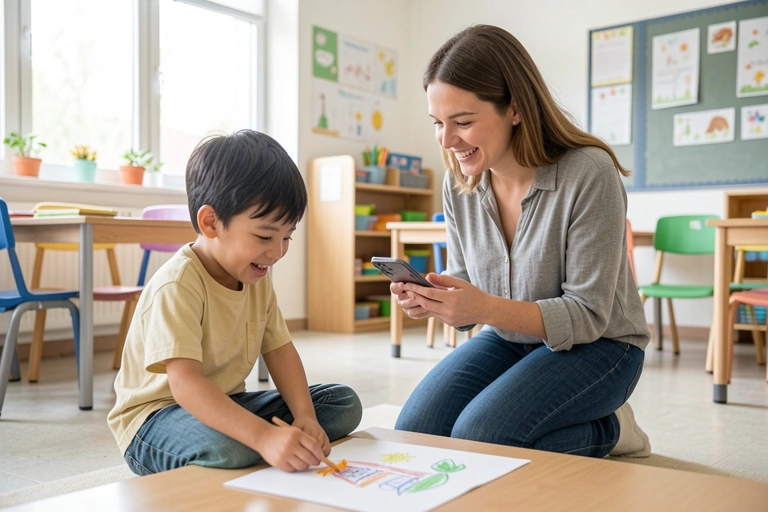
To truly understand a child's learning journey, we must look beyond test scores and see the small, everyday moments of curiosity, struggle, and breakthrough.
When observation becomes a tool for understanding rather than just judgment, it empowers teachers. It gives them a deeper, more holistic view of their students, allowing them to personalise learning and provide targeted support where it’s needed most. This shift in mindset is the bedrock upon which a thriving observation culture is built.
Making it Easy: The Role of Technology
A positive mindset is essential, but it can be quickly crushed by clunky, inefficient systems. The days of juggling clipboards, sticky notes, and complex spreadsheets are over. Modern school admin software and communication platforms are designed to make capturing learning seamless and intuitive. The right technology doesn't just digitise old processes; it transforms them. Think about the power of capturing a short video of a group of Early Years children building a complex structure together, or a photo of a Key Stage 1 student’s proudest piece of writing. These are not just records; they are windows into the learning experience. With a platform like Parent Portal, teachers can capture these moments on any device, tag the relevant children, and even link the observation directly to curriculum objectives like Development Matters or the National Curriculum. Everything is stored in one central place, building a rich, longitudinal profile for each child over time. This not only saves countless hours but also makes the process of observation more meaningful and impactful, directly helping to reduce teacher workload.
1. Define Your 'Why': Hold a staff meeting to discuss the purpose of observation. Focus on understanding students and celebrating progress, not just tracking data.
2. Start Small: Ask teachers to capture just one voice or photo observation per child over a two-week period. Keep it low-pressure to build confidence and habit.
3. Share and Celebrate: Dedicate a few minutes in team meetings to share positive observations and discuss the insights gained. This reinforces the value and builds momentum.
From Observation to Insight: Using the Data Meaningfully
Capturing observations is only half the story. The real magic happens when you use that accumulated knowledge to generate actionable insights. A folder full of photos and notes is a lovely keepsake, but its true educational value is unlocked through analysis. This is where AI-powered EdTech is becoming a teacher's greatest ally. Imagine a system that can analyse hundreds of micro-observations for a single child—transcribed voice notes, teacher comments, photos of work—and automatically identify patterns. Parent Portal’s AI analysis tools do exactly that. They can highlight a child’s emerging strengths, pinpoint areas where they might need more support, and even suggest next steps and teaching strategies. This is a revolutionary step in reducing teacher workload. Instead of spending hours poring over records to prepare for planning or parents' evenings, teachers receive automated, evidence-based summaries. Furthermore, this wealth of authentic evidence can be used by AI assistants to help draft personalised, insightful end-of-term report comments, saving teachers days of work while producing higher-quality reports.
Closing the Loop: Involving Parents in the Journey
The final, crucial element of a school-wide observation culture is partnership with parents. For too long, the classroom has been a black box for families. They see the homework and the final report card, but they miss the process, the small victories, and the daily moments of joy and learning. Sharing observations changes everything. When a parent receives a push notification with a photo of their child mastering a new skill or a short video of them collaborating happily on a project, it provides a powerful, positive connection to the school. It reinforces learning at home and builds immense trust and goodwill. Of course, this needs to be managed carefully. An approval workflow, where teachers review observations before they are shared, is essential to ensure quality and appropriateness. This feature, built into effective school communication tools, gives schools complete control. These shared moments become fantastic conversation starters for parents' evenings, shifting the dialogue from a dry recitation of data to a collaborative discussion about the child, grounded in shared evidence.
- Year 2 Teacher
This level of parent engagement is invaluable. It helps parents feel like true partners in their child's education, creating a supportive community around every learner and strengthening the home-school bond in a way that newsletters and emails simply cannot.
The Future of Formative Assessment
Building a school-wide observation culture is not just another initiative to add to the list. It is a fundamental transformation of teaching and learning. By combining a mindset shift with powerful, intuitive technology, schools can create a system where understanding the whole child is at the heart of everything they do. The benefits are clear: a significantly reduced teacher workload, more personalised and responsive teaching, deeper student insights, and unprecedented levels of parent engagement. As we look towards edtech in 2025 and beyond, these integrated systems for observation, analysis, and communication will become the standard. Schools that embrace this culture today are not just improving their assessment practices; they are building a more connected, insightful, and supportive educational environment for the future.
Comments