
PE Observations: Recording Physical Development Progress
The Challenge of Capturing Movement
Physical Education is one of the most dynamic and energetic subjects in the primary curriculum. It’s where children learn to master their bodies, develop resilience, and understand the power of teamwork. Yet, for all its importance, it remains one of the most challenging subjects to assess meaningfully. How do you effectively document a child’s improving coordination, their growing confidence in a team game, or the precise moment they master a difficult gymnastic sequence? Traditional paper-based checklists and infrequent formal assessments often fall short. They fail to capture the nuances of progress and can add significantly to teacher workload, often feeling like a box-ticking exercise rather than a useful tool for development. The very nature of PE—fast-paced, active, and continuous—demands a more agile and descriptive approach to observation. We need tools that allow us to capture progress as it happens, without disrupting the flow of the lesson. This is where modern school communication tools can revolutionise our practice.
A Digital Leap for PE Assessment
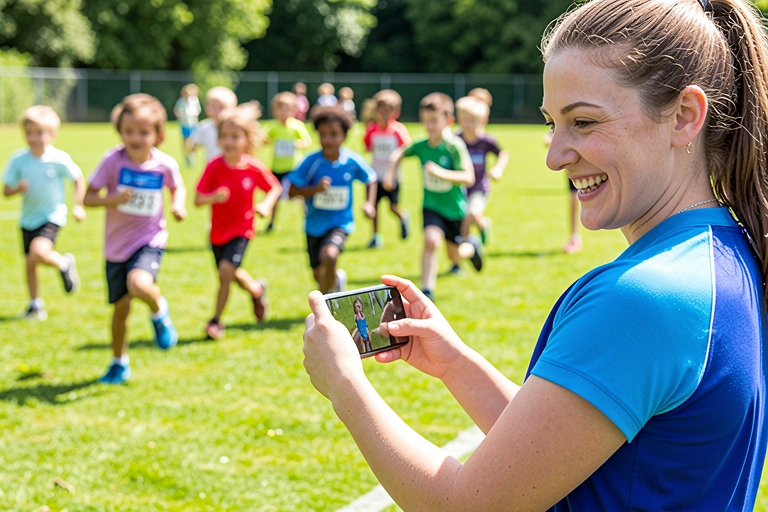
Imagine being able to capture rich, evidence-based observations on the fly, directly from the school field or sports hall. Parent Portal transforms this idea into a practical reality. Its suite of observation tools is designed to help teachers document learning moments quickly and efficiently, creating a comprehensive picture of each child’s physical development journey. The cornerstone of this approach is the use of multimedia. A fleeting moment of excellent sportsmanship or a breakthrough in skill can be captured with a quick Photo or Video Observation. A short video of a child successfully executing a continuous throwing and catching sequence provides far richer evidence than a simple tick on a spreadsheet. It’s visual, it’s specific, and it’s a powerful record of achievement.
Even more game-changing are the Voice-Recorded Observations. This feature is a powerful tool to reduce teacher workload while increasing the quality of assessment. Instead of trying to scribble notes mid-lesson, a PE teacher can take 30 seconds to record a voice note on their device. For example: “During the invasion game today, Tom demonstrated excellent spatial awareness. He consistently moved into open spaces to receive the ball and his passing accuracy has improved significantly since last term.” This micro-observation is automatically transcribed, tagged to the student's profile, and stored as a piece of evidence. It’s a low-effort, high-impact method for building a detailed, longitudinal record of progress for every single child.
By capturing progress visually and through in-the-moment audio notes, we move assessment from a summative chore to a formative, ongoing conversation about a child's development. It makes progress visible and tangible.
These individual observations, whether photo, video, or voice, accumulate over time to create a rich learning story. This isn’t just about making assessment easier; it’s about making it better. It provides a more authentic and holistic view of a child's abilities, celebrating small wins and tracking gradual improvements that might otherwise be missed. This shift in methodology empowers teachers to spend less time on paperwork and more time doing what they do best: teaching.
Linking Observations to Meaningful Insight
Gathering observations is only the first step. The true power lies in connecting this evidence to curriculum objectives and using it to inform future planning. Parent Portal is purpose-built to bridge this gap. Teachers can seamlessly link their PE observations to specific goals within the Early Years Foundation Stage (EYFS) framework or the National Curriculum for PE at Key Stage 1 and 2. When a teacher uploads a video of a Year 1 class performing a dance sequence, they can tag it with objectives related to coordination, rhythm, and expressive movement. This directly connects the classroom activity to required learning outcomes, building a robust evidence base for each child’s progress against age-related expectations.
This process is supercharged by the platform's AI-Powered Progress Analysis. Over time, the system analyses all the accumulated observations for a student to identify patterns, strengths, and areas needing further development. The AI might synthesise multiple voice notes and video clips to generate a summary: “Sophie consistently excels in activities requiring fine motor control and balance but shows less confidence in team-based competitive games. Consider providing more opportunities for collaborative, non-competitive group tasks.” This level of insight, generated automatically from teacher-led observations, is invaluable for differentiation and personalised learning. It transforms raw data into actionable intelligence, helping teachers to plan their next steps and provide targeted support where it’s needed most.
- Sarah, Parent of a Year 2 Pupil
This intelligent combination of teacher expertise and AI analysis ensures that assessment is not only efficient but profoundly effective. It helps build a 360-degree view of the student, informing everything from planning and differentiation to the comments written in end-of-term reports, which can also be assisted by AI using this very evidence.
Engaging Parents in Their Child’s Physical Journey
For many parents, PE can be a black box. They might hear about it briefly at parents’ evening, but they rarely get to see the progress their child is making. This is a missed opportunity for reinforcement and celebration. Strong parent engagement is a proven driver of student success, and this applies just as much to physical development as it does to literacy and numeracy. By sharing PE observations through Parent Portal, schools can bring parents directly into the learning journey. When a parent receives a push notification and opens the app to see a photo of their child beaming with pride after scoring a goal, or a voice note from the teacher praising their child’s teamwork, it creates a powerful connection.
These shared moments do more than just inform; they empower. They give parents a window into their child’s school life, fostering positive conversations at home. A child who feels their efforts in PE are seen and celebrated by both their teachers and parents is more likely to be motivated and engaged. The platform makes these achievements a shared success story. Furthermore, features like Virtual Parents' Evenings allow teachers to share their screen and review these video and photo observations with parents, providing a clear and specific basis for discussing progress and setting future targets.
Digital Rewards: Award house points for sportsmanship and effort in real-time.
School Calendar: Keep everyone informed about sports days, fixtures, and club dates.
Announcements: Send targeted messages to sports teams or year groups.
Clubs Booking: Allow parents to easily book and pay for after-school sports clubs.
Beyond individual lessons, these communication tools help build a vibrant school-wide culture around physical activity and wellbeing. Using the announcements feature to celebrate a team’s success or the calendar to promote an upcoming sports day keeps the whole community involved and excited about PE and school sport.
Conclusion: A Fitter Future for School Assessment
Effectively observing and tracking progress in PE requires tools that are as dynamic and flexible as the subject itself. Moving beyond static checklists towards a model of rich, multimedia evidence-gathering is key to reducing teacher workload and gaining deeper insight into student development. Platforms like Parent Portal provide the perfect ecosystem for this modern approach. By integrating quick voice notes, video capture, curriculum links, and AI analysis into one simple system, we empower teachers to build a comprehensive story of each child’s physical journey.
This method not only lightens the administrative burden but also dramatically enhances parent engagement, turning assessment into a collaborative and celebratory process. As we look towards the future of edtech in 2025 and beyond, integrated platforms that provide a holistic view of every child—academically, socially, and physically—will become the standard. By embracing these tools, schools can ensure that progress in every subject, from the classroom to the sports field, is captured, understood, and celebrated.
Comments