
How Teachers Remember to Record: Making Observations Habitual
From Chore to Celebration: The Power of Consistent Observation
The classroom is a whirlwind of activity. From the quiet concentration of a child mastering a new puzzle to the collaborative buzz of a group project, countless moments of learning, discovery, and growth happen every single day. As educators, we know these moments are golden nuggets of information. They tell us what’s clicking, where a student might be struggling, and how we can best support their next steps. The challenge? Capturing them. The reality of teaching often means that by the time you have a spare second to write something down, the moment has passed, lost in the shuffle of managing 30 individual needs. This is why student observation can sometimes feel less like an insightful professional practice and more like another overwhelming task on an endless to-do list.
But what if we reframed it? What if observation wasn’t about meticulously documenting every single event, but about creating a consistent, low-effort habit of capturing snapshots? When done right, regular observation becomes the foundation for everything else. It builds a rich, longitudinal picture of each child’s development, far more nuanced than any standardised test score. It provides concrete evidence to inform your planning and differentiation. Most importantly, it becomes a powerful bridge connecting school and home, transforming parent engagement. By making observation a habit, you’re not adding to your workload; you’re investing in a system that will drastically reduce your workload when it comes to parents' evenings and report writing.
Building the Habit: Practical Tips for Busy Teachers
The key to making any new practice stick is to make it simple, achievable, and integrated into your existing flow. Trying to find an extra hour in your week to "do observations" is a recipe for failure. Instead, the goal is to weave tiny, one-minute actions into the day you’re already living. It’s about working smarter, not harder.
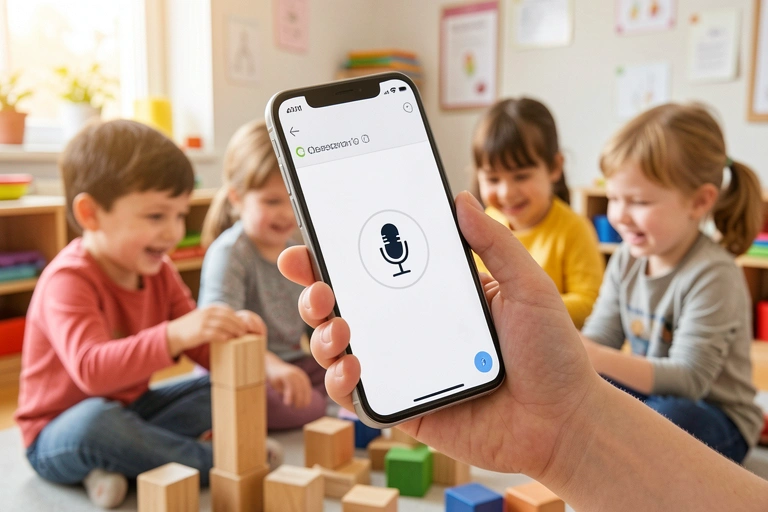
One of the most effective strategies is to focus on micro-observations. Forget writing long-winded paragraphs. Think in terms of headlines or quick summaries. This is where technology becomes a game-changer. Imagine a child has just had a breakthrough in their reading. Instead of trying to remember it until break time, you pull out your phone, open an app like Parent Portal, and record a 30-second voice note: "Jessica just successfully sounded out a three-syllable word from the board without any prompting. She pointed to each syllable as she said it. She looked so proud of herself afterwards." That’s it. The moment is captured in your own words, easily and instantly. This simple action, repeated just a few times a day, quickly builds an invaluable bank of evidence.
Another powerful technique is to link observations to your existing routines. Don't try to find new time; use the time you already have. For example, make it a habit to capture one observation while children are settling into their morning activity, another during group tidy-up time, or one from the playground. By anchoring the task to a pre-existing part of your day, you remove the mental effort of remembering to do it. The routine becomes the trigger. Soon, it feels as natural as taking the register.
The secret of getting ahead is getting started. The secret of getting started is breaking your complex overwhelming tasks into small manageable tasks, and starting on the first one.
Finally, stop trying to capture everything for everyone, every day. Focus on a small group of children each day. With a class of 30, you could focus on just six children a day, ensuring you have at least one quality observation for every child by the end of the week. This targeted approach is far more manageable and ensures no one slips through the cracks. It turns an impossible task into a series of small, daily wins.
Your Pocket-Sized Assistant: How EdTech Makes Observation Effortless
For too long, the tools for observation have been clunky clipboards and easy-to-lose sticky notes. Modern edtech is changing the game, offering solutions that fit seamlessly into the dynamic classroom environment. The best school communication tools aren’t just for sending messages; they are sophisticated platforms designed to reduce teacher workload. Parent Portal’s observation features are a prime example of technology working for the teacher.
The voice-recorded observation feature is revolutionary. It leverages the one tool teachers always have with them—their voice. By allowing for quick 30-60 second voice notes that are automatically transcribed, the most time-consuming part of the process—typing—is eliminated entirely. You speak, the app types. This simple innovation transforms observation from a sit-down admin task into an on-the-go action. Furthermore, the ability to instantly tag observations to curriculum objectives, like Development Matters or the National Curriculum, adds a layer of purpose with a single tap. This means that when it's time for progress tracking or report writing, the evidence is already organised and linked for you.
- Voice-to-Text: Record 30-second voice notes that are automatically transcribed.
- Instant Tagging: Link observations to EYFS/KS objectives and individual students in seconds.
- AI-Powered Insights: Let our AI analyse patterns and suggest next steps, saving you hours of analysis.
- Effortless Sharing: Securely share moments of progress with parents to build a strong home-school connection.
This integration of smart technology is what marks the transition to edtech 2025. It’s no longer about simply digitising analogue processes; it's about using AI and intelligent design to create genuine efficiencies. A good school admin software understands that a teacher's time is their most precious resource. By making the process of data capture and organisation effortless, it frees up teachers to do what they do best: teach.
More Than Just Data: The Impact on Teacher Workload and Parent Engagement
The ripple effect of a consistent observation habit, supported by the right tools, is immense. It moves beyond simple data collection and positively impacts every aspect of a teacher's role. Think about parents' evenings. Instead of relying on memory and hurried notes, you have a rich, media-filled timeline for each child at your fingertips. You can show parents the photo of their child leading a group, play the voice note of their reading breakthrough, and share AI-generated progress summaries. The conversation becomes deeper, more collaborative, and evidence-based.
Then there’s the herculean task of report writing. This is where the long-term benefit of those one-minute observations truly pays off. With a system like Parent Portal, the AI Report Writing Assistant can analyse the entire term's worth of accumulated observations—the voice notes, photos, and curriculum links—to generate unique, personalised, and evidence-based report comments for each child. What once took weeks of painstaking work can now be drafted in a fraction of the time, leaving you to simply review, refine, and approve. This is a clear, tangible way to reduce teacher workload and combat burnout.
This approach also transforms parent engagement from something that’s often reactive and problem-focused into a continuous, positive dialogue. When parents receive regular, small updates celebrating their child’s efforts and achievements, it builds immense trust and goodwill. They feel included in their child's school life in a meaningful way, turning them into active partners in the learning process. This proactive communication fosters a supportive community around the child, which is the ultimate goal.
Making Observation Second Nature
Remembering to record observations in a busy classroom isn’t a matter of willpower or memory. It’s a matter of systems. By breaking the task down into manageable micro-actions, linking it to existing routines, and leveraging smart technology that does the heavy lifting for you, observation can become a natural, effortless part of your professional practice. It’s a habit that pays dividends, saving you time, reducing stress, and strengthening the vital connections between you, your students, and their families. Embracing tools like Parent Portal isn't about adding another piece of tech to your day; it's about adopting a partner that helps you capture the magic of learning, one moment at a time.
Comments