
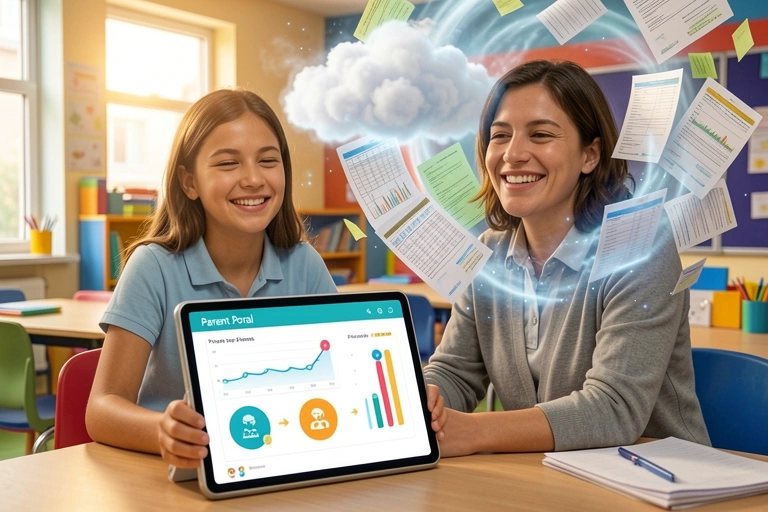
How to Stop Teachers Drowning in Data Entry
The Endless Tide of Administrative Tasks
In the modern classroom, teachers are often said to be data-rich but time-poor. The push for evidence-based practice and detailed progress tracking has created a mountain of administrative work. Every observation, assessment score, behaviour point, and attendance mark needs to be logged. While the intention is noble—to build a comprehensive picture of each child’s journey—the reality for many educators is a daily battle with spreadsheets, disparate software, and endless forms. This constant data entry doesn't just eat into planning time; it chips away at the very passion that brought them into the profession. The goal must be to reduce teacher workload, not just digitise it.
The cost of this administrative burden is immense. It contributes to burnout, reduces the time available for creative lesson planning, and prevents teachers from being fully present with their students. When a teacher's evening is spent typing up observation notes from a crumpled notepad, they are not recharging or preparing to inspire young minds the next day. They are simply transcribing. This isn't sustainable, and it's not effective. We need a fundamental shift in how we approach data in schools, moving from manual collection to intelligent automation.
From Tedious Transcription to Meaningful Moments
Imagine capturing a learning observation not by typing, but by speaking. A teacher sees a child in the Early Years successfully negotiate sharing a toy, demonstrating key social skills. Instead of breaking away to find a device and type it all out, they simply record a 30-second voice note on their phone or tablet. That's it. The moment is captured, in their own words, with all the nuance and detail intact. This is the new reality of data collection. Tools like Parent Portal are transforming this process by using technology to serve the teacher, not the other way around.
With voice-recorded observations, the system automatically transcribes the audio, tags the relevant child, and makes it available for review. The teacher can then link it to curriculum objectives, such as EYFS Development Matters, with a single tap. What used to be a five-minute data entry task becomes a 30-second capture. When this is repeated dozens of times a day, the time savings are monumental. This approach doesn't just save time; it produces richer data. The teacher's authentic voice and immediate reflections are preserved, creating a far more valuable longitudinal record than a hastily typed note ever could. This is where effective school communication tools begin to merge with smart data management.
- Sarah Kent, Headteacher
This efficiency extends beyond observations. Photo and video moments can be shared just as quickly, building a vibrant, visual story of a child's progress. Instead of being locked away in a spreadsheet, this evidence becomes a powerful tool for planning, assessment, and, crucially, for strengthening parent engagement by sharing these moments directly with families.
Automating the Admin: A Unified Solution
Data entry isn't confined to student progress. Daily school life is governed by a relentless cycle of administrative tasks: taking the register, logging absences, managing homework, and chasing payments. A truly effective piece of school admin software must tackle all of these areas within a single, integrated system. Using separate platforms for communication, payments, and attendance only moves the problem around, forcing staff to log in and out of multiple systems and manually cross-reference information.
A unified platform changes the game. When a parent reports their child's absence through an app, the digital register is automatically updated, saving the school office a phone call and the teacher a manual entry. When a teacher sets a homework task, they can track submissions, provide feedback, and share the status with parents from the same place they send messages. This level of integration eliminates the double-handling of data. Information is entered once and then flows where it needs to go, whether that's to the attendance officer, a teacher's mark book, or a notification on a parent's phone.
The goal of educational technology should be to make the human element of teaching more visible, not less.
This consolidation is key to genuinely reducing workload. It ensures consistency, reduces the chance of error, and provides school leaders with a single source of truth for school-wide analytics. Instead of pulling reports from three different systems to analyse attendance patterns, it's all there on one dashboard. This is the efficiency that schools have been crying out for.
The Rise of the AI Teaching Assistant
Looking towards the future of edtech 2025 and beyond, the next frontier in tackling data overload is Artificial Intelligence. AI is no longer a futuristic concept; it's a practical tool that can act as a powerful teaching assistant, automating some of the most time-consuming professional tasks. This isn't about replacing teachers, but about augmenting their skills and freeing them to focus on high-impact activities.
The most significant application is in data analysis and reporting. Imagine a system that has collected hundreds of voice notes, photos, and formal observations for every child throughout the year. Manually synthesising this vast amount of information to write personalised, evidence-based report cards is one of the most dreaded and time-intensive jobs a teacher faces. Parent Portal’s AI Report Writing Assistant does the heavy lifting. It analyses all the accumulated data for a child and generates unique, insightful, and constructive report comments based on real evidence. The teacher then reviews, edits, and personalises these comments, transforming a weekend-long task into a focused, hour-long editing session.
This AI support extends across the teaching workflow. It can generate differentiated homework tasks, create reading comprehension exercises, explain complex concepts in simple terms, and even draft constructive feedback on student work. By taking on the formulaic and repetitive aspects of these tasks, AI gives teachers the ultimate gift: more time to spend on direct instruction, intervention, and building relationships with their students.
A Future Free from the Data Grind
The problem of teachers drowning in data entry is solvable. The solution lies in choosing intelligent, integrated, and forward-thinking tools that are designed with teacher wellbeing at their core. By shifting from manual transcription to voice-powered observation, unifying disparate systems into a single school admin software platform, and embracing the power of AI, we can fundamentally change the nature of a teacher's work. We can stop the drain on their time and energy and redirect it back to the art and science of teaching. The technology is here. It’s time to use it to liberate our teachers from the tyranny of the spreadsheet and empower them to do what they do best: inspire the next generation.
Comments