
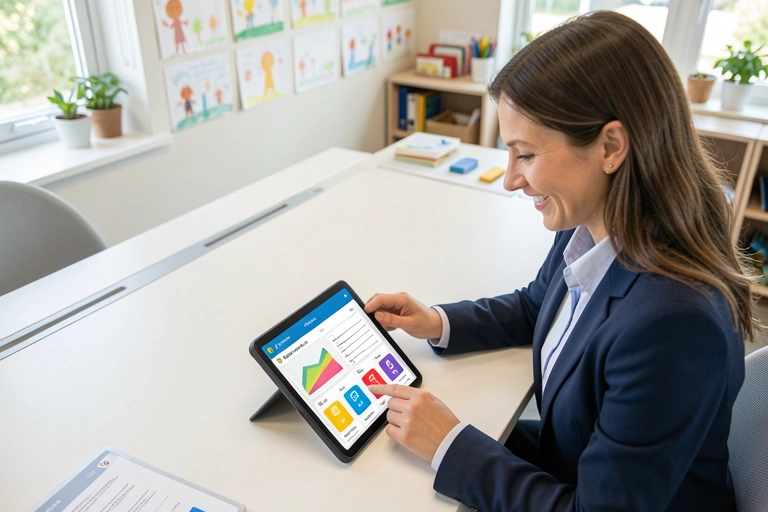
The Future of School Administration: Trends for 2025
The Countdown to Edtech 2025: Are You Ready?
The world of education is in a constant state of flux, but the pace of change has never been faster. School leaders, teachers, and administrative staff are navigating unprecedented challenges, from managing squeezed budgets to addressing ever-increasing workloads. As we look ahead to 2025, it’s clear that the traditional, paper-heavy methods of school administration are no longer sustainable. The future lies in harnessing the power of smart, integrated technology to create more efficient, communicative, and supportive school ecosystems. But what does this future actually look like? It’s not about futuristic robots teaching classes; it’s about sophisticated, user-friendly school admin software designed to empower humans, not replace them. It’s about creating time, fostering connection, and using data to make a real difference. Let's explore the defining trends that will shape school administration in 2025 and beyond.
Trend 1: The End of Fragmentation with All-in-One Platforms
For years, schools have juggled a dizzying array of separate systems: one for sending messages, another for taking payments, a third for booking parents' evenings, and a fourth for tracking student observations. This fragmented approach is inefficient, expensive, and creates data silos that prevent a holistic view of the school or its students. The most significant trend for 2025 is the widespread adoption of unified, all-in-one platforms. Forward-thinking schools are demanding a single source of truth—a central hub where communication, learning, administration, and finance seamlessly intertwine. Imagine a world where a teacher records a voice observation of a child's reading progress, which is instantly available to parents, automatically contributes to progress tracking data, and can be pulled into an AI-generated report comment. That's the power of integration. Platforms like Parent Portal consolidate everything from instant messaging and school calendars to attendance registers and safeguarding logs into one powerful system. This not only simplifies life for staff but also provides parents with a single, reliable app for everything related to their child's school life, massively boosting parent engagement.
Trend 2: Generative AI as the Ultimate Colleague
The term 'AI' can be intimidating, but in the context of edtech 2025, think of it as the ultimate time-saving assistant. The goal is to reduce teacher workload by automating the repetitive, time-consuming tasks that distract from teaching. We’re moving beyond simple automation into the realm of generative AI, which can create new, original content based on your needs. This is a game-changer for educators. Instead of spending hours planning, teachers can use AI tools to generate a complete lesson plan, create differentiated homework activities, or even generate a slideshow for a new topic in minutes. Parent Portal’s AI Report Writing Assistant, for example, analyses a student's entire history of observations—including voice notes and photos—to draft unique, evidence-based report comments. This frees up teachers to focus on the human elements of their job: building relationships, inspiring students, and providing targeted support.
Unlike older AI that just analyses data, Generative AI *creates* new things.
For teachers, this means tools that can:
- Write unique lesson plans and activity ideas from a simple prompt.
- Generate personalised student report comments based on observation data.
- Create age-appropriate reading comprehension texts and questions.
- Explain complex concepts in simple, child-friendly terms.
The impact of this technology on teacher wellbeing cannot be overstated. By clawing back hours every week, schools can create a more sustainable and rewarding professional environment, helping to attract and retain the best teaching talent.
Trend 3: Hyper-Personalised Parent Communication
The weekly newsletter and the occasional parents' evening are no longer enough. Today’s parents expect real-time, meaningful insights into their child's learning journey. The future of school communication tools is hyper-personalisation. Instead of generic, school-wide broadcasts, the focus is on sharing individual moments of progress and achievement. The ability for a teacher to capture a 30-second voice note of a child mastering a new concept and share it directly with their parent is incredibly powerful. This “show, don’t just tell” approach builds a strong home-school connection and gives parents a genuine window into the classroom. Tools that facilitate this, like photo and video observations tagged to curriculum goals, create a rich, longitudinal picture of a child’s development. This level of detail transforms parent consultations from a brief summary into a collaborative, evidence-based discussion about the child’s strengths and next steps. In 2025, parent engagement will be defined by its quality and specificity, not just its frequency.
The goal is to transform data from a compliance burden into a compass that guides our every decision, ensuring that no child is left behind and every educator is empowered to make a difference.
This shift towards data-driven culture is not about creating more work; it's about making work more impactful. When school leaders can instantly see attendance patterns, identify which students are falling behind, or track the success of a new behaviour policy, they can intervene early and effectively. Modern school admin software presents this information through intuitive dashboards and automated reports, making complex data accessible to everyone, not just data specialists. This democratisation of data empowers middle leaders and class teachers to make informed decisions that directly benefit the children in their care.
Trend 4: Seamless and Cashless School Operations
The school office is the engine room of any primary school, but it’s often bogged down by manual, administrative tasks. Chasing late payments, processing trip permission slips, and managing after-school club bookings are huge drains on time and resources. The trend for 2025 is the complete digitalisation and automation of these core operations. Integrated payment systems, like those offered through Parent Portal with Stripe, allow parents to pay for trips, clubs, and dinner money through a simple app. The system automatically tracks who has paid and can send automated reminders, saving admin staff hours of tedious financial reconciliation. Similarly, allowing parents to report absences or book club places directly through an app streamlines processes and reduces inbound phone calls. Freeing up the administrative team from these routine tasks allows them to focus on higher-value activities, such as parent support, community engagement, and strategic school improvement.
- C. Davies, Headteacher
As we embrace these trends, the role of school administration will evolve from a reactive, paper-pushing function to a proactive, strategic powerhouse. By choosing the right school admin software, schools can build a foundation for a future that is more efficient, more connected, and ultimately, more focused on what truly matters: the progress and wellbeing of every child.
Comments