
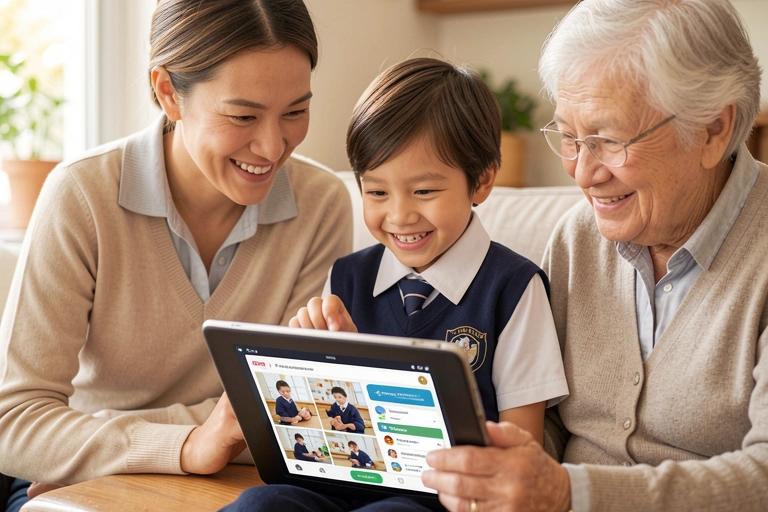
The Role of Technology in Multi-Generational Family Engagement
The Evolving Definition of "Parental Involvement"
For decades, the concept of parental involvement in education has been built around a traditional model: mum or dad checking the school bag for letters, attending parents' evenings, and helping with homework at the kitchen table. But in the 21st century, this picture is often incomplete. The reality of the modern family is far more diverse, dynamic, and wonderfully complex. We see dual-income households juggling demanding schedules, single parents heroically managing it all, and blended families navigating shared responsibilities. Crucially, we see grandparents and other relatives playing a more active and vital role in childcare than ever before.
This shift raises a critical question for schools: is our communication strategy keeping pace with the changing shape of our families? If we are still relying on a single point of contact or paper newsletters, we risk excluding key figures in a child's support network. Technology, when thoughtfully applied, offers a powerful solution. It's not about replacing personal connection but expanding it, creating a digital bridge that brings a child's entire support system into the school community. Platforms like Parent Portal are at the forefront of this evolution, reimagining family engagement as a multi-generational, inclusive, and collaborative effort.
Understanding the Modern Family Unit
Today’s primary school classrooms are a reflection of society’s rich diversity. The notion of a nuclear family as the sole model is outdated. Many children benefit from the care of grandparents who may handle school runs, after-school care, and homework help. In other cases, aunts, uncles, or close family friends are integral caregivers. For separated or divorced parents, ensuring consistent and equal access to school information is essential for co-parenting effectively.
Traditional communication methods inadvertently create barriers. A letter sent home with a child might only reach one household. A phone call to a single designated parent can lead to information being lost in translation or forgotten during a hectic handover. This creates an unnecessary burden on one parent to act as the sole information conduit and can leave other caregivers feeling disconnected and uninformed. To truly support every child, we must engage the entire team of adults invested in their success. This requires a communication infrastructure built for a network, not a straight line.
True family engagement means creating a circle of support, not a single point of failure.
The solution lies in a centralised system that provides simultaneous, equitable access for every approved carer. By moving away from siloed channels, schools can foster a more resilient and informed support system around each student, ensuring everyone is on the same page, from term dates to moments of classroom celebration.
How Technology Creates an Inclusive Communication Web
This is where purpose-built school communication tools become transformative. The core principle is simple but profound: create a single, secure profile for each child that multiple authorised adults can link to. With a platform like Parent Portal, schools can implement a Family Group Management system. This allows a mother, father, step-parent, and grandparent to each have their own secure login, all connected to the same child. This immediately dismantles the information bottleneck.
The impact is immediate. When a teacher sends a message or a school posts an announcement, everyone receives a real-time push notification. There is no delay and no dependency on one person relaying the message. A grandparent overseeing homework for the evening sees the same assignment details as the parent. A non-resident parent can book a parents' evening slot without having to coordinate through their ex-partner. This level of seamless coordination reduces friction for families and significantly cuts down on administrative follow-up for school staff who no longer have to field calls from parents who "didn't get the message". It fosters independence and shared responsibility, respecting the unique structure of every family.
Parent Portal allows schools to link multiple carer accounts to a single student profile. With separate, secure logins, parents, step-parents, and grandparents can all receive school announcements, view observations, message teachers, and engage with their child's learning journey simultaneously and equitably. This ensures no one is left out of the loop.
This networked approach goes beyond simple logistics. It builds a foundation of trust and transparency, showing families that the school respects and values the role every carer plays.
Beyond Logistics: Sharing Moments That Matter
Effective multi-generational engagement is about more than just broadcasting dates and deadlines; it's about sharing the story of a child's education. This is where technology offers something truly magical, especially for relatives who may not live nearby. Features like Photo and Video Observations turn a school communication app into a window into the classroom.
Imagine a grandparent living hundreds of miles away receiving a notification. They open the app to see a short video of their grandchild confidently reading a sentence aloud for the first time, or a photo of them beaming with pride over a finished art project. Or perhaps it's a Voice-Recorded Observation, a 30-second audio clip from the teacher describing a moment of kindness or a breakthrough in understanding a tricky maths concept. These are not just updates; they are cherished moments. They provide a richness and immediacy that a summary in a year-end report could never capture. This shared experience strengthens emotional bonds and provides meaningful conversation starters at home. The question “How was school?” is transformed when a family member can say, “I saw the photo of your volcano experiment today! It looked amazing, tell me more about it.”
This flow of information enriches family life and gives every caregiver a genuine sense of participation in the child's daily school life, regardless of their physical location. It’s a powerful tool for building a child’s confidence, as they know their whole family is part of their cheering squad.
Making EdTech Accessible for Everyone
A common concern when implementing new technology is its accessibility, particularly for users who may not be digital natives. Will grandparents be comfortable navigating a new app? This is a valid question, and the answer lies in prioritising user-friendly design. Modern edtech platforms are built to be intuitive, with clear navigation and simple interfaces accessible via both mobile apps and desktop web browsers. This allows users to engage on the device they are most comfortable with.
Furthermore, inclusivity means catering to diverse linguistic backgrounds. In many multi-generational households, older relatives may have English as an additional language. Features like Multi-Language Support and automatic message translation are game-changers. A grandparent can read a school announcement or a teacher's message in their native language, removing a significant barrier to engagement and ensuring they feel fully included in the school community. These thoughtful design choices demonstrate a commitment to making technology work for everyone, fostering a sense of belonging across different generations and cultures.
Building a True Partnership with Every Family
Ultimately, the goal of a school communication strategy should be to build a genuine partnership with a child's entire support network. By embracing technology that facilitates multi-generational engagement, schools are not just improving efficiency; they are actively strengthening the web of support that helps children thrive. When the whole family is informed, engaged, and empowered, the benefits ripple outwards. Students feel more supported and motivated, families feel more connected and valued, and teachers can focus more on teaching, confident that their messages are reaching everyone.
The future of family engagement is inclusive, networked, and collaborative. It acknowledges that it takes a village to raise a child and provides that village with the tools it needs to communicate effectively. By choosing technology that connects generations, schools can cultivate a vibrant community where every parent, grandparent, and carer is a valued partner in the educational journey.
Comments