
Micro Observations vs Traditional Assessment: A Comparison
The Enduring Challenge of Assessment
For decades, the rhythm of the school year has been dictated by assessment cycles. Whether it's end-of-unit tests, formal observations, or statutory assessments, the process of measuring student progress has often been a high-stakes, time-intensive affair. Traditional assessment methods, while valuable for providing standardised data, often give us only a snapshot—a single moment in time under formal, sometimes stressful, conditions. They can tell us what a child knows on a particular day, but do they tell the whole story of their learning journey? For teachers and school leaders striving for a more holistic understanding of student development, the limitations are clear. These methods can create significant workload pressures, from planning and administering tests to marking and data entry, taking valuable time away from teaching and interacting with pupils.
A New Paradigm: The Rise of Micro Observations
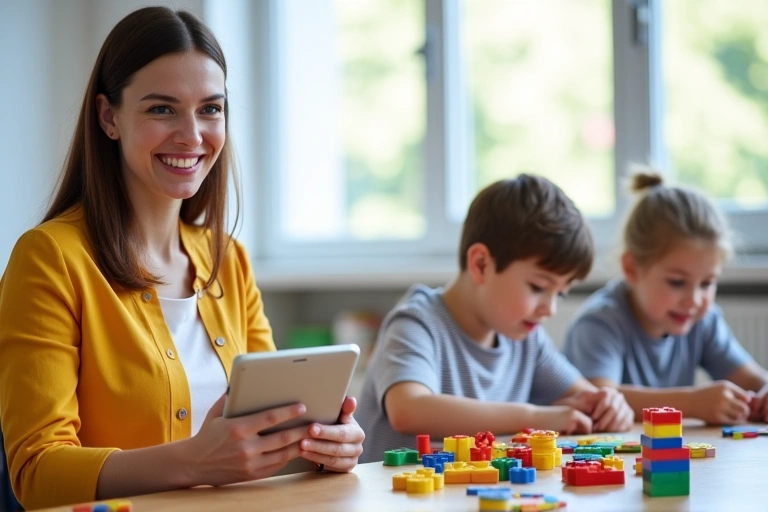
Imagine capturing learning as it happens, not in a staged test, but in the middle of authentic, child-led play or a collaborative classroom activity. This is the essence of micro-observations. Instead of lengthy, formal write-ups, micro-observations are quick, frequent, and capture genuine moments of discovery, challenge, and progress. They can be a 30-second voice note describing how a child solved a problem, a quick photo of a group building a tower, or a short video of a student explaining their thinking. This approach shifts the focus from testing learning to witnessing it. By gathering these small pieces of evidence consistently over time, a far richer, more nuanced, and longitudinal picture of each child’s development begins to emerge. It’s a dynamic, continuous story of growth rather than a static photograph.
The goal is to capture the process, not just the product. True learning is messy, iterative, and happens in the small moments between the big tests.
Authenticity and Student Wellbeing
One of the most significant differences between the two approaches lies in authenticity. Traditional tests often create an artificial environment that can cause anxiety for many children, potentially masking their true abilities. In contrast, micro-observations happen in the natural flow of the school day, capturing children when they are most comfortable, engaged, and themselves. This low-pressure approach not only provides more reliable evidence of their skills but also promotes positive student wellbeing. When assessment is woven seamlessly into daily activities, children see it as a natural part of their learning journey, not a stressful event to be feared. This fosters a more positive attitude towards learning and school in general, which is a foundational element of success.
"Switching our focus to supplement formal assessments with micro-observations has been transformative. Our teachers feel closer to their pupils’ individual learning journeys, and the evidence we gather is so much more authentic. Parent-teacher consultations are now filled with rich examples of progress, not just data points on a spreadsheet. It has completely changed the conversation and significantly improved our parent engagement." – Sarah Jones, Primary Headteacher
Reducing Teacher Workload with Smarter Tools
The phrase "new initiative" can often sound like "more work" to busy teachers. However, when supported by the right technology, the shift to micro-observations can dramatically reduce teacher workload. Traditional assessment involves hours of marking papers and laborious data input into tracking systems. Modern school communication platforms, like Parent Portal, are revolutionising this process. A teacher can use a simple app to record a 60-second voice note about a student's reading progress. Parent Portal then automatically transcribes the audio, tags the child, and allows the teacher to link it to relevant EYFS or National Curriculum objectives with a few taps. What would have taken 10-15 minutes to write up is now captured, transcribed, and logged in under a minute. This isn't about adding another task; it's about replacing an inefficient, time-consuming one with a faster, more effective alternative. These accumulated observations become a powerful, searchable database of learning evidence, ready for analysis.
Data Richness and AI-Powered Insights
While a test score provides a single data point, a collection of micro-observations provides a rich, qualitative dataset. Each photo, video, and voice note adds another layer of context. Over a term, this data can reveal patterns that a simple test score never could. Does a child excel in collaborative tasks? Do they explain their mathematical thinking more clearly verbally than in writing? This is where technology becomes a game-changer. Parent Portal’s AI-powered progress analysis sifts through hundreds of these observations to identify strengths, highlight potential areas for development, and even suggest next steps for each child. For school leaders, this provides a level of insight that goes far beyond spreadsheets. It helps teachers tailor their planning, create truly differentiated learning experiences, and prepare for parents' evenings with a wealth of specific, evidence-based examples, moving beyond generic statements to personalised, meaningful feedback.
Our platform is designed to make this process seamless:
• Voice-Recorded Observations: Record quick voice notes that are auto-transcribed and saved to a child's learning profile.
• Photo & Video Sharing: Instantly capture and share visual moments of learning with parents.
• EYFS & KS Linking: Tag observations against curriculum objectives to automatically track progress.
• AI Report Writer: Generate unique, evidence-based report comments from accumulated observation data in seconds, massively reducing report writing time.
Enhancing Parent Engagement and Communication
How often have parents asked, "What did you do at school today?" only to be met with a shrug or a simple "I don't know"? Micro-observations bridge this gap between school and home in a powerful way. Instead of waiting until the end-of-term report or parents' evening, parents can receive a steady stream of updates about their child's learning journey. A photo of their child mastering a new skill or a notification about a thoughtful question they asked in class brings learning to life. This continuous connection helps parents feel more involved and better equipped to support their child's education at home. It transforms school communication from a one-way channel of administrative announcements into a collaborative partnership focused on celebrating each child's individual progress. This high level of engagement is a cornerstone of a successful school community and is proven to have a positive impact on student outcomes.
Comments