
Micro Observations and Academic Progress: Making the Connection
The Challenge of Capturing True Progress
Every teacher knows them: those fleeting, magical moments of genuine understanding. A child’s eyes lighting up as they finally grasp a tricky maths concept. A quiet student confidently sharing an idea with their group. An impromptu act of kindness on the playground. These are the moments that truly define a child's progress, yet they are often the hardest to document. Traditional assessment methods, with their focus on formal tests and summative judgments, can feel like trying to capture the essence of a flowing river with a single photograph. They give us a snapshot, but they miss the story, the context, and the subtle shifts that signify real learning.
The administrative burden of recording observations, linking them to curriculum frameworks, and translating them into meaningful data is immense. It often leaves educators feeling overwhelmed, spending more time on paperwork than on pedagogy. But what if we could reclaim those moments? What if we could build a bridge between authentic, in-the-moment observations and meaningful, long-term academic tracking? This is where the power of micro-observations comes into play.
What Exactly Are Micro Observations?
Micro-observations are short, frequent, and informal records of a child’s learning and development captured as they happen. Think of them not as lengthy, formal write-ups, but as pedagogical snapshots. They can take many forms: a 30-second voice note describing how a student tackled a problem, a quick photo of a collaborative building project, or a short video of a child reading a passage with newfound fluency. The key is their immediacy and simplicity.
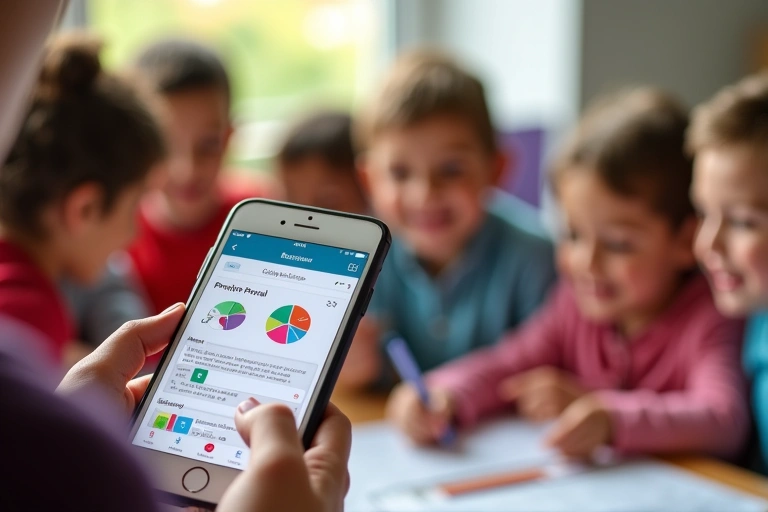
Instead of relying on memory at the end of a hectic day, teachers can capture the essence of a learning moment instantly. For example, Parent Portal’s voice-recorded observation feature allows a teacher to record a quick audio note right there on the spot. This isn't just about convenience; it's about authenticity. The teacher's tone, emphasis, and immediate reflections are all preserved, providing a much richer record than a hastily scribbled Post-it note ever could. These small snippets, collected over time, weave together to form a detailed tapestry of a child’s educational journey, far more vibrant and detailed than any single test score.
Reducing Teacher Workload, Not Adding to It
The immediate reaction to a new initiative can often be, “Is this just one more thing to do?” It's a valid concern in a profession already stretched thin. However, a well-designed system for micro-observations is built to decrease workload, not increase it. The goal is to work smarter, leveraging technology to handle the administrative heavy lifting so teachers can focus on what they do best: teaching.
Consider the traditional workflow: observe, remember, find time to write it down, file it, and later, try to collate it with other records. With a platform like Parent Portal, the workflow is streamlined. A teacher records a voice note, and the app’s AI gets to work, automatically transcribing the audio. The teacher can then quickly tag the observation to specific children and link it to curriculum objectives, like Development Matters or National Curriculum statements, in just a few taps. What once took hours of manual data entry at the end of the week can now be accomplished in seconds, throughout the day.
The goal of technology should be to restore time to teachers, not to consume it. By automating the mundane, we free up educators to focus on the human connections that lie at the heart of great teaching.
This time-saving extends beyond observations. When the platform’s AI can also assist with generating personalised report comments, creating differentiated homework tasks, and even drafting lesson plans, the cumulative effect is transformative. It shifts the balance back from administration to education, directly impacting teacher wellbeing and job satisfaction.
Strengthening the Home-School Connection
For parents, the school gate can feel like a barrier. They receive formal reports and attend parents' evenings, but they often miss out on the day-to-day context of their child's learning. Micro-observations change that. Sharing a curated selection of these moments—a photo of their child beaming with pride over their artwork, or a short clip of them presenting to the class—gives parents an unprecedented window into the classroom.
This isn't about overwhelming parents with data; it's about sharing the story of their child's progress. When a parent receives a notification from Parent Portal and sees a positive observation, it creates an immediate, positive connection. It provides a specific, meaningful starting point for conversations at home, replacing the generic "How was school today?" with "I saw the amazing castle you built! Tell me about it." With an approval workflow, schools retain full control, ensuring that only appropriate and constructive observations are shared, maintaining professional standards while fostering a powerful partnership.
- Sarah Jones, Headteacher
This continuous stream of communication builds trust and demonstrates the school's commitment to each child's individual journey. It turns parents into active participants, reinforcing learning at home and creating a cohesive support network around the student.
From Raw Observation to Actionable Insight
A single observation is a piece of a puzzle. An entire collection of them, however, holds the key to unlocking a deep understanding of each student. The real power of a digital observation system is its ability to analyse the accumulated data and present it as actionable intelligence for teachers. This is where AI moves from a simple convenience to an indispensable teaching assistant.
By analysing hundreds of transcribed voice notes, tagged photos, and completed homework assignments, AI can identify patterns that might be invisible to the naked eye. It can highlight a child's preferred learning styles, pinpoint recurring misconceptions, track progress against age-related expectations, and suggest strengths and areas for development. This empowers teachers to make truly data-informed decisions.
• Identify learning patterns & student preferences.
• Highlight strengths & areas for development against curriculum goals.
• Suggest personalised next steps and teaching strategies.
• Create unique, evidence-based report comments in seconds.
This transforms raw observations into actionable teaching intelligence.
This level of insight is invaluable when planning lessons, creating differentiated groups, or preparing for parents' evening consultations. Instead of relying solely on grade books and memory, a teacher can review a child’s entire learning story, complete with evidence. They can open a student’s digital profile and see the journey from uncertainty to mastery, all backed by timestamped, objective-linked observations. This leads to richer, more productive conversations with parents, grounded in a wealth of evidence.
A New Chapter in Assessment
Connecting micro-observations to academic progress is about more than just adopting a new tool; it's about embracing a new philosophy. It’s a move away from sporadic, high-pressure assessment events towards a more holistic, continuous, and authentic understanding of student development. It recognises that learning is a journey, not a destination, and that the small steps along the way are just as important as the final outcome.
By using modern school admin software to capture these moments efficiently, we can reduce teacher workload, improve wellbeing, and build stronger-than-ever relationships with parents. We empower educators with the insights they need to personalise learning and help every child reach their full potential. The future of assessment is not more testing; it's better, more meaningful observation. And the technology to make it a reality is already here.
Comments