
Student Self-Assessment: Teaching Responsibility Through Technology
From Passive Pupils to Proactive Learners
In any bustling classroom, one of the greatest challenges and greatest rewards is guiding children to take ownership of their learning. We want to nurture students who don't just wait for a grade, but who ask, "How did I do?" and, more importantly, "How can I do better?" This is the essence of self-assessment, a cornerstone of metacognition and a vital skill for lifelong success. It’s the process that transforms a passive pupil into a proactive, responsible learner. For years, however, fostering genuine self-assessment has been a time-intensive, often paper-heavy endeavour. Today, technology is changing the game, providing innovative school communication tools that make this powerful practice more accessible, meaningful, and efficient than ever before.
What is Student Self-Assessment, Really?
At its heart, self-assessment is far more than students simply marking their own maths sheet. It is a structured process of reflection where learners evaluate their work against set criteria, identify their own strengths, and pinpoint areas for improvement. When implemented effectively, the benefits are profound. It cultivates critical thinking as children analyse their own performance. It builds resilience and a growth mindset by reframing mistakes as learning opportunities. Most crucially, it develops a deep sense of ownership and responsibility. Suddenly, learning isn't something that is done to them; it's a journey they are actively navigating. This shift is fundamental in preparing children for the complexities of the world beyond the school gates.
The Hurdles of Ticking Boxes and Piles of Paper
While the educational benefits are clear, the practical execution of self-assessment has often been fraught with difficulty. For younger children in EYFS and Key Stage 1, articulating their reflective thoughts in writing is a significant barrier. The result is often simplified, generic checklists that barely scratch the surface of their thinking. For teachers, managing this process for a class of thirty children means more paperwork, more time spent deciphering handwriting, and a struggle to gain real insight from the exercise. It can quickly feel like another administrative task on an already overflowing plate, a tick-box exercise rather than a transformative learning experience. This administrative burden often relegates meaningful self-reflection to the “nice-to-have” pile, when it deserves to be a core part of our pedagogical approach.
Learning happens not just in the doing, but in the thinking about the doing.
To truly embed this reflective practice, we need tools that capture thinking in its most natural form, integrating it seamlessly into the daily rhythm of the classroom rather than adding to the workload. The goal is to make reflection as easy as having a conversation, and this is where technology offers a powerful solution.
How Technology Unlocks Authentic Reflection
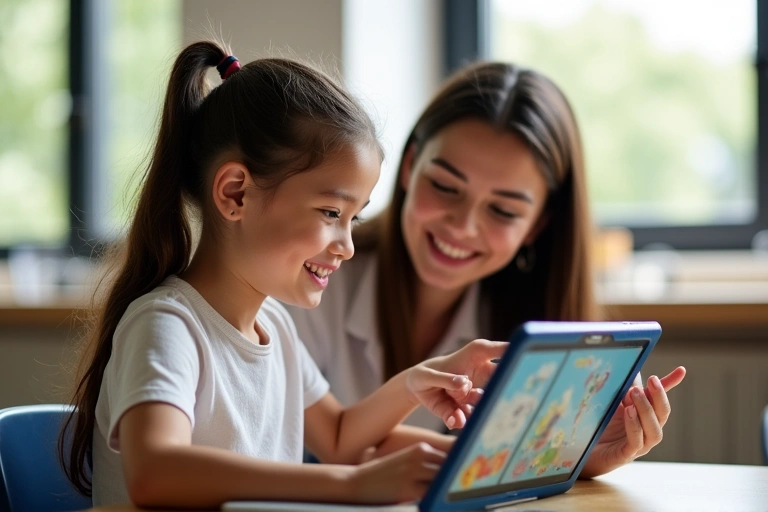
Imagine a Year 1 student, beaming with pride over the castle they’ve just built. Instead of asking them to fill out a worksheet about it later, their teacher pulls out a tablet. The student takes a photo of their creation and then, prompted by their teacher, records a short voice note. They talk about the tricky part of making the towers stand up and how they plan to make them even stronger next time. This entire moment—the visual evidence and the child's own reflective words—is captured in seconds and added to their digital learning profile. This isn't science fiction; it’s what’s possible with modern school communication platforms like Parent Portal. Features like voice-recorded observations and photo sharing break down the barriers of traditional self-assessment. They capture the child's authentic voice, preserving the nuances of their thought process in a way writing never could. This creates a rich, longitudinal picture of their developing metacognitive skills, visible to the student, the teacher, and the parent.
1. Capture the Moment: Use the app to take a photo or video of a student's work.
2. Record the Reflection: Ask the student to record a short voice note explaining what they are proud of and what they would improve.
3. Tag & Link: Tag the student and link the observation to a curriculum objective, like those in the EYFS framework.
4. Share the Journey: Approve and share the observation with parents, giving them a unique window into their child's thinking.
This approach moves self-assessment from a summative task at the end of a unit to a formative, ongoing dialogue. A student’s digital portfolio becomes more than a gallery of finished work; it’s a living record of their growth, thought processes, and evolving understanding.
Putting Parents in the Picture
The learning journey doesn't stop at the school gates. One of the most powerful aspects of using technology for self-assessment is the ability to share these moments with parents, fostering true parent engagement. When a parent receives a notification not just about homework, but with a short audio clip of their child excitedly explaining how they solved a tricky problem, the connection to their child’s education deepens immeasurably. It transforms dinner-table conversations from "What did you do today?" to "I heard your reflection on your story writing—tell me more about the main character!" Platforms designed for comprehensive school communication create this vital three-way partnership between student, teacher, and parent. By sharing these reflective moments, schools empower parents to understand and support the process of learning, not just the outcome. This shared understanding reinforces the value of reflection and helps children build confidence in their ability to articulate their own progress.
- Mrs. Davies, Headteacher
Reducing Teacher Workload, Not Adding to It
Any new initiative, no matter how valuable, will face resistance if it adds to teacher workload. This is where smart, integrated school admin software becomes a critical ally for school leaders. A platform that combines communication, observation, and assessment tools into one system doesn't create more work—it streamlines it. Capturing a voice note is faster than writing a detailed observation. Using an AI report writing assistant to analyse months of these digital observations and generate personalised, evidence-based report comments can save teachers dozens of hours. The same AI can even help generate constructive feedback on homework, modelling the kind of reflective language we want students to use themselves. By choosing an all-in-one system, schools eliminate the friction of juggling multiple apps and logins. Everything from the daily register and parent messaging to deep learning observations and parents' evening bookings is in one place. This holistic approach ensures that innovative practices like digital self-assessment are not an add-on, but an integrated part of a more efficient and effective school ecosystem, ultimately giving teachers back their most precious resource: time.
The Future is Reflective
As we look towards the classroom of 2025 and beyond, the focus of edtech is shifting from simple digitisation to intelligent augmentation. The goal is to build learning environments that are more personalised, responsive, and empowering for students. Teaching self-assessment isn't just about academic achievement; it's about developing character, resilience, and a love of learning. By embracing technology that captures student voice, makes learning visible, and connects the entire school community, we can move beyond the limitations of the past. We can finally make student self-assessment the powerful, ongoing, and transformative practice it was always meant to be, preparing our children not just for their next test, but for a lifetime of thoughtful growth.
Comments