
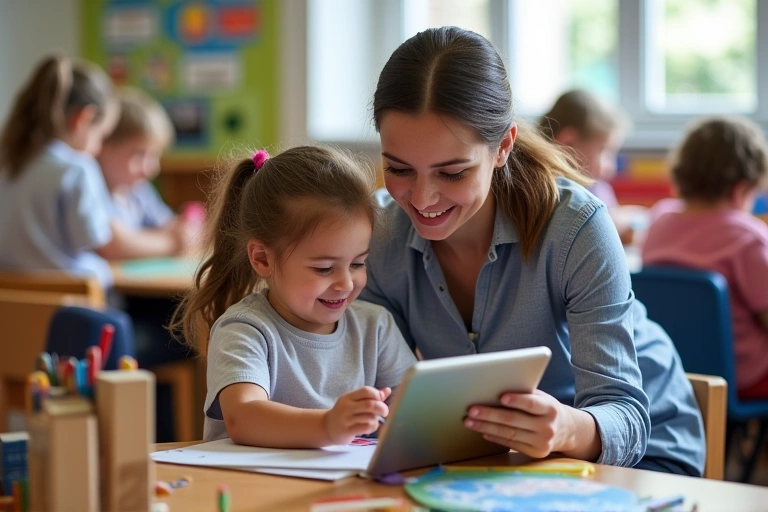
Foundation Stage Profile: Streamlining the Assessment Process
The Annual Challenge: Making the EYFS Profile Meaningful
For any teacher or leader in Early Years education, the end of the Reception year brings with it a familiar, monumental task: completing the Early Years Foundation Stage (EYFS) Profile for every child. This statutory assessment is designed to be a holistic, best-fit summary of each child's development, knowledge, and understanding across 17 Early Learning Goals (ELGs). It’s a crucial transition document for Year 1 teachers and a valuable summary for parents. Yet, the process of compiling it is often fraught with administrative challenges, late nights, and the immense pressure of getting it right for every single child.
Traditionally, this has involved juggling folders bursting with paper evidence, annotating endless sticky notes, and trying to synthesise a year's worth of fleeting moments into coherent, evidence-based judgements. The workload is significant, and it can sometimes feel more like an exercise in evidence collection than a meaningful reflection of a child's journey. But what if there was a way to honour the principles of the EYFS Profile while radically streamlining the process? What if technology could handle the administrative heavy lifting, freeing up teachers to focus on their core purpose: observing, interacting, and teaching?
Beyond the Checklist: Capturing Authentic Learning Moments
The spirit of the EYFS is rooted in observing children as they learn through play and exploration. The most valuable insights don't come from staged activities but from authentic, in-the-moment interactions. The problem is that these moments are often transient. A child explaining their intricate block construction, two friends negotiating roles in the home corner, a sudden breakthrough in phonics – these are rich with assessment information, but they are difficult to capture with a pen and clipboard.
This is where modern observation tools change the game. Imagine being able to capture the nuance of a child's explanation with a quick 30-second voice note. With a tool like Parent Portal, teachers can use Voice-Recorded Observations to record rich verbal evidence on the fly. These audio snippets are automatically transcribed and can be tagged to specific ELGs. This method preserves the child's actual language, their tone, and their thought process in a way a written note never could. Similarly, Photo and Video Observations provide powerful visual context. A single photo of a child's mark-making or a short video of them navigating a climbing frame can offer a wealth of information, instantly shareable and linked to their development profile.
Assessment isn't a single event at the end of the year; it's a continuous story of growth, discovery, and progress. The challenge is telling that story accurately and efficiently.
By making observation quick, easy, and multi-modal, technology empowers teachers to move away from a 'tick-box' mentality. It shifts the focus from proving learning has happened to simply capturing it as it unfolds naturally. The result is a more accurate, authentic, and holistic body of evidence that truly reflects the child.
From Scattered Notes to a Cohesive Narrative
One of the biggest headaches of traditional EYFS assessment is the fragmented nature of the evidence. Sticky notes get lost, photo prints pile up, and digital files are scattered across different devices. When it comes time to make a summative judgement, teachers have to embark on a huge detective mission to piece together a coherent picture for each of the 30 children in their class. This is not only inefficient but also risks missing crucial links in a child's development.
An integrated platform like Parent Portal solves this by creating a centralised Student Learning Profile for every child. Each voice note, photo, video, or written observation is automatically added to a chronological timeline. This digital portfolio builds throughout the year, creating a rich, longitudinal narrative of the child's journey. Teachers can filter observations by area of learning or look at the complete picture over time. This makes it incredibly simple to track progress, identify patterns, and prepare for moderation meetings. Instead of digging through a mountain of paper, teachers have a searchable, organised, and comprehensive record at their fingertips, enabling them to make their 'best-fit' judgements with confidence.
Automated Analysis: Identifies progress patterns and learning gaps from hundreds of observations.
Evidence-Based Reporting: Generates unique report comments based on real voice and photo evidence.
Next-Step Suggestions: Recommends activities and strategies to support individual development.
Time Savings: Drastically reduces the administrative time spent on data synthesis and writing.
The Smart Assistant Every EYFS Teacher Deserves
The next frontier in reducing teacher workload lies in Artificial Intelligence. While teachers' professional judgement remains paramount, AI can act as an incredibly powerful teaching assistant, automating the most time-consuming analytical and administrative tasks. The Parent Portal platform integrates AI tools specifically designed for the education sector. Its AI-Powered Progress Analysis engine can sift through hundreds of observations for a single child, highlighting strengths, identifying potential areas for development, and even suggesting next steps. It takes the raw data captured by the teacher and turns it into actionable insight.
Perhaps the most transformative feature is the AI Report Writing Assistant. Writing 30 unique, personalised, and evidence-based reports is one of the most demanding parts of completing the EYFS Profile. With Parent Portal, the AI analyses each child's entire observation history – the transcribed voice notes, photo captions, and teacher comments – and generates draft report comments for the profile. These comments are not generic; they are unique to the child and grounded in the real evidence collected throughout the year. The teacher's role then shifts from writer to editor, refining the AI-generated text to add their final professional judgement and personal touch. This single feature can save days, if not weeks, of work, tackling a major cause of teacher burnout.
Making Assessment a Conversation, Not a Report Card
Parent partnership is a cornerstone of the EYFS framework, but too often, parents are only brought into the assessment process at the very end. The final profile can feel like a formal, static document that doesn't fully capture the child they know. A continuous communication platform fundamentally changes this dynamic. By sharing selected observations with parents throughout the year, teachers bring them along on the learning journey. When a parent receives a push notification with a photo of their child mastering a new skill or a voice note of them telling a story, they gain a real-time window into their child's world at school.
This ongoing dialogue builds trust and a shared understanding of the child's development. It demystifies the assessment process and provides parents with concrete examples of what learning looks like in Reception. When the time comes to discuss the final EYFS Profile, it's no longer a one-way delivery of information. It's a rich, collaborative conversation between two experts on the child: the teacher and the parent. This fosters a far stronger home-school connection and ensures that the insights from the profile are genuinely useful for supporting the child's next steps.
Redefining the Foundation Stage Profile for the 21st Century
Completing the EYFS Profile will always require the professional skill and deep knowledge of the teacher. Technology will never replace that. But it can, and should, remove the barriers that prevent teachers from applying their expertise effectively. By embracing an integrated system for observation, progress tracking, and communication, schools can transform the profile process from a source of stress into a celebration of progress.
With tools that allow for authentic, in-the-moment observation, a system that organises that evidence into a coherent story, and AI that automates the administrative burden of analysis and writing, the EYFS Profile becomes what it was always intended to be: a powerful and insightful summary of a child's unique journey. It's time to equip our outstanding Early Years practitioners with 21st-century tools, giving them back their most precious resource – time – to dedicate to the children in their care.
Comments