
Voice Recording in the Classroom: Why Teachers Are Making the Switch
The Unseen Moments of a Busy Classroom
Every teacher knows them: those fleeting, magical moments of discovery. A child finally grasps a tricky concept and explains it in their own, beautifully unique way. A group of students collaborates on a problem, their dialogue buzzing with creative ideas. A shy pupil finds their voice in a small group discussion. These are the moments that truly define learning, yet they are often the hardest to capture. For decades, the go-to tool has been the clipboard and pen, a method that forces teachers into a difficult choice: either interrupt the natural flow of learning to furiously scribble notes, or let the moment pass, documented only in memory.
This method, while well-intentioned, is fraught with challenges. It’s slow, cumbersome, and often results in brief, decontextualized notes that fail to capture the richness of the interaction. How can you possibly write down the specific vocabulary a child used, the tone of excitement in their voice, or the nuance of their reasoning, all while managing 29 other children? The reality is, you can't. As schools look towards a future powered by smarter technology, many are asking: is there a better way? The answer is a resounding yes, and it’s simpler than you might think. It’s about putting down the pen and picking up a microphone.
From Scribbles to Sound: The Rise of Voice Observations
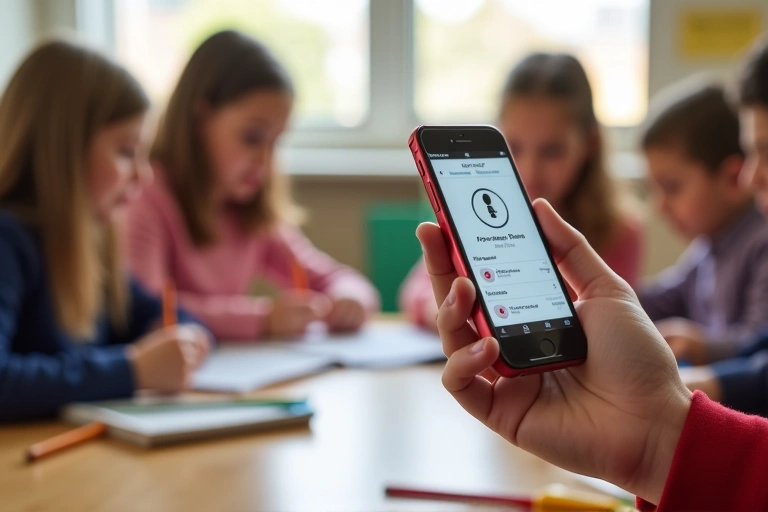
Imagine capturing that rich learning moment with a simple tap. Instead of writing, you record a quick 30-second voice note. In your own words, you describe the scene, quote the child directly, and articulate your immediate thoughts on their progress. This is the core principle behind voice-recorded observations, a transformative feature in modern school communication tools like Parent Portal. It’s not about replacing teachers with technology; it's about empowering them with tools that fit seamlessly into the dynamic classroom environment.
This simple switch from writing to speaking has profound implications. Firstly, it’s incredibly fast. Capturing a detailed observation vocally takes a fraction of the time it would take to write it down, allowing teachers to gather more evidence without disrupting the lesson. Secondly, the quality of the observation is exponentially higher. A voice note can capture emotion, intonation, and specific language that written notes often miss. It allows for a more narrative and detailed account, creating a far more authentic record of the child's learning process. This method provides the context that is so often lost in hastily written snippets.
A child’s own words are the most powerful evidence of their learning. Capturing them accurately and in the moment transforms assessment from a task into a story.
The beauty of this approach is its subtlety. Teachers can make these micro-observations without breaking stride, preserving the organic learning environment that is so crucial, especially in Early Years and Key Stage 1. This continuous, low-friction method of data collection begins to build something truly powerful: a detailed, longitudinal picture of each child's development over time, one authentic moment at a time.
Turning Audio into Action: The Power of AI in Education
Capturing hundreds of voice notes is one thing, but making sense of them is another. This is where cutting-edge school admin software really demonstrates its value. A platform like Parent Portal doesn't just store audio files; it puts them to work. The moment a teacher saves a voice observation, it's automatically transcribed into text. Suddenly, every observation is not just audible but also readable, searchable, and, most importantly, analysable.
This is where AI steps in as a true teaching assistant. The platform's AI-powered progress analysis sifts through the accumulated observations for each child, identifying patterns, academic strengths, and potential areas for development. It can highlight a child's growing confidence in phonics, flag a recurring misconception in maths, or track their progress against specific curriculum objectives from Development Matters or the National Curriculum. The system provides teachers with automated summaries, saving them hours of manual analysis and offering insights they might have otherwise missed.
Time Efficiency: A 30-second voice note captures more detail than 5 minutes of frantic writing.
Automatic Transcription: AI converts speech to text, creating a searchable record instantly.
Smart Tagging: Link observations to EYFS or National Curriculum objectives with a single tap.
AI-Powered Reports: Accumulated observations are analysed by AI to generate unique, evidence-based end-of-term report comments, eliminating hours of work.
This intelligent analysis directly tackles one of the biggest drivers of teacher workload: report writing. Parent Portal's AI Report Writing Assistant uses the rich evidence from voice and photo observations to generate personalised, unique comments for each student. Instead of starting from a blank page and trying to recall moments from months ago, teachers are presented with a draft report comment grounded in a wealth of specific, time-stamped evidence. This not only saves an incredible amount of time but also results in more meaningful and accurate reports for parents.
Building a Stronger Home-School Bridge
The impact of voice recording extends far beyond the classroom and the staffroom. It has the power to fundamentally change parent engagement. While a photo of a child smiling is lovely, hearing a short clip of your child confidently explaining how they built their tower or reading a sentence aloud for the first time is incredibly powerful. It offers parents an unprecedented and intimate window into their child's daily learning experiences.
With a secure approval workflow, teachers can choose to share specific observations directly with parents through the app. Imagine a parent receiving a notification and hearing their child's thought process. This creates wonderful opportunities for conversation at home, reinforcing learning and allowing parents to feel more connected to the school day than ever before. It demystifies what happens in the classroom and transforms parent communication from a series of logistical announcements into a shared celebration of their child’s journey.
This deeper connection is invaluable. It builds trust, fosters a collaborative spirit, and ensures that parents are true partners in their child's education. When parents' evening comes around, the conversation is already primed with a shared understanding of the child's progress, backed by a portfolio of real, tangible examples of their learning in action.
Voice Recording: A Sound Strategy for 2025 and Beyond
As we look towards the future of EdTech, the focus must be on tools that genuinely enhance teaching and learning without adding to the administrative burden. Voice recording in the classroom, when integrated into a comprehensive platform like Parent Portal, does exactly that. It is a perfect example of technology working in harmony with pedagogy. It respects the teacher’s professionalism, streamlines archaic processes, and produces deeper insights into student progress.
By making the switch, schools are not just adopting a new feature; they are embracing a more authentic, efficient, and collaborative approach to education. They are giving their teachers back their most valuable resource—time—and empowering them to focus on what they do best: teach. They are providing parents with a richer connection to their child’s world and building a complete, evidence-based story of every single student. In the quest to reduce teacher workload and boost parent engagement, the simple act of pressing 'record' might just be the most impactful change a school can make.
Comments