
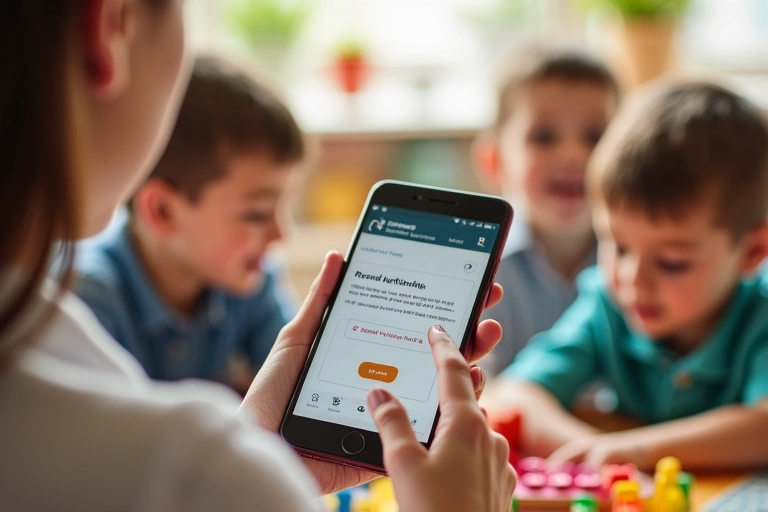
Voice Recording Best Practices for Classroom Teachers
The Challenge of Capturing Fleeting Moments
In the vibrant, fast-paced environment of a primary school classroom, magical learning moments happen in a flash. A child suddenly grasps a new concept, a quiet student shares a brilliant idea in a group, or a friendship blossoms over a shared construction project. As a teacher, you know these are the golden nuggets of formative assessment, the authentic glimpses into a child’s progress. The challenge? Capturing them. Traditional pen-and-paper observations are slow, cumbersome, and often fail to capture the rich context, the specific language, or the intonation of a child’s voice. In the time it takes to write a single detailed note, a dozen other moments have passed by. This is where modern school communication tools are changing the game.
Why Voice Recordings are a Game-Changer for Teachers
Imagine being able to capture the essence of a learning moment in just 30 seconds, without ever taking your eyes off the children. This is the power of voice recording. Instead of frantically scribbling paraphrased notes, you can discreetly record a quick voice memo on a school tablet or phone. This simple shift in practice offers profound benefits. Firstly, it drastically helps to reduce teacher workload. A 30-second voice note can contain far more detail than a written note created in the same amount of time. It frees you from the clipboard and allows you to remain present and engaged in the classroom flow.
Secondly, voice recordings offer unparalleled authenticity. You capture the child's actual words, their tone of voice, their questions, and their explanations. This raw data is incredibly powerful, providing a much deeper insight into their understanding and thought processes than a second-hand summary ever could. It’s the difference between reading a description of a song and actually hearing the music. These micro-observations accumulate over time, building a comprehensive, evidence-based learning journey for every student.
Voice recordings transform our observations from a static snapshot into a living, breathing story of a child’s development.
This approach moves assessment from a separate, often stressful, administrative task to an integrated, organic part of your daily teaching practice. It allows you to gather richer evidence with less effort, providing a solid foundation for planning, reporting, and parent communication.
Getting Started: Practical and Ethical Considerations
Adopting voice recording in your classroom is straightforward, but it’s crucial to lay the right groundwork. The first step is to establish a clear policy in line with your school's safeguarding and data protection guidelines. Transparency is key. Parents should be informed about how and why voice recordings will be used – not as a surveillance tool, but as a positive method for capturing their child's learning and development. Using a secure, GDPR-compliant platform like Parent Portal is non-negotiable. Such systems ensure recordings are stored securely, only accessible to authorised staff, and shared with parents through a protected channel, mitigating any privacy concerns.
Once policies are in place, the hardware is simple: a school-owned smartphone or tablet is all you need. The key is to make it part of your routine. Perhaps you dedicate five minutes during a carousel of activities to capture a few observations, or you keep the device handy during child-led play in an EYFS setting. The goal is for the process to become second nature, a quick and seamless action that doesn't disrupt the learning environment.
- Emma C., Year 1 Teacher
Start small. Aim to capture just two or three high-quality voice notes per session. As you become more comfortable, you'll find more opportunities to document the amazing progress happening all around you. Consistency is more important than quantity, especially in the beginning.
Best Practices for Meaningful Voice Observations
A great voice observation is more than just hitting 'record'. To make your notes truly valuable, focus on being descriptive. Your goal is to be a narrator, not a judge. Instead of saying, "Jessica is good at maths," record yourself saying, "Jessica just pointed to the two groups of counters and said, 'Look, three and three more makes six altogether!' and she looked really proud." This captures the specific skill, the language used, and the child's emotional response. Always try to add context. A brief mention of the activity, the resources used, or the social setting adds immense value to the observation. Aim for recordings to be between 30 and 60 seconds—long enough to capture the moment, but short enough to be a 'micro-observation' that's quick to review.
The most effective teachers link these observations back to their curriculum. With a platform like Parent Portal, you can tag each voice note with relevant EYFS Development Matters statements or National Curriculum objectives. This not only organises your evidence but also automates progress tracking. Over weeks and months, the system can analyse these tagged observations to highlight strengths, identify areas needing support, and even suggest next steps, revolutionising how you plan for individual needs.
From Recording to Insight: Closing the Loop
A folder full of audio files is just raw data. The magic happens when you turn that data into insight and action. This is where dedicated school admin software becomes invaluable. Modern platforms can automatically transcribe your voice notes, saving you hours of typing. This allows you to quickly scan, search, and analyse your observations. Sharing these moments with parents is perhaps the most powerful outcome. When a parent receives a short audio clip of their child excitedly explaining a science experiment, it creates an immediate and meaningful connection to the school day. It’s a tangible piece of their child's learning journey and a fantastic tool for boosting parent engagement.
These observations also become a cornerstone of professional practice. Before a parents' evening, you can review a child's collection of voice notes to refresh your memory on specific examples of progress. For end-of-term reports, this bank of evidence makes writing unique, personalised comments so much easier. Instead of generic statements, you can reference specific moments captured weeks or even months ago, backed by the child’s own voice.
Conclusion: The Future of Observation is Listening
Embracing voice recording is about more than just adopting a new piece of edtech 2025; it's about fundamentally improving the quality of our teaching insights while reclaiming our most valuable resource: time. By following these best practices—establishing clear policies, focusing on descriptive narration, linking to curriculum goals, and using an integrated platform—teachers can unlock a more efficient and effective way of working. The ability to capture authentic moments helps build a richer learning story for each child, strengthens the home-school partnership, and ultimately supports better educational outcomes. The classroom of the future is one where teachers are empowered by smart tools that allow them to focus less on admin and more on what they do best: teaching. It’s time to start listening.
Comments