
The Science of Rewards: What Actually Motivates Children
From Sticker Charts to Digital Stars: A Fresh Look at Motivation
For generations, the humble sticker chart has been a staple of classrooms and homes. A gold star for tidy work, a smiley face for good behaviour. It’s a simple system of cause and effect that children understand. But as educators, we are constantly asking ourselves a deeper question: are we teaching children to value the sticker, or to value the effort that earned it? This question lies at the heart of one of the biggest debates in education—the science of motivation and the role of rewards.
The conversation has moved beyond a simple pro- or anti-rewards stance. We now understand that motivation is a complex interplay of internal drive and external recognition. The challenge for modern schools is not to eliminate rewards but to use them strategically to nurture a genuine, lifelong love of learning. The key is to find a balance that fosters intrinsic motivation while using extrinsic rewards as a powerful tool for encouragement and communication. In a busy school environment, this is where smart technology becomes indispensable.
The Great Debate: Intrinsic vs. Extrinsic Motivation
At its core, motivation can be split into two categories. Intrinsic motivation is the desire to do something for its own sake. It’s the child who reads a book under the covers with a torch because they are captivated by the story, not because they’ll get a prize for finishing it. It’s the thrill of solving a tricky maths problem or the pride of creating a piece of art. This is the holy grail of education—a self-perpetuating desire to learn and grow.
Extrinsic motivation, on the other hand, comes from the outside. It’s driven by the anticipation of a reward (like points, praise, or privileges) or the avoidance of a punishment. While often viewed as the lesser of the two, extrinsic motivation is a powerful force in shaping behaviour. The potential danger, known as the 'overjustification effect', occurs when an external reward unintentionally diminishes the intrinsic motivation that was already there. An activity that was once fun can start to feel like a job.
The most effective approach is not to vilify external rewards, but to integrate them in a way that supports and amplifies a child's budding internal drive.
So, how do we navigate this complex landscape? The goal is to use extrinsic motivators not as a bribe for compliance, but as a scaffold to build lasting habits, confidence, and a positive mindset. It’s about celebrating the journey, not just the destination.
Using Rewards the Right Way: Effort, Progress, and Recognition
The secret to an effective rewards system is shifting the focus from the outcome to the process. When we reward effort, perseverance, and positive learning behaviours, we send a powerful message: we value your hard work and your attitude more than just getting the right answer. This approach encourages a growth mindset, where children see challenges as opportunities to improve rather than tests of their innate ability.
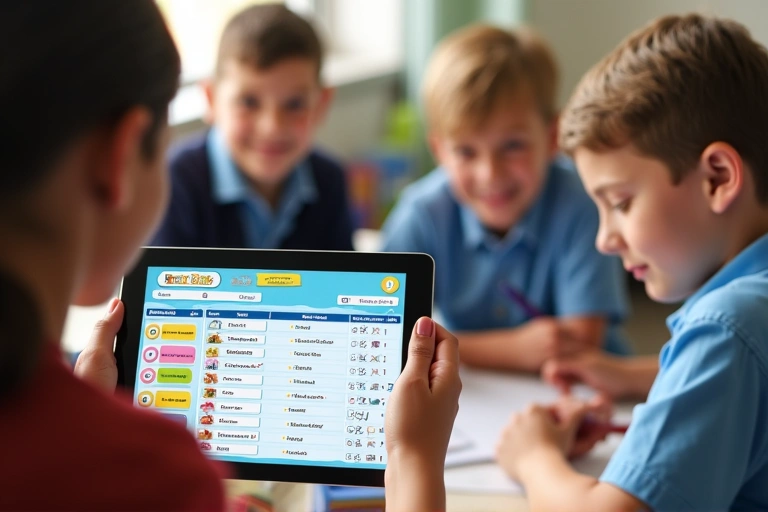
This is where integrated school admin software like Parent Portal transforms the concept of rewards. Instead of a generic sticker, a teacher can award a digital point specifically for “Excellent teamwork during the science experiment” or “Showing great resilience in maths.” This specific, immediate feedback is far more meaningful. Parent Portal’s Digital Rewards System allows teachers to award points instantly from any device, linking positive reinforcement directly to the action. This helps reduce teacher workload by making recognition a seamless part of the daily workflow, not another administrative task.
1. Be Specific: Instead of “Good work,” say “I was so impressed with how you used descriptive words in your story.”
2. Reward the Process: Praise effort, strategy, and perseverance, not just achievement.
3. Promote Community: Use group and house point systems to foster collaboration and team spirit.
4. Involve Parents: Use a school communication tool that instantly notifies parents of achievements, turning a school win into a family celebration.
Building Community Spirit with House Points and Shared Goals
Motivation isn't just an individual pursuit; it's a social one. A sense of belonging and collective purpose can be one of the most powerful drivers of positive behaviour. This is why school-wide systems like house points are so enduringly popular. They tap into our innate desire to be part of a team.
Modern edtech takes this concept to the next level. With Parent Portal’s House Points & Competitions feature, the traditional wall chart is replaced with a live, dynamic leaderboard visible to students, staff, and parents. This creates a buzz around the school, encouraging healthy competition and camaraderie. Suddenly, tidying up the classroom isn't just a chore—it’s a chance to earn points for Gryffindor! This collective effort helps build a positive school culture where every student’s contribution is valued. Sharing these successes through the platform’s Achievement Celebrations function amplifies the impact, reinforcing the school’s values and boosting morale across the entire community.
The Golden Triangle: Connecting Teachers, Students, and Parents
An effective rewards strategy cannot exist in a vacuum. For motivation to truly take root, it needs to be understood and reinforced at home. This is where seamless parent engagement becomes a game-changer. When a parent receives a real-time notification on their phone celebrating their child’s achievement—whether it’s a reward point for kindness or a photo observation of a 'lightbulb moment' in phonics—it closes the loop. It turns an abstract school event into a concrete, positive conversation at the dinner table.
– Sarah Kent, Headteacher
This level of transparency fosters a true partnership. Parents gain insight into what behaviours the school values, enabling them to echo that messaging at home. It’s no longer just about the termly report card; it’s about a continuous, collaborative journey. This is the future of education technology, or ‘edtech 2025’—systems that don’t just manage data, but build relationships.
Conclusion: Motivating the Next Generation with Smarter Tools
The science of motivation teaches us that there is no magic bullet. The path to creating engaged, resilient, and curious learners lies in a balanced and thoughtful approach. It requires us to foster intrinsic passion wherever we can, while using extrinsic rewards as a precise and supportive tool to celebrate effort and build positive habits.
In the past, managing such a nuanced system would have been an administrative nightmare, adding to already significant teacher workloads. Today, platforms like Parent Portal provide the integrated school communication tools to make it a reality. By linking rewards to progress observations, behaviour, and parent communication, we can create a holistic system that is both powerful for students and efficient for staff. The right technology empowers us to move beyond simple sticker charts and build a culture of recognition that truly motivates children, not just for the next test, but for a lifetime of learning.
Comments