
Next Steps Planning: Using Data to Inform EYFS Practice
In the vibrant, fast-paced world of Early Years education, the concept of ‘next steps’ is the golden thread that ties observation to progress. It’s the art of seeing a child’s blossoming curiosity in one moment and knowing how to nurture it in the next. Yet, for many dedicated practitioners, the process of planning these crucial next steps can feel less like an art and more like an administrative marathon. Juggling sticky notes, observation files, and curriculum frameworks while trying to provide individualised support for every child is a monumental task. This immense pressure often leads to a significant increase in teacher workload, turning a meaningful practice into a source of stress. But what if we could reclaim the joy of planning? What if we could use technology not to replace our professional judgment, but to amplify it, making our next steps planning more insightful, efficient, and impactful than ever before?
The Traditional Approach: Pitfalls and Pressures
For years, the backbone of EYFS planning has been the practitioner's keen eye and diligent record-keeping. We’ve all been there: scribbling a ‘wow’ moment on the nearest piece of paper, trying to capture the delightful but fleeting evidence of a child mastering a new skill or asking a profound question. The intention is perfect, but the execution is fraught with challenges. These valuable snippets of learning can get lost in a sea of paperwork, making it incredibly difficult to see the bigger picture of a child's development. When it comes time to plan, we’re left piecing together a puzzle with half the pieces missing. This can lead to planning that is generic rather than truly personalised, or a desperate scramble to ‘find’ evidence that fits a pre-determined objective.
This pressure to document everything creates a heavy administrative burden that detracts from our most important role: interacting with the children. The time spent collating, cross-referencing, and writing up observations is time taken away from facilitating play and scaffolding learning. It’s a classic case of working harder, not smarter. Moreover, this mountain of paperwork can make linking observations to developmental milestones feel like a box-ticking exercise, draining the process of its pedagogical heart. The goal should be to find tools that help reduce teacher workload while simultaneously enhancing the quality of our teaching and assessment. The challenge is clear: we need a system that organises the evidence for us, so we can focus on the insights.
Redefining 'Data' in the Early Years Classroom
The word ‘data’ can often conjure images of sterile spreadsheets and complex graphs, things that feel far removed from the warmth and creativity of an EYFS setting. But it’s time we reclaim the term. In the context of early years, ‘data’ is not about numbers; it’s about stories. It's the photo of a child successfully building a bridge with blocks, the short video of a group negotiating roles in imaginative play, or the audio snippet of a child explaining their drawing with impressive new vocabulary. This is the rich, qualitative, authentic data that truly represents learning. The problem has never been a lack of data, but a lack of effective tools to manage it.
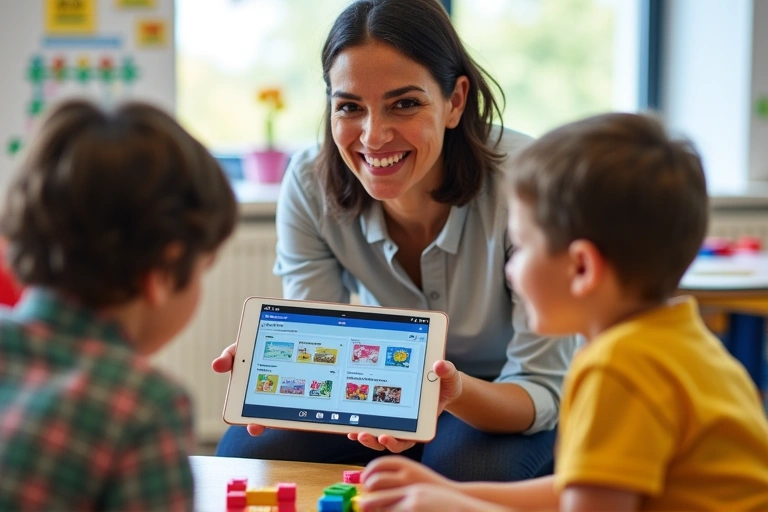
This is where modern school communication tools are changing the game. Imagine capturing a significant learning moment not with a pen and paper, but with a quick 30-second voice note on a tablet. With a platform like Parent Portal, teachers can record Voice-Recorded Observations on the fly, without disrupting the flow of activity. These voice notes are automatically transcribed and securely stored in the child's digital profile. A quick photo or video can be captured and tagged to a specific child or group, instantly linking it to EYFS curriculum objectives. Suddenly, the process of gathering rich observational data is seamless and integrated into the daily routine, not a separate, time-consuming task.
The purpose of observation is not to produce data, but to understand the child. The data is simply the trail of understanding left behind.
By making the capture process effortless, the focus shifts from documentation to observation. Teachers can be more present, more attuned to the nuances of children’s interactions and explorations. Each small observation becomes a valuable data point in a child's learning journey, building a comprehensive, longitudinal picture of their progress, interests, and unique learning style. This is the foundation of truly data-informed practice.
From Scattered Moments to Strategic Insights
Once this wealth of authentic data is captured, how do we turn it into actionable next steps? A digital system like Parent Portal acts as a powerful organisational engine. Instead of a pile of paper, you have a structured, searchable, and interconnected digital portfolio for every child. Every photo, video, and transcribed voice note is automatically filed, dated, and linked to relevant areas of learning within the EYFS & KS Observations framework.
Parent Portal’s AI Teaching Assistant helps generate meaningful next steps by:
• Analysing Progress: Synthesising hundreds of observations to spot patterns and highlight strengths and gaps.
• Generating Activities: Suggesting bespoke, creative activity ideas based on a child’s observed interests and developmental needs.
• Explaining Concepts: Breaking down complex topics into child-friendly explanations to support your teaching.
This is where the magic really happens. The platform’s AI-Powered Progress Analysis sifts through this accumulated evidence to do what’s humanly impossible: it identifies subtle patterns, connections, and learning trajectories over time. The AI can highlight that a child consistently chooses activities involving fine motor skills but avoids collaborative play, or that their vocabulary related to nature has exploded in the last month. These are the deep insights that elevate EYFS planning from reactive to proactive. The system presents teachers with automated summaries highlighting each child’s progress and even suggests potential next steps, serving as an expert co-pilot. It transforms a haystack of observations into a portfolio of clear, evidence-based insights.
Planning for Progress, Not Paperwork
With these powerful insights at their fingertips, teachers can finally move beyond the administrative grind and focus on high-impact teaching. The system doesn't dictate the next steps; it provides the evidence-based springboard for the teacher's professional judgment. This approach transforms planning into a creative and targeted process. For example, the AI might highlight a child's emerging interest in counting. The teacher can then use the integrated Activity Ideas Generator to get instant, differentiated suggestions for maths activities that build on that specific interest. This synergy between AI-driven analysis and teacher expertise is a cornerstone of what we can call EdTech 2025—technology that empowers, not replaces, great teaching.
- Sarah, EYFS Lead
This data-informed approach also strengthens the bridge between school and home, a critical component of parent engagement. Approved observations—a beautiful photo of their child’s finished artwork or a proud voice note explaining how they solved a problem—can be shared directly with parents. This gives families a real-time window into their child's learning, not just a summary at the end of term. When parents see what their child is exploring at school, they are better equipped to support and extend that learning at home. The platform even helps formalise these conversations, using AI-Generated Meeting Summaries after parents' evenings to ensure that everyone is aligned on the agreed-upon next steps, creating a powerful, collaborative team around every child.
Comments