
Attendance Analytics: Identifying Patterns Early
Every school leader knows that attendance is fundamental. It’s not just a box to tick for the Department for Education; it’s the bedrock of learning, a key indicator of a child’s wellbeing, and a strong predictor of academic success. For years, the morning register has been a familiar ritual, but what if that daily task could offer more than just a record of who is present? What if it could become a powerful, proactive tool for safeguarding and early intervention? In today's data-rich world, simply recording attendance is no longer enough. The real value lies in understanding the patterns behind the numbers. This is the power of attendance analytics, a core component of modern school admin software that transforms a routine administrative duty into a cornerstone of student support.
From Manual Registers to Meaningful Data
Let's be honest: traditional attendance management is a chore. Whether it’s paper registers being sent to the office, complex spreadsheets, or clunky legacy systems, the process is often time-consuming and inefficient. Teachers spend valuable minutes at the start of the day taking the register, and administrators invest hours chasing unexplained absences and manually compiling reports. This approach is inherently reactive. A problem like persistent absence only becomes visible once it has become significant, often after weeks of manual tallying reveal a worrying trend. By then, valuable time for intervention has already been lost.
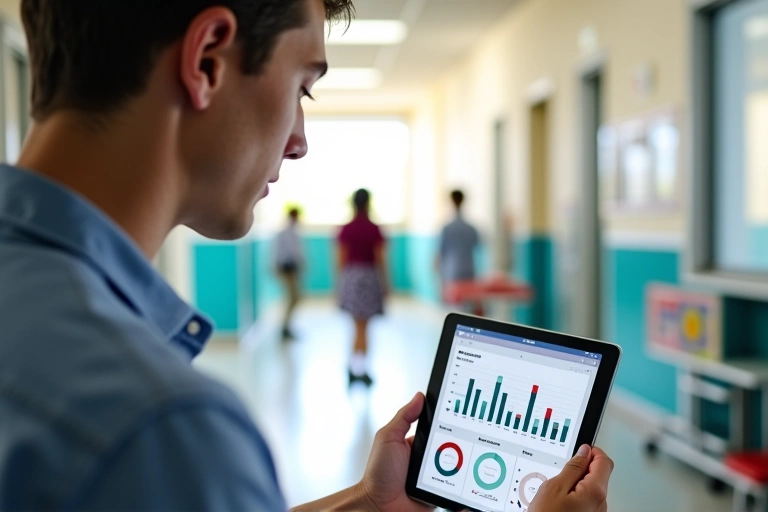
This is where integrated platforms like Parent Portal change the game. By digitising the entire attendance process, we move beyond simple record-keeping. When a teacher takes the register on their tablet or laptop using our simple digital interface, that data doesn't just sit in a static file. It instantly feeds into a dynamic, intelligent system. This simple action eliminates manual data entry for an administrator, significantly reducing workload and freeing up staff time to focus on what truly matters: the students. The real magic happens next, as the system begins to analyse this data in real-time, looking for the subtle clues that might otherwise be missed. It’s about making data work for you, not creating more work.
What is Attendance Analytics Really Looking For?
So, what exactly are these patterns that an analytics tool uncovers? It’s far more sophisticated than just flagging a child with a low overall percentage. A robust system delves deeper to identify behaviours that are often precursors to bigger issues. For example, it can automatically highlight a student who is consistently ten to fifteen minutes late, but only on certain days of the week. This could signal a recurring travel issue, a struggle with morning routines at home, or an avoidance of a particular morning lesson. Another common pattern is frequent, single-day absences. A child who misses one Friday a month might not trigger a traditional alert, but analytics can spot this trend instantly, prompting a gentle enquiry.
The system can also correlate absence with other school events. Is a student frequently unwell on days they have PE or swimming? Does their attendance dip in the run-up to assessments? These insights provide teachers and pastoral staff with specific, evidence-based starting points for a conversation. Rather than a vague, “Your child’s attendance is a concern,” a teacher can say, “We’ve noticed that Ben has missed the last three Tuesday mornings. Is everything alright on Tuesdays?” This targeted approach is far more constructive and demonstrates a school that is attentive and supportive. It’s about shifting from reaction to pre-emption.
Attendance analytics is not about catching children out; it's about catching them before they fall. It transforms data into insight, and insight into early, effective support.
This proactive stance is at the heart of modern educational thinking. By leveraging technology to spot these early warnings, schools can deploy support resources much more effectively, addressing small issues before they escalate into significant barriers to learning. It’s a fundamental change in how we view and use daily administrative data.
Connecting Attendance Data to Student Wellbeing
The link between attendance patterns and safeguarding is undeniable. A sudden change in attendance or a pattern of persistent lateness can be one of the earliest and most reliable indicators that a child may be facing difficulties. These issues could range from challenges at home and family instability to bullying, anxiety, or other mental health concerns. In a busy school environment, it's incredibly difficult for any single member of staff to hold all these puzzle pieces. A class teacher might notice the lateness, while an administrator processes the absence calls, but connecting the dots systematically is a huge challenge.
This is where a centralised platform with robust attendance analytics becomes a critical safeguarding tool. When the system flags a concerning pattern, it provides Designated Safeguarding Leads (DSLs) with an immediate, data-backed reason to investigate further. Parent Portal ensures that this sensitive information is handled securely, with access restricted to authorised staff. The platform can build a comprehensive chronology for each child, showing not just attendance data but also any logged behavioural or wellbeing concerns. This holistic view is invaluable for identifying vulnerable students and ensuring that interventions are timely and well-informed. It equips schools to fulfill their safeguarding duties more effectively and with greater confidence.
Early Pattern Detection: Automatically identify non-obvious patterns like day-specific absences or persistent lateness.
Reduced Admin Workload: Eliminates manual data collation and report generation for office staff and teachers.
Enhanced Safeguarding: Provides DSLs with real-time, data-driven alerts for at-risk students.
Improved Parent Communication: Facilitates evidence-based, constructive conversations with families about attendance.
By automating the detection process, schools can ensure that no child slips through the cracks. It creates a safety net woven from data, enabling staff to act with precision and care when it matters most.
Turning Insights into Action with Parents
Identifying a pattern is only the first step. The next, crucial stage is communicating effectively with parents to understand the context and work together on a solution. This is often a delicate conversation, and having clear, objective data is essential. Old-fashioned communication methods like sending letters home or relying on phone calls can be slow and inefficient. Modern school communication tools integrate attendance management directly into the parent-facing experience, creating a seamless and transparent loop.
With Parent Portal, the entire process is streamlined. A parent can report their child’s absence in the morning directly through the app, selecting a reason from a predefined list. This information is instantly available to the school office and the class teacher, saving a phone call and providing immediate context. If a child is marked absent without explanation, the system can send an automated push notification to the parent's phone, prompting a swift response. This closes the communication gap and ensures all absences are accounted for quickly. Furthermore, when it's time for a parents' evening, the teacher has all the attendance data at their fingertips within the same platform they use to book appointments and share observations. This allows for truly holistic and informed discussions about a child's progress and wellbeing.
This integration of attendance, communication, and parent engagement makes the data actionable. It fosters a partnership approach where the school and parents work together, using shared information to support the child. It moves the conversation away from blame and towards collaborative problem-solving, which is a far more effective way to improve attendance in the long run.
The Future of Attendance Management is Proactive
Looking towards EdTech 2025 and beyond, the role of data in education is only set to grow. For school leaders, harnessing this data is key to driving school improvement. Aggregated attendance analytics allows leadership teams to zoom out and see the bigger picture. They can track trends across the entire school, compare attendance between year groups, or analyse data for specific cohorts, such as Pupil Premium or EAL students. These high-level insights are vital for strategic planning. Is there a school-wide issue with lateness that needs to be addressed through a new policy? Is one particular year group struggling with attendance, suggesting a need for targeted pastoral support?
This data-driven approach allows schools to allocate resources more effectively, measure the impact of their interventions, and report to governors and Ofsted with confidence. A platform like Parent Portal brings all of this together in one place, combining powerful school admin software with intuitive school communication tools. The future of attendance management isn't a bigger, more complicated spreadsheet. It's an intelligent, automated system that reduces teacher workload, strengthens the home-school partnership, and, most importantly, places student wellbeing at the very centre. By embracing tools that provide early, actionable insights, schools can move from being reactive to truly proactive, ensuring every child has the opportunity to be present, engaged, and ready to learn.
Comments