
How to Use Homework Data to Inform Teaching
From Chore to Insight: Reframing the Purpose of Homework
For decades, homework has been a staple of education, but its perception is often one of a necessary chore. For students, it's more work after a long school day. For parents, it can be a source of evening friction. And for teachers, it's another pile of marking that extends the working day. But what if we've been looking at it all wrong? What if, instead of being a mere box-ticking exercise, homework could become one of the most valuable sources of data for informing your teaching practice? By shifting our perspective from completion to comprehension, we can unlock a wealth of information. Homework isn't just about reinforcing what was taught; it's a low-stakes opportunity to see learning in action, identify misconceptions as they form, and understand how each student is progressing on their unique learning journey. Seeing homework as a form of formative assessment is the first step towards transforming it into a powerful feedback loop that benefits everyone.
Collecting Meaningful Homework Data with Modern Tools
The challenge has always been collecting this data efficiently. Traditional paper-based homework offers limited insight beyond a final score. It’s difficult to track how long a task took, where a student hesitated, or what common errors emerged across the entire class without a time-consuming manual review. This is where modern school communication tools fundamentally change the game. With a platform like Parent Portal, homework moves from a static piece of paper to a dynamic, data-rich interaction. Teachers can use an AI-Generated Homework Tasks tool to create differentiated assignments targeting specific skills, ensuring the data collected is both relevant and precise. Students submit their work digitally—whether as a text response, a file, or even a simple photo of their workbook. This process automatically creates a digital record, timestamped and stored in one central place. Suddenly, you have a clear picture of who has submitted work, when they did it, and a complete history of their efforts. This digital collection method is the foundation for deeper analysis, and it serves to reduce teacher workload by eliminating the need to chase down lost sheets or manage mountains of paper.
Decoding the Data: Identifying Patterns and Insights
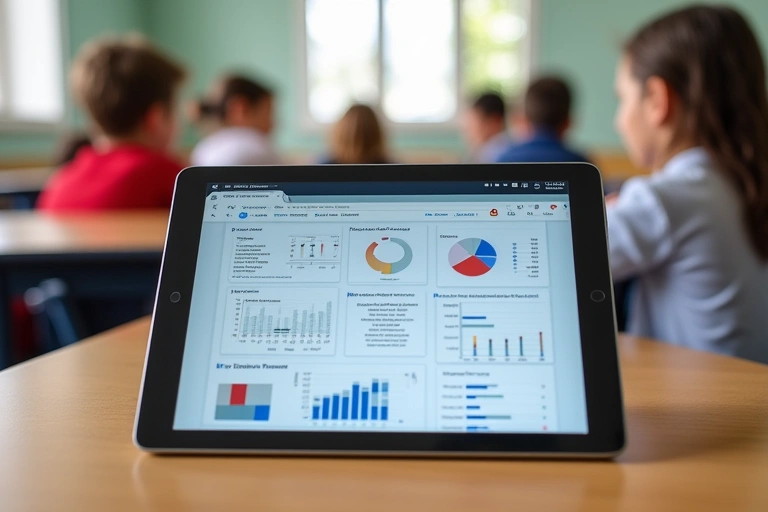
Once you have a consistent stream of digital homework submissions, you can begin the real work: analysis. This isn't about spending hours poring over spreadsheets. It's about learning to spot the patterns that tell a story about your class's learning. Start by looking for three levels of insight. First, class-wide patterns. Did 70% of the class struggle with question three on the maths homework? That's not a student issue; it's a teaching-and-learning flag. It tells you the concept needs revisiting, perhaps from a different angle. Second, look for group patterns. You might notice a small group of students who consistently misapply a specific grammar rule or, conversely, a group that always finishes extension tasks with ease. This is your cue for targeted group interventions. Finally, focus on individual patterns. A single student's homework history might reveal a persistent difficulty with word problems but a strong grasp of pure calculation. This is crucial data for personalising their learning path and providing specific, constructive feedback. Platforms that offer AI-powered analysis can accelerate this process, automatically highlighting trends and flagging areas of concern, turning raw data into actionable intelligence without adding to your to-do list.
The goal is to turn data into information, and information into insight. By harnessing the data from everyday tasks like homework, we can move from reactive teaching to proactive, personalised learning.
Understanding these patterns is the bridge between collecting data and using it effectively. It allows you to tailor your approach, ensuring that your teaching is always responsive to the real-time needs of your students. It transforms your classroom into a more agile and supportive learning environment.
“Using Parent Portal's homework tools has completely changed how I plan. I used to feel like I was guessing where the gaps were. Now, after assigning a task, I can quickly see a summary of common mistakes. I shared a report with a parent showing them the specific SPAG errors their child was making, and they were so grateful for the clarity. It’s helped us work as a team and I’ve seen a real improvement in the child’s writing. It’s powerful, proactive parent engagement, not just a mark at the top of a page.”
This level of detailed insight makes conversations with parents more productive and specific. Instead of general comments, you can share concrete examples from homework submissions, fostering a genuine partnership in the child’s education.
From Data to Differentiated Instruction
The most critical step is turning your analysis into action. Data is useless if it doesn't inform your practice. Based on the patterns you've identified, you can now implement targeted, differentiated instruction with precision. If class-wide data showed a misunderstanding, start the next lesson with a 5-minute mini-lesson to reteach the concept. If you identified a small group struggling with fractions, pull them aside for a guided session while others work independently. For the student who excels, use the insights to provide more challenging homework that pushes their boundaries. This responsive teaching model ensures that every student is being appropriately supported and challenged. Efficient school admin software incorporates tools to help with this. For instance, an AI Feedback Generator can help you craft personalised, constructive comments on submitted work in a fraction of the time, highlighting strengths and suggesting next steps. An AI Lesson Planning tool can even help you build your next lesson plan, incorporating activities designed to address the specific gaps you identified from the homework data. This is smarter, not harder, teaching.
1. Collect: Assign and gather homework digitally to create a rich data set.
2. Analyse: Identify class-wide, group, and individual patterns and misconceptions.
3. Act: Adjust lesson plans, create intervention groups, and provide personalised feedback.
4. Communicate: Share specific insights with parents to build a collaborative support network.
5. Repeat: Continuously refine teaching strategies based on ongoing homework data.
This cyclical process ensures that your teaching is never static. It evolves week by week, informed by the direct evidence of your students' learning. It’s a sustainable model that leads to better outcomes and, thanks to modern technology, doesn't have to mean more work.
Closing the Loop: Engaging Parents with Homework Insights
Finally, don't keep these valuable insights to yourself. Homework data is one of the most powerful tools you have for meaningful parent engagement. When a parent can see their child's homework, the teacher's feedback, and a summary of their progress all in one place, the conversation changes. It moves from "How was school today?" to "I see you're learning about Ancient Egypt, and your teacher suggested focusing on using full sentences in your answers." Platforms like Parent Portal, with integrated homework visibility and direct messaging, make this seamless. Sharing these insights demonstrates a deep understanding of each child and shows parents exactly how they can support learning at home. This transparent approach builds immense trust and turns parents into genuine partners in their child's education. It transforms the parent-teacher relationship from a once-a-term meeting into an ongoing, collaborative dialogue focused on student success.
The Future of Homework: Smarter, Not Harder
The conversation around homework is shifting. By leveraging the right school communication tools, we can move beyond the debate over its existence and instead focus on maximising its value. By treating homework as a key source of formative assessment data, we empower teachers to become more responsive, efficient, and effective. The future of education, and the promise of edtech 2025, lies in using technology to reduce teacher workload while simultaneously enhancing learning outcomes. Using homework data to inform teaching is a perfect example of this principle in action. It allows us to personalise learning, foster stronger home-school connections, and ensure that the effort put into homework—by students, parents, and teachers—yields the greatest possible return. It's time to unlock the data hiding in plain sight and build a smarter, more responsive classroom for every child.
Comments