
Managing Multi-Academy Trusts: Centralized vs Decentralized Tech
The MAT Conundrum: Unity or Autonomy?
The landscape of UK education is continually evolving, with Multi-Academy Trusts (MATs) becoming an increasingly prominent structure. As trusts grow, absorbing more schools under a single administrative umbrella, a fundamental question emerges for leadership teams: how do you manage technology and systems across a diverse group of schools? This question sparks a critical debate between two opposing philosophies: rigid centralization versus complete decentralization. Should every school operate on an identical, trust-mandated platform, or should each be free to choose the tools that best suit its unique community? The answer isn't simple, and the stakes—impacting everything from budgets and teacher workload to parent engagement and safeguarding—are incredibly high.
Choosing a path has profound implications. A centralized approach promises efficiency, data consistency, and streamlined oversight. On the other hand, a decentralized model honors the individuality and autonomy of each school, empowering leaders and teachers to use tools they know and love. In this article, we’ll delve into the complexities of this choice and explore how a modern, hybrid approach to school admin software might just offer the perfect balance for forward-thinking MATs heading towards 2025 and beyond.
The Power of Unity: Why Centralization Appeals to MATs
For many MAT leaders, the argument for a centralized technology stack is compelling. The primary driver is the pursuit of operational excellence through consistency. When every school uses the same platform for communication, attendance, payments, and progress tracking, it creates a cohesive ecosystem. This standardization simplifies everything. Training becomes more efficient, staff moving between schools in the trust face a familiar environment, and the MAT can project a unified brand identity to parents and the wider community.
The financial argument is equally persuasive. Centralized procurement allows MATs to leverage economies of scale, negotiating better prices for software licenses and reducing redundant spending. Instead of ten schools paying for ten different communication apps, the trust invests in one comprehensive system. This consolidation not only saves money but also dramatically simplifies IT support and vendor management. Furthermore, a single point of data entry reduces the administrative burden, directly contributing to the crucial goal to reduce teacher workload.
A unified tech platform across a MAT can lead to:
- Consistent communication and branding.
- Significant cost savings through economies of scale.
- Simplified GDPR and safeguarding compliance.
- Powerful trust-wide data analytics for informed decision-making.
- Reduced administrative workload for IT and school leaders.
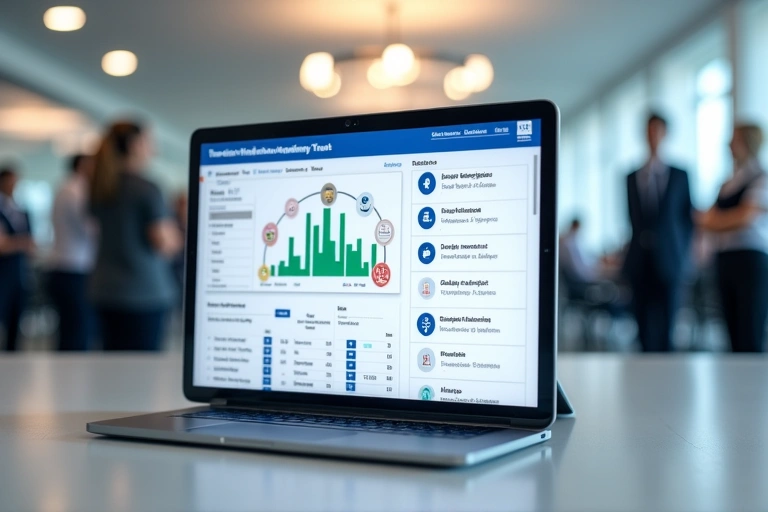
Perhaps the most significant benefit of centralization is data visibility. With a unified system like Parent Portal, MAT leaders can access a central dashboard providing a real-time, trust-wide overview of key metrics. Imagine being able to analyse attendance patterns, track safeguarding concerns, or compare parent engagement levels across all your schools from a single screen. This high-level insight is invaluable for strategic planning, identifying areas for improvement, and ensuring consistent standards of care and performance are met everywhere.
Celebrating Individuality: The Merits of Decentralization
While centralization offers clear benefits, it’s not without its drawbacks. The strongest counter-argument is rooted in the very nature of schools themselves: they are not franchises. Each school has a distinct culture, a unique student demographic, and a community with its own specific needs and expectations. A one-size-fits-all technology solution, enforced from the top down, can feel impersonal and restrictive. It risks stifling the innovation and passion that makes each school special.
Empowering school leaders and teachers with autonomy over their tools can foster a greater sense of ownership and morale. When staff are allowed to use software they have chosen and find effective, adoption rates are higher and the tools are used to their full potential. A school with a large EAL community might prioritise a platform with strong translation features, while another might focus on specific tools for EYFS observations. Forcing them onto a system that doesn't meet their primary needs can lead to resentment, workarounds, and ultimately, inefficiency. This approach respects the professionalism of school-level staff, trusting them to know what’s best for their pupils and parents.
The Best of Both Worlds: A Hybrid Approach to MAT Tech
Given the compelling arguments on both sides, it becomes clear that neither pure centralization nor pure decentralization is the optimal solution. The former can feel dictatorial and inflexible, while the latter creates chaos and inefficiency. This is where the hybrid model comes in—an approach that seeks to combine the strategic oversight of a centralized system with the operational flexibility of a decentralized one.
The goal for any successful Multi-Academy Trust is not to force uniformity, but to foster unity; to align on core principles while empowering individual schools to flourish.
A hybrid strategy is built on a platform that is both powerful and adaptable. It provides a non-negotiable, unified core for essential functions like financial management, safeguarding logging, and trust-wide analytics. This ensures consistency, compliance, and the high-level data MAT leaders need. However, within this robust framework, it gives individual schools the freedom to customize their day-to-day operations. School leaders can manage their own news feeds, run their own calendars, and tailor their parent communications to reflect their school’s unique voice and priorities. This model delivers the best of both worlds: a cohesive trust-wide structure that doesn’t erase individual school identity.
How a Unified Platform Like Parent Portal Bridges the Gap
This hybrid ideal is the principle upon which Parent Portal was built, particularly with its multi-school support for MATs. It’s designed to be the single source of truth that connects every school in a trust while celebrating their individuality. For parents, the benefit is immediate: one login and one app to manage communication, payments, and calendars for all their children, even if they attend different schools within the MAT. This drastically improves parent engagement by making life simpler.
For MAT leadership, the platform’s central dashboard offers unparalleled oversight. You can securely manage staff accounts across the trust, set permissions, and access aggregated data on everything from attendance to payments. Crucially, safeguarding information can be tracked consistently, ensuring no child slips through the cracks created by disparate systems. Yet, for the teacher in the classroom, the platform feels like their own. They can use Parent Portal’s innovative tools—like AI-powered lesson planners, voice-recorded observations, and digital homework management—in a way that suits their teaching style and their students' needs.
This balance is the key to successfully scaling a MAT. It allows the trust to implement consistent policies and benefit from efficiencies while empowering teachers with cutting-edge school communication tools and AI assistants that make their jobs easier. It’s a vision for edtech 2025 that is not about control, but about connection and collaboration.
Building a Cohesive and Effective MAT
The choice between centralization and decentralization is not just a technical one; it’s a decision about the very culture of your Multi-Academy Trust. A fragmented, patchwork approach leads to data silos, frustrated parents, and an increased administrative burden that works against the core mission of educating children. A overly rigid, centralized system can stifle morale and ignore the unique needs of individual school communities. The future of effective MAT management lies in a sophisticated hybrid model. By adopting a unified platform like Parent Portal, trusts can establish a cohesive operational backbone while providing their schools with the powerful, flexible tools they need to thrive. It’s about creating a single, connected family of schools, strong in its shared structure but vibrant in its individual expression.
Comments