
The End of Lost Homework: Digital Submission Benefits
The Era of the Missing Worksheet is Over
Every teacher knows the familiar refrains: “I left it on the kitchen table,” “My dog chewed it,” or the classic, “I’m sure I put it in my bag.” For decades, managing, collecting, and tracking paper homework has been a time-consuming and often frustrating part of the job. The endless cycle of printing, distributing, chasing late submissions, and carrying heavy stacks of books for marking contributes significantly to teacher workload. But what if we could reclaim that time? What if we could create a more efficient, transparent, and impactful homework process? The solution is already here, and it’s transforming classrooms across the UK: digital homework submission.
Switching from paper-based assignments to a digital system isn't just about swapping a worksheet for a screen. It represents a fundamental shift in how we manage learning outside the classroom. By leveraging integrated school communication tools, we can create a streamlined workflow that benefits everyone involved: teachers get more time to teach, parents gain unprecedented visibility into their child's learning, and students develop crucial digital literacy skills. It’s about building a connected learning ecosystem where homework is a meaningful extension of the school day, not a logistical headache.
Streamlining the Homework Cycle to Reduce Teacher Workload
The most immediate and profound impact of digital homework management is the significant reduction in teacher workload. Think about the administrative-heavy tasks associated with traditional homework. Designing tasks, printing copies, handing them out, recording who has submitted, chasing those who haven't, and then the physical act of marking—it all adds up. A digital platform like Parent Portal automates or simplifies many of these steps.
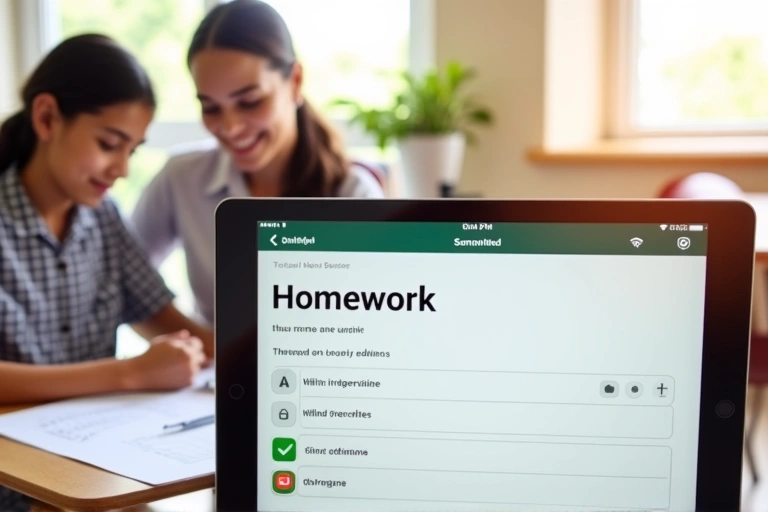
Teachers can create and assign homework tasks with just a few clicks, attaching resources like documents, links, or videos. Due dates are set automatically, and the system keeps track of submissions in real-time. There’s no more need for manual checklists or sifting through piles of paper to see who has handed their work in. When a parent reports their child is off school, the homework is still accessible, ensuring they don’t fall behind. Furthermore, providing feedback becomes infinitely more efficient. Instead of writing the same comments repeatedly, teachers can provide typed, legible feedback directly on the submission, which is instantly available to both the student and their parents. This creates a clear and immediate feedback loop that is far more powerful than a tick on a page returned days later.
The move towards digital isn't just about replacing paper; it's about reimagining the entire homework lifecycle to be more efficient, transparent, and pedagogically sound.
The integration of AI takes this to another level. With AI-powered tools, teachers can generate age-appropriate homework activities for subjects like maths and literacy in seconds. Need a differentiated reading comprehension task for three different ability groups? An AI assistant can create it instantly. This frees up valuable planning time, allowing educators to focus on the higher-impact aspects of their role, such as analysing student progress and tailoring their teaching strategies. The days of spending Sunday evenings preparing worksheets are numbered.
- Year 4 Teacher, UK Primary School
This streamlined process not only saves time but also centralises a crucial part of the learning journey. Every assignment, submission, and piece of feedback is stored in one secure location, creating a digital portfolio of work for each child. This eliminates the risk of lost work and provides a rich historical record that can be reviewed at any time, which has powerful implications for tracking progress and preparing for parents' evenings.
Boosting Parent Engagement Through Unprecedented Visibility
For parents, homework can often feel like a black box. They might see the task go into a school bag and see the marked work return a week later, but they often lack visibility into the process. Digital submission platforms change this dynamic entirely. With a system like Parent Portal, parents are brought into the loop in real-time. They receive a notification when homework is assigned, along with all the instructions and resources. They can see when their child has submitted the work and, crucially, view the teacher's feedback as soon as it’s posted.
This transparency is a game-changer for parent engagement. It empowers parents to support their child's learning effectively. If they see their child struggling with a concept, they know immediately rather than waiting for a parents' evening. They can discuss the teacher’s feedback with their child, reinforcing the learning and creating positive conversations around schoolwork. It removes the ambiguity and replaces it with clarity, fostering a stronger partnership between home and school. This is a core principle of effective school communication tools, extending collaboration beyond the school gates.
Our platform brings every aspect of homework management into one simple interface:
• Digital Assignment: Create tasks with custom instructions, due dates, and multimedia attachments.
• AI-Powered Task Generation: Instantly create differentiated homework for maths, reading, and SPAG.
• Student Submission: Pupils submit work via text, photo uploads, or file attachments.
• Live Tracking: See who has submitted work and send automated reminders.
• Efficient Feedback: Provide typed or AI-generated feedback directly on submissions.
• Parent Visibility: Parents see all tasks, submission statuses, and teacher feedback in their app.
This visibility also reduces friction. There are no more arguments over whether homework was assigned or when it was due. The information is available 24/7 in the parent app. For families where parents are separated, both can have access to the same information, ensuring consistency in supporting their child. By making homework a transparent, shared process, schools can significantly enhance their parent engagement strategy, turning it from a passive-receptive model to an active-collaborative one. This is a key pillar of outstanding school administration and a valuable feature of modern edtech in 2025.
Building a Richer Picture of Student Progress
While the immediate benefits of reduced workload and increased engagement are clear, the long-term strategic advantage of digital homework submission lies in data. Every piece of submitted work contributes to a growing digital portfolio for each student. Unlike a paper workbook that gets sent home at the end of the year, this digital record is longitudinal. A Year 5 teacher can easily look back at a student's work from Year 3 to identify patterns of development, persistent misconceptions, or areas of exceptional talent.
This creates a powerful evidence base for assessment. When combined with other data points, such as in-class observations, the homework portfolio provides a holistic view of a child's learning journey. For example, Parent Portal integrates voice-recorded observations with homework submissions and formal assessment data. Before a parents' evening, a teacher can review this complete profile to have an incredibly detailed, evidence-backed conversation about the student's progress. The AI Report Writing Assistant can even analyse this accumulated data to help generate personalised, unique report comments, saving teachers hours of work while producing higher-quality insights.
For school leadership, this centralised data is invaluable. Senior leaders can get an overview of homework completion rates across different classes or year groups, identify areas where additional support might be needed, and ensure consistency in how homework is being managed across the school. This is a far cry from the disconnected, paper-based systems of the past. It transforms homework from a standalone task into an integrated component of the school's data-driven improvement cycle, a key function of effective school admin software.
Comments