
Nappy Changes and Meal Times: Tracking Care Digitally
The End-of-Day Rush: A Familiar Story
The scene is familiar in every nursery and early years setting across the country. The clock ticks towards home time, and a wave of parents arrives, each eager for a summary of their child's day. Amid the bustle of finding coats and bags, practitioners juggle hurried conversations, trying to recall every detail. How long did they nap? Did they eat all their lunch? Has their toilet training progress been noted? Often, the answers are scribbled in a paper diary, which might be incomplete, hard to read, or already in the child's bag. It’s a moment of pressure for staff and potential anxiety for parents, who leave with a fragmented picture of their child's day.
For too long, this has been the accepted reality. But what if there was a better way? What if parents could have a clear, real-time window into their child's day, and staff could communicate these vital details instantly, without adding to their already significant workload? The future of early years care isn't about more paperwork; it's about smarter, more connected communication.
From Paper Diaries to Digital Updates
The traditional paper-based daily diary has served its purpose, but it’s a system fraught with challenges. It’s time-consuming for staff, prone to human error, and creates an information lag. A detail noted at 11 AM isn't seen by a parent until 5 PM, by which time its context can be lost. This is where a dedicated digital solution like Parent Portal's Nursery Keyworker System completely changes the game.
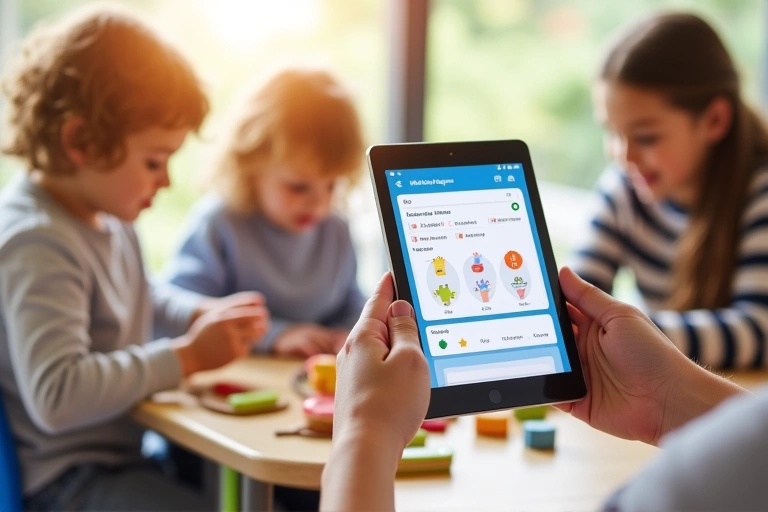
Imagine a keyworker attends to a child. With a few taps on a tablet, they can log the nappy change, note if it was wet or dry, and share it securely. When a child finishes their lunch, the practitioner can quickly record what they ate and how much, perhaps even snapping a quick photo of the clean plate. When a toddler wakes from their nap, the start and end times are logged instantly. Each of these small, crucial updates can be shared in real-time to the parent's app, creating a live feed of their child's wellbeing. This eradicates the end-of-day scramble to fill in a dozen paper forms and transforms the handover conversation from a recital of facts into a meaningful discussion.
Building Parent Trust Through Transparency
For a parent, leaving their young child in someone else's care requires a huge leap of faith. The biggest source of anxiety is the unknown. A digital feed of care routines provides profound reassurance. A simple notification that their child has had a good nap or enjoyed their fruit snack can alleviate worry and help a parent feel connected and involved. It closes the distance between home and nursery, fostering a genuine sense of partnership.
True parent partnership isn't just an annual report; it's built from the small, daily moments of connection and shared understanding.
This flow of information empowers parents to have more meaningful conversations with their children. Instead of the generic "What did you do today?", they can ask, "I saw you had fish pie for lunch, was it yummy?" or "Your teacher said you had a long nap, you must have been very sleepy after all that playing!". This shared context strengthens the home-school bond and reinforces the child’s experiences, making them feel seen and understood in both environments. This level of engagement is a cornerstone of modern, effective parent communication.
Linking Daily Care to EYFS Learning
Excellent early years practice understands that care and education are inextricably linked. A mealtime is a lesson in social skills and fine motor development. A nappy change is a moment for one-on-one interaction and language building. Digital systems make it easy to formally connect these moments to a child's learning journey. Using a tool like Parent Portal, a keyworker can not only log a care event but also attach a photo, video, or quick voice-recorded observation linked directly to curriculum objectives.
A log of a child successfully using a spoon can be tagged against 'Physical Development'.
A note about a child asking for more water can be linked to 'Communication and Language'.
This creates a rich, evidence-based learning journey that goes beyond traditional observations.
This approach creates a holistic profile of the child where wellbeing and development are viewed as two sides of the same coin. It provides a much richer picture of progress than academic observations alone, giving educators and parents deep insights into the whole child. This integrated data is invaluable for planning next steps and for discussions during parents' evenings.
Reclaiming Time for What Matters Most
Perhaps one of the most compelling arguments for digital care tracking is the dramatic impact on staff workload. Let's consider the maths: if a practitioner spends just five minutes per child at the end of the day filling in a paper diary, for a room of 15 children, that’s over an hour of administrative time. That is time that could be spent planning, tidying, or, most importantly, engaging in high-quality interactions with the children.
Digital logging takes seconds. A tap here, a quick note there, and the record is complete, accurate, and instantly shared. This efficiency doesn't just reduce workload; it boosts staff morale and reduces end-of-day stress. It allows your best assets – your practitioners – to focus their energy and expertise on nurturing and educating children, not on paperwork. This is a critical component in any strategy aiming to reduce teacher workload and improve staff retention.
– Sarah, Nursery Manager, Little Oaks Early Years
This reclaimed time is an investment back into the quality of your provision. With less administrative burden, practitioners are freer to be more present, observant, and responsive to the needs of the children in their care, which is the ultimate goal of any educational setting.
A Complete Picture for Every Child
By tracking nappy changes, meals, and naps digitally, you are not just collecting data; you are weaving a comprehensive story of each child's life at your setting. Over time, this digital record becomes an invaluable resource. You can easily spot patterns – does a shorter nap consistently lead to challenging behaviour in the afternoon? Is a child's appetite decreasing? This information allows for proactive, targeted support. The entire history is stored securely in the child's profile, providing a complete overview for new keyworkers, managers, and parents during consultations. It’s the ultimate tool for providing continuous, personalised care. Moving beyond paper is no longer a futuristic idea; it's a practical, achievable step towards building a more efficient, communicative, and caring early years environment.
Comments