
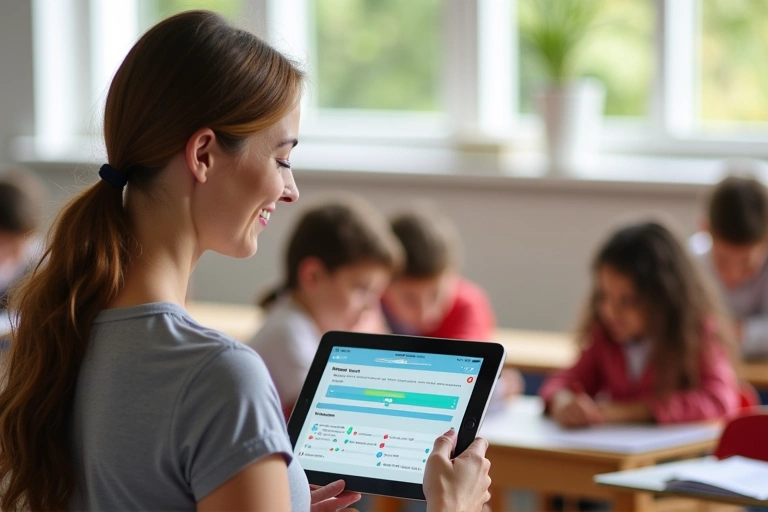
CPD Tracking: Making Professional Development Visible
From Paperwork to Progress: Reimagining Staff Development
Continuous Professional Development (CPD) is the lifeblood of any thriving school. It’s the engine that drives pedagogical innovation, enhances student outcomes, and keeps our teaching staff inspired and engaged. Yet, for many school leaders and teachers, managing CPD can feel less like an inspiring journey and more like an administrative marathon. We’re all familiar with the annual cycle: dusty binders filled with certificates, clunky spreadsheets for tracking objectives, and appraisal meetings that often feel disconnected from the day-to-day realities of the classroom. This traditional approach is not only time-consuming but often fails to capture the true, ongoing nature of professional growth.
The administrative burden of tracking training hours, gathering evidence, and preparing for performance reviews can be immense, pulling staff away from their core mission: teaching. The process can feel fragmented, with objectives set in September becoming a distant memory by spring. It’s time to ask a critical question: is our current system truly fostering development, or is it simply a tick-box exercise? By clinging to outdated methods, we risk demotivating staff and missing crucial opportunities to link individual growth with the school’s wider strategic goals. The challenge isn't a lack of desire for improvement, but a lack of tools to make it visible, manageable, and meaningful.
A New Vision for Professional Growth
Imagine a world where CPD is not an annual event, but a continuous, living part of a teacher's professional life. Imagine a system where setting objectives, gathering evidence, and reflecting on practice happen seamlessly within the tools you already use every day. This is the promise of modern EdTech and the philosophy behind platforms like Parent Portal. By moving CPD management into an integrated digital environment, we can shift the focus from burdensome administration to genuine professional learning. An integrated system provides a single source of truth, making development visible to both the teacher and their line manager throughout the year.
This digital approach transforms objective setting from a static document into a dynamic roadmap. Progress can be tracked in real-time, evidence can be uploaded instantly—a photo from a successful lesson, a snippet of peer feedback, a link to a useful resource—and conversations about development can be ongoing and evidence-based. It’s about creating an ecosystem where growth is nurtured, not just measured. This shift empowers teachers to take ownership of their development, fostering a culture of reflective practice and continuous improvement that benefits everyone.
Professional development is not about filling a gap, but about building a bridge to new possibilities for every teacher and student.
When staff feel supported by a system designed to help them succeed, their engagement and morale soar. The goal is to create a transparent, supportive, and efficient framework that celebrates progress and makes professional growth an integral part of the school culture, rather than a separate, time-consuming task.
Streamlining Appraisals with Integrated Tools
The annual appraisal meeting is often a source of stress for teachers and a significant administrative challenge for school leaders. Preparing for these meetings involves collating evidence from disparate sources, trying to recall specific examples of progress, and aligning it all with predefined objectives. A dedicated platform completely changes this dynamic. With a built-in appraisal system, the entire performance management cycle is streamlined within one unified space. School leaders can set up appraisal cycles, and teachers can create their own SMART objectives directly within the platform, ensuring they are clearly defined and aligned with school priorities from the outset.
The real game-changer is the ability to track progress against these objectives throughout the year. Parent Portal’s system uses simple RAG (Red, Amber, Green) status indicators, allowing teachers and their mentors to see at a glance how they are progressing. This visual, at-a-glance overview removes ambiguity and turns the end-of-year review into a formality—a summary of a year-long conversation, not a high-stakes judgment. This approach significantly reduces the workload associated with appraisals. Instead of a last-minute scramble for evidence, teachers build their case for success organically over time, creating a richer, more accurate picture of their professional journey.
1. Objective Setting: Teachers and leaders collaborate to create SMART (Specific, Measurable, Achievable, Relevant, Time-bound) objectives aligned to the School Improvement Plan.
2. Continuous Evidence Logging: Throughout the year, teachers and observers can link observation notes, feedback, and other evidence directly to specific objectives.
3. Live Progress Tracking: Using RAG ratings, everyone involved can see progress in real-time, enabling timely support and intervention.
4. Simplified Reviews: Appraisal meetings become productive, evidence-based conversations, as all information is collated and organised in one place.
This data-driven process ensures fairness and consistency, promoting a culture where staff feel supported in their growth. It transforms performance management from a compliance exercise into a powerful tool for professional development and school improvement.
Building a Rich Portfolio of Practice
Effective CPD goes beyond formal courses and qualifications; it’s rooted in the daily craft of teaching. The most powerful development often comes from peer collaboration, observation, and reflection. However, capturing these valuable moments has always been a challenge. How do you formally record the impact of a brilliant piece of peer feedback or an impromptu observation that sparks a new idea? An integrated system provides the answer by offering dedicated tools for recording and storing observation notes and feedback. This allows schools to build a comprehensive portfolio of professional practice for every teacher.
Instead of scribbled notes that get lost or informal chats that are forgotten, peer observations can be logged directly into the system. Feedback can be structured and stored, linked to specific teaching standards or personal objectives. This creates a powerful evidence base that demonstrates a teacher's commitment to improving their practice over time. It’s no longer just about what CPD was attended, but how it influenced classroom practice. For instance, after attending a workshop on questioning techniques, a teacher’s peer can observe a lesson and log specific examples of how the new strategies were implemented, linking it directly to the teacher’s development goals. This makes the impact of CPD tangible and visible.
- C. Davies, Headteacher
This accumulated evidence becomes invaluable not only for appraisals but also for a teacher's personal reflection. Over time, they can look back at their journey, identify patterns in their strengths and areas for development, and make more informed decisions about their future learning needs. It turns development into a reflective, ongoing story of growth, driven by real classroom practice.
From Individual Growth to School-Wide Improvement
The true power of an integrated CPD tracking system is its ability to scale insights from the individual to the entire institution. When all staff development data is housed in one central, secure location, school leaders gain an unprecedented strategic overview. They can move beyond anecdotes and gut feelings to make data-informed decisions about resource allocation, training priorities, and school-wide initiatives. By analysing aggregated, anonymised data, leaders can identify common development needs across a department, year group, or even the whole school. For example, if multiple teachers are setting objectives related to supporting students with EAL, it signals a clear need for targeted, whole-school training in that area.
This capability is especially crucial for Multi-Academy Trusts (MATs). With a unified platform, MAT leaders can maintain a consistent approach to staff development across all their schools while still allowing for individual school priorities. They can identify pockets of excellence and facilitate cross-school collaboration, ensuring that best practice is shared effectively. Ultimately, a system that connects individual teacher objectives to the school’s overarching strategic plan ensures that everyone is pulling in the same direction. CPD becomes a strategic lever for driving the School Improvement Plan, not just an isolated activity for individual benefit. This alignment ensures that every pound spent on training and every hour invested in development contributes directly to achieving the school's most important goals, creating a powerful cycle of continuous improvement for staff and students alike.
Comments