
How Audio Observations Build Trust With Families
Beyond the Written Report Card
For generations, the bridge between the classroom and home has been built with paper, ink, and carefully chosen words. Report cards, newsletters, and brief notes in homework diaries have been the standard bearers of school communication. In recent years, digital tools have added photos and text messages to the mix, offering a more immediate window into the school day. Yet, even with these advances, a fundamental gap often remains. How do you truly convey the spark in a child’s eye when they grasp a new concept? How do you share the nuance of their questioning, the cadence of their storytelling, or the collaborative buzz of a group project? These moments—the very fabric of learning—are often lost in translation. A static photo shows the 'what', but rarely the 'how' or 'why'. A written summary, composed hours later, can lose the immediacy and raw emotion of the original event. This is the communication challenge that schools face: how to share a child’s story in a way that is authentic, insightful, and builds genuine, lasting trust with families.
Capturing Learning in the Moment
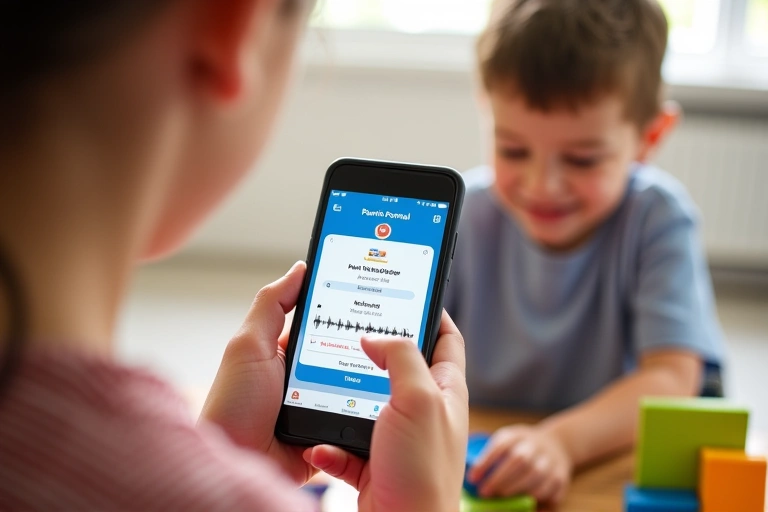
Imagine this: a Year 1 child, working with building blocks, suddenly has a breakthrough moment understanding symmetry. Instead of making a mental note to write down later, the teacher simply taps a button on their device and records 45 seconds of audio. They capture the child’s excited voice explaining their discovery, the questions they ask their friend, and the teacher’s own gentle prompts. This is the power of audio observations, a cornerstone feature of the Parent Portal platform. It’s not about staging a performance; it’s about capturing the authentic sound of learning as it unfolds. This simple shift from retrospective writing to in-the-moment recording is a profound one. It preserves the integrity of the moment, complete with the tone, emotion, and unique personality of the child. For teachers, it’s a revolutionary tool for evidence-gathering that integrates seamlessly into the rhythm of the day, significantly reducing the administrative burden typically associated with detailed observations.
Hearing a child work through a problem in their own words offers a window into their thought process that a written summary simply cannot replicate.
This approach moves beyond simply documenting progress; it captures the process itself. The journey is just as important as the destination, especially in early years and primary education. When a parent can hear that journey, their understanding of their child's school life deepens immeasurably.
Why Audio is a Game-Changer for Parent Trust
While photos and text updates are valuable, audio brings a unique, and arguably more powerful, dimension to parent engagement. It fosters trust on multiple levels. Firstly, it offers unparalleled authenticity. A voice recording is unfiltered and real. Parents hear their child, not an interpretation of them. They hear the slight hesitation before a confident answer, the joy in their tone, or the focused discussion with a classmate. This transparency demonstrates that the school has nothing to hide; it is proud to share the genuine, everyday moments of learning, not just the polished end-of-term highlights. Secondly, it creates a powerful emotional connection. For a parent at work, receiving a short audio clip of their child happily explaining their science experiment is incredibly moving. It closes the distance between home and school, making them feel like a part of their child's day in a way that text alone cannot achieve. This consistent stream of positive, personal connection builds a huge bank of goodwill and trust. Finally, it provides a deeper understanding of their child as a learner. Parents gain insight into their child’s social skills, their developing vocabulary, and their individual learning style. They might discover their child is a natural leader in group work or a thoughtful, reflective questioner—nuances that are difficult to convey in a written report. When a teacher’s voice is also on the recording, offering encouragement, it models the supportive classroom environment and builds a parent's confidence in the school’s staff.
Reducing Workload, Not Impact
The benefits of audio observations extend far beyond parent engagement. For teachers and school leaders, it's a critical tool for creating efficiency and enhancing professional practice. The most immediate impact is on teacher workload. Recording a 60-second voice note is exponentially faster than writing a detailed observation, especially when Parent Portal's AI automatically transcribes the audio. This frees up invaluable time for teachers to focus on what they do best: teaching. But it's not just about saving time; it's about making better use of it. This stream of audio data builds a rich, longitudinal picture of each child's development. Every observation, tagged against curriculum objectives, contributes to a comprehensive learning profile. This evidence base is a goldmine for assessment, planning, and intervention. When it comes to parents' evenings, teachers can review this accumulated history, prepared with specific, evidence-based examples of a child's progress. Furthermore, with Parent Portal's AI Report Writing Assistant, this data can be synthesised to help generate unique, personalised report comments, turning a weeks-long task into a manageable process. It’s a perfect example of how edtech in 2025 should function: using intelligent school admin software to reduce administrative burdens while simultaneously increasing the quality and depth of educational insight.
- C. Davies, Headteacher, UK Primary School
This experience is not unique. Schools that embrace this form of transparent, authentic communication find that it changes the entire dynamic of the home-school partnership. When parents feel genuinely connected and informed, they become stronger allies. They are more likely to support school initiatives, reinforce learning at home, and approach consultations with a spirit of collaboration rather than confrontation.
The Sound of Progress
In a crowded market of school communication tools, it’s easy to get lost in feature lists. But the true measure of any platform is the quality of the relationships it helps to build. Audio observations cut through the digital noise to deliver something fundamentally human: the sound of a child learning and growing. By capturing these fleeting moments, schools can build a foundation of trust with families that is deep, authentic, and lasting. It shifts the narrative from periodic, formal reporting to a continuous, shared celebration of the learning journey. For any school looking to deepen parent engagement, reduce teacher workload, and create a truly collaborative community, the answer might be simpler than you think. It's time to start listening.
Comments