
Voice Technology in Education: The Next Frontier
The Sound of Progress: How Voice is Reshaping the Classroom
In our daily lives, voice technology has become second nature. We ask Alexa for the weather, tell Siri to set a reminder, and dictate messages to our friends. It’s fast, intuitive, and seamlessly integrated into our routines. But what happens when this powerful technology enters the most important environment of all: the classroom? The answer is not just about convenience; it’s about a fundamental shift in how we capture learning, measure progress, and reduce the ever-growing burden of teacher workload. For schools looking towards the future of education, voice technology isn't just a novelty—it's the next frontier in meaningful edtech.
Beyond Pen and Paper: The Limitations of Traditional Observations
Every teacher, especially in Early Years and Key Stage 1, knows the dance of the observation. You’re trying to manage a group activity, support a child who is struggling, and simultaneously capture a 'wow' moment when another child finally grasps a new concept. The reality often involves scribbled notes on a sticky pad, a hastily taken photo with no context, or a mental note that gets lost in the beautiful chaos of a primary classroom. The pressure to document progress for EYFS profiles, Ofsted evidence, and effective assessment is immense. This documentation process is time-consuming and often happens long after the school day has ended, relying on memory to fill in the gaps. It’s a system that creates significant administrative work and struggles to capture the authentic, fleeting sparks of learning as they happen.
Voice technology allows educators to capture the nuance and richness of a learning moment, something a hastily written note or a checklist can never achieve.
This traditional approach, while well-intentioned, often forces teachers to choose between being present with their students and being a scribe for their progress. This is the core problem that modern school administration software must solve. It’s not about adding more tools; it’s about creating smarter, more efficient workflows that give time back to teachers.
Capturing Learning in the Moment: The Power of Voice Notes
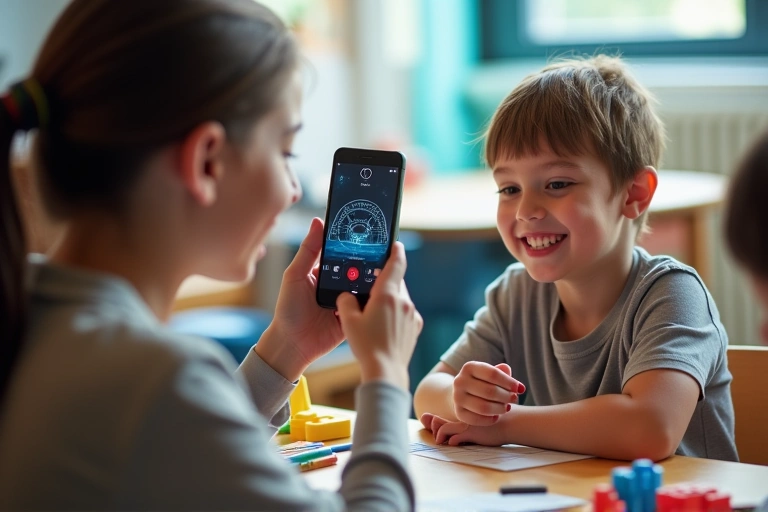
This is where the voice revolution begins. Imagine being able to capture that 'wow' moment without breaking the flow of your teaching. With Parent Portal’s Voice-Recorded Observations, teachers can do just that. Using a simple app on a phone or tablet, a teacher can record a quick 30-60 second voice note, describing what they see in rich, natural language. For example, a teacher might record, "Leo just successfully used procedural language to explain to his friend how to build the tower, saying 'First, you need a wide base'. This is a big step for his communication and language skills." This entire observation is captured in less than a minute, with all the nuance and detail intact. The teacher remains present in the activity, and the observation is logged instantly. This method is not only faster, but it’s also more authentic. The tone of voice, the specific vocabulary used—it all adds a layer of qualitative data that a written note simply can’t match. It’s about working smarter, not harder, and using technology to enhance, not replace, the teacher's professional judgement.
Turning Observations into Insights: The Role of AI
Recording a voice note is just the beginning. The real magic happens next. Once an observation is saved, Parent Portal’s integrated AI gets to work. It automatically transcribes the audio into text, making it searchable and easy to read. But it goes much further. The system is designed to understand the context of UK education. The AI analyses the transcript and helps tag it to the relevant objectives in frameworks like Development Matters, Early Learning Goals, or the National Curriculum. Suddenly, that 30-second voice note about Leo's tower is not just a lovely anecdote; it’s a piece of evidence automatically mapped against specific EYFS assessment points. Over weeks and months, these micro-observations build a comprehensive, longitudinal picture of each child's development. Our AI-Powered Progress Analysis engine can then identify patterns, highlight strengths, and even suggest potential areas for development or next steps. This transforms the administrative task of progress tracking into an insightful, data-driven process that actively supports teaching and learning, significantly helping to reduce teacher workload.
→ Record 30-60 second voice notes on the go.
→ AI automatically transcribes and links notes to curriculum goals.
→ Build a rich, longitudinal learning story for every child, effortlessly.
This automated analysis culminates in tools like the AI Report Writing Assistant, which uses the accumulated evidence from voice notes to generate unique, personalised report comments, turning a weeks-long task into a manageable review process.
Sharing the Journey: Strengthening Parent Engagement
One of the most powerful aspects of modern school communication tools is their ability to bridge the gap between home and school. Voice observations excel here. After a quick review and approval by the teacher, these observations—whether as audio clips, transcribed text, or paired with a photo—can be shared directly with parents through the Parent Portal app. Imagine a parent receiving a notification during their workday. Instead of a generic update, they see a note from the teacher about a specific achievement their child made that morning. This provides parents with a genuine window into their child's school life, fostering a deeper connection and understanding. It transforms parent engagement from a once-a-term parents' evening into an ongoing, positive conversation. When parents' evening does arrive, both the teacher and the parent are already equipped with a wealth of specific examples of progress, leading to far more meaningful and productive consultations.
This level of detailed, continuous feedback is something that parents value immensely and helps build a strong, collaborative community around the school.
Embracing the Future of School Administration
Voice technology in the form of recorded observations is not an isolated gimmick; it’s a cornerstone of a more integrated and intelligent approach to school management. It’s a key part of the 'EdTech 2025' vision, where technology works silently in the background to make the lives of educators easier. When combined with other AI-powered tools like lesson plan generators, comprehension builders, and automated parents' evening summaries, it forms a complete ecosystem designed to tackle the number one issue facing the education sector: workload. By automating administrative tasks and providing deeper insights, voice technology empowers teachers to rediscover the joy of their profession. It allows them to spend less time on paperwork and more time on the human connections that inspire learning. The future of education will be defined by tools that are not just powerful, but practical, intuitive, and designed with a deep understanding of a teacher's day. The voice revolution is here, and it sounds a lot like progress.
Comments