
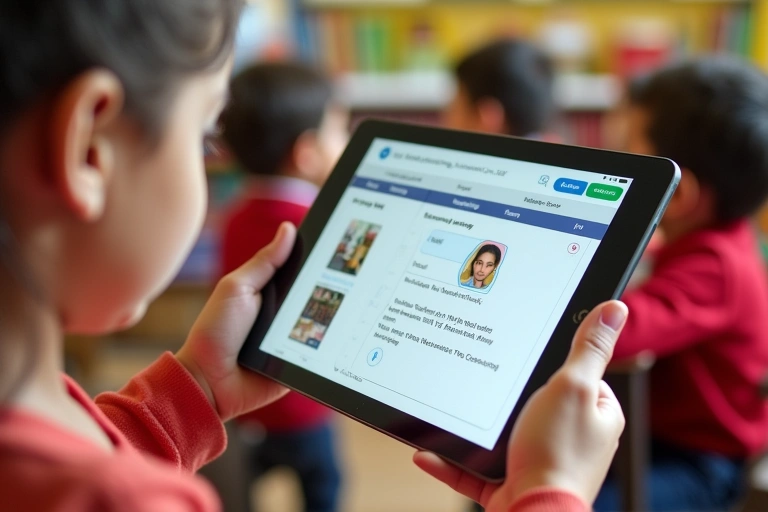
Digital Reading Journals: Student Observations and Progress
From Page Counts to Meaningful Progress
For decades, the humble reading record has been a staple of primary education. A simple log of books and pages, it served as a basic link between home and school. But in today's data-rich, time-poor educational landscape, is a simple page count enough? We believe there’s a better way. The goal isn't just to track what a child reads, but how they read, think, and feel about it. This is where the concept of a digital reading journal comes in, transforming a mundane administrative task into a powerful tool for observation, assessment, and genuine parent engagement.
Imagine replacing that dog-eared notebook with a dynamic, multimedia log of a child’s entire reading journey. This isn’t just about ticking boxes; it’s about capturing the magic of learning to read. It's about building a holistic picture of progress that informs teaching, celebrates small wins, and actively involves parents as partners. As a leader in school communication tools, Parent Portal is pioneering this shift, helping schools reduce teacher workload while gaining deeper insights into student development.
The Power of Voice: Capturing Reading in Real Time
The most profound limitation of a paper record is its silence. It can’t capture the hesitation before a tricky word, the growing confidence in a child’s voice, or their excited gasp at a plot twist. Parent Portal’s Voice-Recorded Observations change this entirely. In just 30-60 seconds, a teacher can capture a live audio snippet of a child reading aloud. This simple action is revolutionary for assessment.
These micro-observations are automatically transcribed and can be tagged to an individual student’s profile. Over time, they build a rich, longitudinal audio history of a child’s journey with fluency, prosody, and phonics. A teacher can listen back to a recording from September and compare it to one from December, gaining an immediate, visceral sense of the progress made. It's faster than writing extensive notes and provides far more nuanced data. This isn’t just tracking; it’s experiencing a child's progress first-hand, creating invaluable evidence for planning and reporting.
Hearing a child’s voice as they decode a new word or express their delight in a story provides a layer of understanding that written notes can never capture.
This approach moves beyond simple assessment to become a cornerstone of effective teaching and learning. It highlights specific areas for support, such as particular digraphs or comprehension skills, allowing for targeted intervention. For busy teachers, it's an incredibly efficient way to gather high-quality evidence without adding to their administrative burden, a key benefit for any modern school admin software.
Bringing Observations to Life with Photos and Videos
Reading isn't a solitary, silent activity; it's vibrant and interactive. A digital reading journal should reflect this. Alongside voice notes, teachers can use Photo & Video Observations to capture the complete context of reading within their classroom. A quick photo can show a child proudly pointing to a sentence they’ve written about a book, or a short video can capture a group of children enthusiastically acting out a scene from their class reader.
These visual moments provide context that words alone cannot. They make learning visible, showing not just the academic skill but the engagement, collaboration, and creativity that reading inspires. When shared with parents, these snapshots offer a window into their child’s school day that a newsletter or a note in a planner simply can't match. It bridges the gap between home and school, strengthening the foundations for outstanding parent engagement.
Voice Recordings: For fluency, pronunciation, and monitoring real-time comprehension.
Photo Evidence: For showing engagement, written responses, and decoding strategies in action.
Video Clips: For group discussions, drama activities, and demonstrating reading skills in a social context.
By combining these different media types, teachers create a multi-faceted digital portfolio for each child. This becomes the central source of truth for reading progress, accessible anytime and anywhere, on any device.
Linking Reading to Curriculum Goals (EYFS & KS)
A collection of beautiful observations is wonderful, but its true power is unlocked when it’s connected to curriculum objectives. A key challenge for schools is turning qualitative observations into quantitative data that can demonstrate progress over time. Parent Portal is purpose-built for the UK education system, with integrated tools for both EYFS & KS Observations.
Every voice note, photo, or video captured can be instantly tagged against specific statements from Development Matters, Early Learning Goals, or the National Curriculum. A recording of a child using phonics to decode a word can be linked directly to the relevant reading objective for their year group. This simple step transforms anecdotal evidence into structured, trackable assessment data. School leaders and teachers can then analyse progress not just for individual children, but for whole classes or cohorts, identifying school-wide trends and areas for development. This robust student progress tracking provides the evidence needed for pupil progress meetings, Ofsted inspections, and, crucially, for creating detailed and meaningful reports for parents.
AI-Powered Insights: The Ultimate Workload Reducer
Collating and analysing this wealth of data is where the next wave of edtech 2025 is making a real difference. Parent Portal’s integrated AI Teaching Assistant tools work in the background to analyse the accumulated observations. The system can identify patterns, flag potential areas for development, and even suggest next steps, acting as a true digital assistant for the teacher.
This culminates in one of the platform’s most powerful features: the AI Report Writing Assistant. At the end of a term, the AI analyses every tagged observation for a child—every voice note, every piece of evidence—and generates unique, evidence-based report comments. The teacher receives a personalised, well-written draft that is rooted in the genuine moments of learning they have captured throughout the term. This doesn't replace the teacher's professional judgement; it enhances it, saving hours, if not days, of administrative work while ensuring reports are more personal and accurate than ever before.
This intelligent application of technology is at the heart of our mission to reduce teacher workload. By automating the heavy lifting of data analysis and report generation, we free up teachers to do what they do best: teach.
Engaging Parents as True Partners in Reading
The ultimate goal of any school communication tool is to build a strong, supportive community around each child. Digital reading journals are a phenomenal catalyst for this. When a parent receives a push notification and opens the Parent Portal app, they aren’t just seeing a homework reminder. They are hearing their child’s voice filled with newfound confidence as they read a challenging passage. They are seeing a photo of their child beaming with pride over a piece of work.
This creates a completely different kind in conversation at home. Instead of "What did you do today?", it becomes "I heard you read so clearly today, I was so impressed!". It gives parents the specific insights they need to support learning effectively. They can see the feedback from the teacher, understand the next steps, and feel like a valued member of the teaching team. This continuous, positive communication loop is the hallmark of exceptional parent engagement and has a proven impact on student outcomes.
The Future of Reading Assessment is Dynamic and Digital
The shift from paper logs to dynamic, digital reading journals represents a fundamental upgrade in how we approach reading assessment. It’s a move towards a more holistic, detailed, and human-centred process that values the learning journey as much as the destination. By leveraging smart technology, we can achieve the once-impossible: gain deeper insights into student progress while simultaneously reducing teacher workload.
Platforms like Parent Portal provide the integrated ecosystem to make this a reality for any ambitious primary school. By combining powerful observation tools, AI-driven analysis, and seamless school communication features, we empower teachers to build a rich, vibrant, and continuous story of every child's reading journey, shared and celebrated with the parents who matter most.
Comments