
Science Observations: Recording Experiments and Findings
The fizz of a chemical reaction, the gasp as a circuit lights up, the look of intense concentration as a seed is planted—these are the magical moments of primary school science. They are moments of pure discovery, where curiosity drives learning. As educators, we know how vital these hands-on experiences are. But we also know the challenge: how do we effectively capture, assess, and share this fleeting, dynamic learning? Traditional notes can feel flat, and photos stored on a personal device are often disconnected from assessment frameworks. It’s a constant battle between facilitating discovery and managing the administrative burden of recording it.
What if there was a way to capture the richness of scientific inquiry as it happens, without interrupting the flow of the lesson? A way to record a child's own excited explanation, link it directly to curriculum goals, and share that 'eureka!' moment with their parents, all in a few taps? Modern school communication platforms are transforming this process, turning a major workload challenge into a powerful opportunity for deeper learning, insightful assessment, and meaningful parent engagement. It’s time to revolutionise how we document science in the classroom.
The Limits of Traditional Science Observation
Science isn't a static, worksheet-based subject. It’s noisy, sometimes messy, and profoundly interactive. Children learn by doing, by questioning, and by explaining their thinking out loud. Capturing this richness is where traditional methods fall short. Pen-and-paper notes, while a long-standing staple, are slow to write and struggle to convey the energy and nuance of a live experiment. A teacher frantically scribbling notes can miss the next crucial question from another student, creating a bottleneck in a busy classroom.
Moreover, these written notes exist in isolation. They are difficult to collate, analyse for patterns, or share effectively with colleagues and parents. Photos and videos offer a more visual record, but they often create their own set of problems. They can quickly fill up a device's storage, get lost in personal camera rolls, and require significant admin time to upload, label, and link to individual student records and assessment criteria. This fragmented approach not only adds to teacher workload but also results in a disjointed picture of a child’s progress, missing the vital connective tissue that shows their journey over time.
Capturing Discovery in High Definition
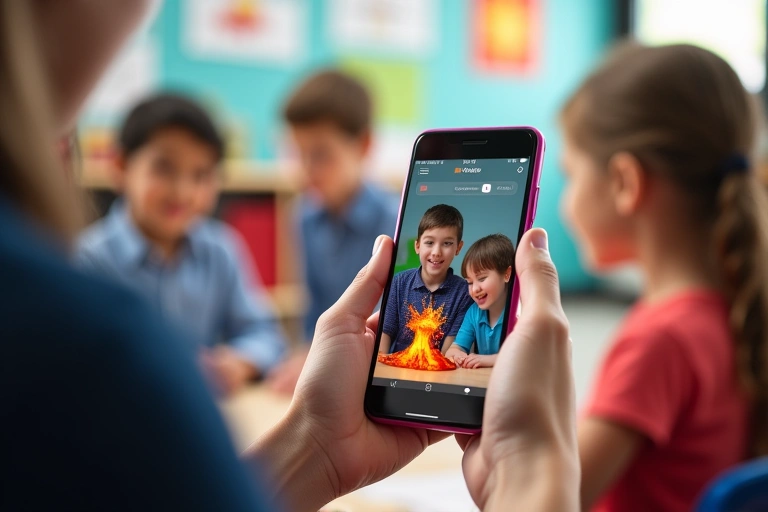
Imagine being able to document a scientific breakthrough without ever picking up a pen. Parent Portal’s observation tools are designed for the dynamic environment of a primary classroom. The standout feature for science lessons is undoubtedly Voice-Recorded Observations. As a group of children works on an experiment, a teacher can discreetly record a 30-60 second audio clip of their conversation. You can capture a child articulating their prediction, explaining their method, or describing the result in their own words. This is authentic, powerful evidence of their understanding and scientific vocabulary in action.
These voice notes are then automatically transcribed, creating a searchable text record that can be tagged to specific students and linked directly to National Curriculum or EYFS objectives. This simple act transforms a fleeting moment of verbal reasoning into a permanent, assessable piece of evidence. Alongside voice notes, Photo and Video Observations allow teachers to visually document the process. A quick snap of a well-constructed circuit or a short video of a successful 'egg drop' experiment provides context and celebrates the practical application of knowledge. This combination of media builds a multi-dimensional story of learning that is far richer than any written summary ever could be.
- Sarah, KS1 Teacher
Every observation, whether voice, photo, or video, can be managed through an efficient Observation Approval Workflow. This ensures that only high-quality, relevant evidence is added to a child’s profile and shared with parents, giving school leaders and teachers complete control over the process.
From Data Collection to Educational Insight
Simply collecting observations is only half the battle. The real value lies in using that evidence to understand each child's learning journey and inform future teaching. This is where the administrative burden often proves overwhelming. Manually sifting through months of observations for every child to identify patterns is an impossible task for a busy teacher. Parent Portal leverages technology to do the heavy lifting for you.
The goal is to use evidence not just to prove learning, but to improve it. Technology allows us to analyse learning patterns at a scale and depth that was previously unimaginable, empowering teachers to personalise their instruction with precision.
The platform’s AI-Powered Progress Analysis engine works in the background, examining the accumulated observation data for each student. It can identify recurring themes, highlight conceptual strengths, and flag areas where a child might be struggling. For example, the AI might notice that a student consistently makes accurate predictions but struggles to use data to justify their conclusions. This automated summary provides teachers with actionable insights, suggesting next steps and helping them tailor their support for individual learners. This move from simple data collection to intelligent analysis helps reduce teacher workload and directly enhances pedagogical practice.
Sharing the Spark of Discovery with Parents
How often do parents ask, “What did you do at school today?” only to receive the classic answer, “Nothing”? Parent Portal bridges this communication gap, transforming parent engagement by sharing concrete moments of learning. When a teacher shares a photo of a child proudly displaying their cress-growing experiment or a voice note of them explaining the water cycle, it provides a powerful window into the classroom.
These shared moments do more than just inform; they actively involve parents in the educational journey. They can see their child’s progress, understand the concepts they are learning, and celebrate their successes in real-time. This creates a strong home-school partnership, where parents feel equipped to have more meaningful conversations about school and support their child’s curiosity at home. For schools, this is a cornerstone of building a strong, engaged community. It demonstrates a commitment to transparent, modern communication and elevates the school’s reputation as an institution that values both technology and parental involvement.
Parent Portal goes beyond observation, offering a suite of AI Teaching Assistant tools to streamline planning and delivery:
• Activity Ideas Generator: Instantly get creative, hands-on experiments for any science topic.
• AI Lesson Planning: Generate a full lesson plan for a science concept, complete with objectives and differentiation.
• Concept Explainer: Break down complex topics like photosynthesis or electricity into simple, child-friendly language.
• Comprehension Generator: Create reading exercises based on scientific texts or the biographies of famous scientists.
By integrating these tools, teachers can save hours on preparation, allowing them to focus more energy on delivering dynamic and inspiring science lessons. This holistic approach supports the entire teaching cycle, from planning and delivery to observation and assessment, making it an indispensable part of a modern teacher's toolkit.
Conclusion: Fostering the Scientists of Tomorrow
Effectively capturing the process of scientific discovery is fundamental to great science teaching. It allows us to assess authentic understanding, provide targeted support, and evidence progress. However, the administrative weight of doing this well has long been a significant drain on teacher time and energy. By embracing integrated platforms like Parent Portal, schools can fundamentally change this dynamic.
Tools like voice-recorded observations, AI-powered analysis, and seamless parent sharing don’t just digitise old processes; they create entirely new possibilities. They reduce teacher workload, provide deeper and more nuanced insights into student progress, and build powerful, engaging bridges between school and home. As we look towards the future of education and the landscape of Edtech 2025, investing in systems that support teachers and enrich learning is paramount. By giving educators the right tools, we empower them to spend less time on paperwork and more time fostering the curiosity, critical thinking, and wonder that will inspire the next generation of scientists.
Comments