
The Power of Consistency: Why Daily Voice Notes Matter
The Unseen Moments of Learning
The school day is a whirlwind of fleeting moments. A quiet breakthrough in the reading corner, a sudden spark of understanding during a maths problem, a collaborative triumph on the playground. As educators, we know these are the moments where real learning happens. But in the rush from one lesson to the next, amid the demands of classroom management and administrative tasks, how many of these precious insights are lost by the time we sit down to write observations or prepare for a parents' evening? Traditional methods of recording progress, often sporadic and time-consuming, capture the milestones but frequently miss the journey. They give us a snapshot, but not the whole story. What if you could capture the nuance, the tone, and the context of these moments, not in laborious written paragraphs, but in just 30 seconds of your own voice?
Building a Richer Narrative, One Voice Note at a Time
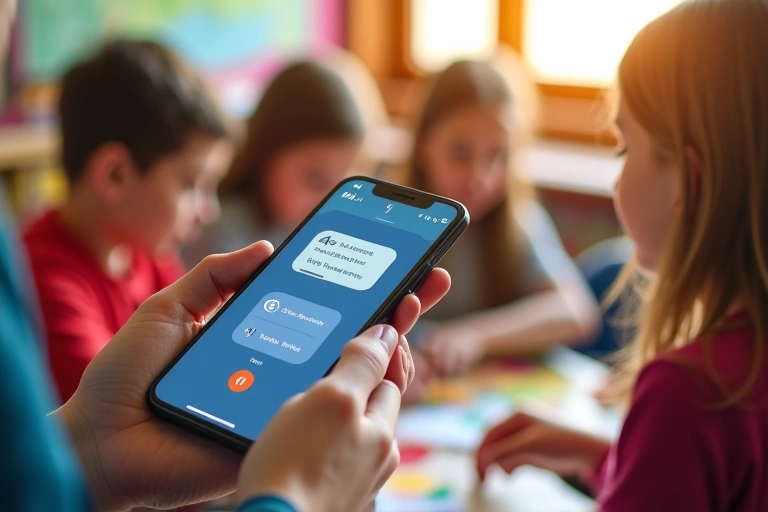
The concept of voice-recorded observations, a cornerstone of the Parent Portal platform, is deceptively simple: see a learning moment, tap record, and speak your observation. That's it. It’s a micro-action that fits seamlessly into the dynamic flow of a classroom. The true power, however, doesn’t come from a single recording, but from the consistency of the habit. Recording a quick observation each day for each child creates a rich, longitudinal audio-visual diary of their progress. It shifts the focus from static outcomes to the dynamic process of learning. Imagine tracking a child’s journey with phonics. Monday’s note might capture their hesitation over a tricky digraph. Wednesday’s might record them sounding it out more confidently. Friday’s could be a triumphant clip of them reading a sentence containing the word aloud. This collection of moments tells a far more powerful and accurate story than any single worksheet score ever could. It’s not about adding another task to an already overflowing plate; it’s about transforming an existing task into a more efficient, effective, and human-centred process. This is a key way that modern school communication tools are designed to reduce teacher workload while simultaneously increasing impact.
It fundamentally changes the conversation from, 'How was school today?' to, 'I heard you learning about the Romans—tell me more about what you found most interesting!'
This consistent stream of observation has a profound effect on what is arguably the most critical partnership in education: the one between school and home. The days of generic end-of-day feedback are numbered. Sharing these brief, authentic voice notes with parents provides them with a direct window into their child's world. They don't just read that their child is progressing; they hear the excitement in their voice as they explain a science experiment or the pride they take in writing their name. This level of specific, positive insight is transformative for parent engagement. It empowers parents to have more meaningful conversations at home, reinforcing what's being taught in the classroom. It builds trust and demonstrates a deep, individualised understanding of each child. For teachers, this proactive communication means that parents' evenings become more productive, shifting from information-giving to strategic collaboration, as parents are already well-informed about the day-to-day journey.
The system automatically transcribes notes, identifies patterns of progress against curriculum objectives, and pulls out key examples. This gives teachers an evidence-backed summary for each student, saving hours of manual preparation and turning report writing from a memory test into a data-driven exercise.
While the impact on professional practice and parent communication is immense, the true revolution is happening behind the scenes. Each voice note is more than just a recording; it's a data point. When hundreds of these points are collected over weeks and months, they form an incredibly rich dataset that can be analysed to reveal profound insights. This is where artificial intelligence acts as a powerful co-pilot for the teacher. Parent Portal’s AI-powered progress analysis gets to work on the transcribed voice notes. It identifies recurring themes, tracks development against EYFS or National Curriculum goals, and highlights strengths and potential areas for development. It can spot subtle patterns that might otherwise be missed, such as a child who consistently excels in collaborative tasks or one who needs more support with independent problem-solving. This isn't about replacing a teacher's professional judgement; it's about augmenting it with powerful, data-driven evidence, making personalised learning a scalable reality for every child in the class.
This intelligent analysis directly feeds into some of the most time-consuming aspects of a teacher's role. Consider end-of-term report writing. Instead of starting with a blank page and trying to recall months of progress for 30 individual children, Parent Portal's AI Report Writing Assistant drafts unique, evidence-based comments based on the accumulated voice observations. Teachers can then review, edit, and personalise these comments, saving an enormous amount of time while producing higher-quality, more individualised reports. This is a prime example of how the right edtech 2025 strategy can meaningfully reduce teacher workload and combat burnout, freeing up educators to focus on what they do best: teaching.
The 30-Second Habit for the 21st-Century School
The compounding effect of this small, daily habit is remarkable. It transforms assessment from a periodic event into a continuous, integrated process. It deepens student progress tracking, strengthens home-school partnerships, and provides an invaluable evidence base for professional discussions, appraisals, and Ofsted inspections. It creates a digital learning profile for each child that tells their unique story, celebrating not just the big wins but the small, courageous steps taken along the way. In a world where teacher wellbeing and retention are paramount, embracing tools that deliver such a high return on a minimal time investment is no longer a luxury—it's a necessity. The consistent practice of recording daily voice notes, enabled by an intuitive parent communication platform, isn't just a new feature; it's a new philosophy for a smarter, more connected, and more sustainable approach to education.
Comments