
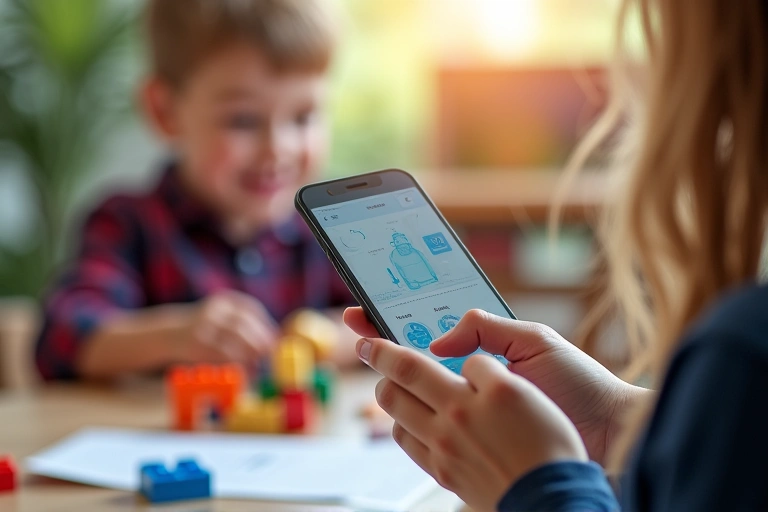
How to Ensure Quality Over Quantity in Micro Observations
The Rise of the Micro-Observation
In modern education, particularly in Early Years Foundation Stage (EYFS) and Key Stage settings, the micro-observation has become a cornerstone of formative assessment. The ability to capture fleeting moments of discovery, collaboration, and understanding is invaluable. Technology has made this easier than ever; a quick photo, a short video, or a typed note on a tablet can document a learning event in seconds. However, this ease of capture has introduced a new challenge: the pressure to record everything. Schools can inadvertently fall into a 'quantity trap', where the number of observations becomes the primary metric of success, leading to a mountain of data that is overwhelming to analyse and often shallow in substance. This approach not only fails to provide a deep understanding of student progress but also significantly adds to teacher workload. The key is to pivot our mindset and our practice from quantity to quality, ensuring every observation serves a distinct purpose.
What Does a Quality Observation Look Like?
Before we can focus on quality, we must define it. A high-quality observation is more than just a snapshot of an activity; it's a window into a child's thinking process. It's the difference between noting, "Sophia built a tower," and capturing the how and why. A quality observation might detail how Sophia tested different blocks for stability, how she explained her design to a peer, or how she demonstrated resilience when a section collapsed. It’s rich with context, often links directly to curriculum objectives, and reveals something new about the child's skills, knowledge, or disposition. In contrast, a low-quality observation is a digital tick in a box. It's a photo with no caption or a generic comment that offers no insight for future planning. To truly support learning, we need to move beyond simple record-keeping and embrace the role of a learning detective, searching for clues that illuminate the path of development for each child.
The goal isn't to create a scrapbook of activities, but to build a roadmap of a child's learning journey, highlighting the milestones and the terrain along the way.
Achieving this level of detail consistently can seem daunting, especially in a busy classroom environment. The fear is that focusing on quality will be too time-consuming, but the opposite is often true. Capturing fewer, more meaningful observations is a more efficient use of a teacher's time and expertise. It's about working smarter, not harder, by being selective and purposeful. This shift not only improves the usefulness of the data collected but also has a direct, positive impact on professional wellbeing and helps to reduce teacher workload, a critical focus for school leaders everywhere.
Strategies for Making Observations Meaningful
Transitioning from a quantity-first to a quality-first culture requires intentional strategies and the right tools. One of the most effective methods is to centre the observation around the question: "What does this moment tell me about this child’s learning?" This simple prompt encourages educators to look for the underlying skill, concept, or developmental step being demonstrated. Another powerful technique is to embrace the narrative power of voice. With Parent Portal’s Voice-Recorded Observations, a teacher can capture a rich, contextual 30-second summary in their own words. This is often faster than typing and preserves the nuance and professional insight that can be lost in a brief text note. They can capture the child's exact words, the tone of a conversation, or their own immediate analysis of the learning taking place. These voice notes can then be automatically transcribed, providing a searchable, detailed record that is rich with qualitative data. Furthermore, linking these moments to curriculum frameworks like Development Matters or National Curriculum objectives is crucial. When an observation is tagged, it's no longer just an isolated anecdote; it becomes a vital data point in tracking progress over time, making it an essential tool for effective student progress tracking.
Purpose-built platforms like Parent Portal move observation from simple recording to intelligent analysis. Features like AI-powered progress summaries and structured approval workflows empower schools to maintain high standards, reduce teacher workload, and provide parents with meaningful insights into their child's development, bridging the gap between classroom activity and tangible progress data.
To further embed quality, schools can implement a light-touch review process. Parent Portal's observation approval workflow, for instance, allows a team leader or phase coordinator to review observations before they are shared with parents. This isn't about micro-management; it's a collaborative mechanism to ensure consistency, provide coaching for new staff, and guarantee that what parents see is both professional and insightful. It builds a collective responsibility for quality and helps refine the school's overall assessment approach.
Leveraging EdTech to Work Smarter
The phrase 'EdTech 2025' signifies a move towards smarter, more integrated systems that actively support teaching and learning, rather than simply digitising old processes. When it comes to observations, the right school admin software is transformative. The sheer volume of high-quality observations can still be a challenge to synthesise, which is where Artificial Intelligence becomes a teacher's most powerful ally. Instead of spending hours trawling through records to prepare for parents' evenings or write reports, teachers can use Parent Portal’s AI-Powered Progress Analysis. This sophisticated tool analyses all accumulated observations for a child—including voice notes, photos, and teacher comments—to identify patterns, highlight strengths, and suggest areas for development. It can generate automated, evidence-based summaries that form the backbone of report comments or talking points for a parent consultation. This doesn't replace the teacher's professional judgement; it augments it, freeing up valuable time to focus on planning and teaching. This is the future of formative assessment: a seamless fusion of human insight and intelligent technology.
– Headteacher, UK Primary School
This intelligent analysis directly enhances parent engagement. A parent is more likely to be impressed and engaged by a detailed summary of jejich progress in phonics, supported by a few key observations, than they are by a feed clogged with dozens of context-free photos. When parents receive meaningful 'wow' moments—a video of their child confidently counting to 20, a photo of a collaborative art project with a note explaining the communication skills involved, or an AI-generated summary of their recent writing progress—it provides a genuine foundation for conversations at home. It reinforces learning and strengthens the home-school partnership, which is the ultimate goal of all effective school communication tools.
Quality Over Quantity: A Sustainable Path Forward
Choosing quality over quantity in micro-observations is not about doing less; it's about making what you do count for more. It’s a strategic decision that pays dividends in reduced teacher workload, more accurate and useful assessment data, and a deeper, more authentic connection with parents. By fostering a culture of purposeful observation, schools empower their teachers to be analysts of learning, not just recorders of events. When this culture is supported by a powerful, integrated platform like Parent Portal, the benefits are multiplied. The combination of intuitive capture tools like voice notes, robust curriculum linking, collaborative workflows, and groundbreaking AI analysis creates an ecosystem where quality thrives. As we look towards the future of education, the ability to harness technology to distil meaning from complexity will be what separates good schools from great ones. The journey starts with a simple step: valuing the story behind the observation, not just the observation itself.
Comments