
Parent Feedback: What Families Think About Micro Observation Updates
The Power of the Small Moment: What Are Micro-Observations?
For decades, the rhythm of school communication has been predictable: a termly newsletter, a parents' evening slot, and the eagerly awaited annual report. While valuable, these touchpoints often feel like formal, high-level summaries. They capture the milestones but can miss the magic that happens in between. They tell parents what their child has learned, but rarely how. This is where the concept of micro-observations is revolutionising parent engagement. Instead of waiting months for an update, parents receive a steady stream of small, meaningful insights directly from the classroom, as they happen. A micro-observation isn't a graded assessment; it's a snapshot of learning in action. It could be a 30-second voice note from a teacher describing a child’s breakthrough moment in phonics, a photo of them proudly displaying their painted volcano, or a short video of them collaborating with friends on a building project. With tools like Parent Portal, these snippets are captured effortlessly and shared securely, creating a vibrant, real-time window into a child's school day.
Beyond the Annual Report: A Window into the Classroom
The annual school report is a cornerstone of academic feedback, but it presents a polished, retrospective view. It summarises a year of progress into a few paragraphs. Micro-observations offer the opposite: they are immediate, contextual, and wonderfully imperfect. They show the process, not just the product. A parent might see a photo of their child struggling with a maths problem one day, followed by a teacher's voice note a week later celebrating their "lightbulb moment" when the concept finally clicked. This narrative is incredibly powerful. It helps parents understand that learning is a journey, not a destination, filled with effort, challenges, and small victories. This continuous feed of information builds a richer, more accurate picture of a child's strengths, interests, and learning style than a formal report ever could. It’s the difference between seeing a holiday photo album and watching the raw, funny video clips from the trip itself; both are great, but only one truly captures the experience.
A teacher can record a 30-second voice note, tag a student, and have it automatically transcribed and sent to the parent's app in under a minute.
This efficiency is key to making continuous feedback a reality without adding to teacher workload.
This approach moves communication from a static, twice-yearly event to a dynamic, ongoing dialogue. It transforms parental involvement from a passive reception of information to an active engagement with their child's daily educational life. Parents don't just find out their child is "making good progress in literacy"; they hear the teacher's excitement as their child successfully uses a new conjunction in a sentence. This level of detail was simply impossible before the rise of integrated school communication tools.
"I Finally Know What My Child Does All Day!": The Parent Voice
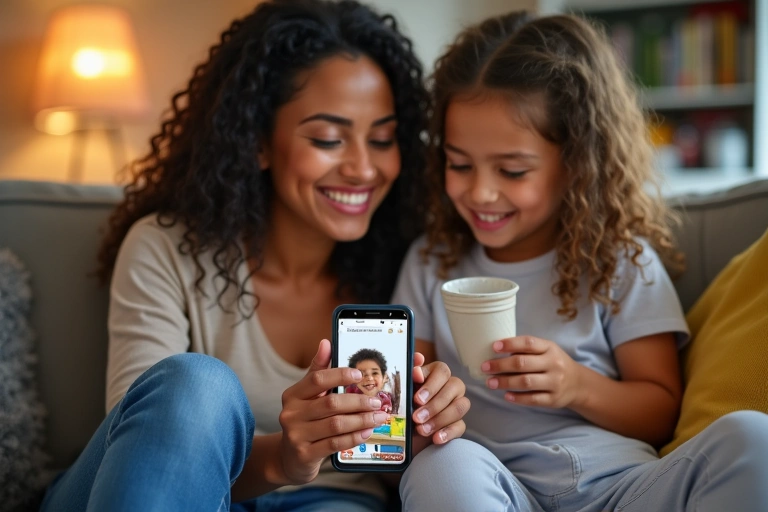
So, what is the feedback from the receiving end? Overwhelmingly, parents tell us that these small updates are transformative. One of the most common refrains we hear is a variation of, "I finally feel like I know what my child actually does at school!" For many parents, the school gates represent a curtain. Their child disappears behind it in the morning and reappears in the afternoon, with the day's events often summarised by a single, unhelpful word: "fine." Micro-observations pull back that curtain. A mother of a Reception child commented that seeing a photo of her shy son confidently speaking in front of his class gave her immense reassurance. A father told us that hearing a teacher’s voice note about his daughter’s inquisitive science question helped him see a side of her academic personality he never knew existed. These updates provide concrete talking points. They give parents a foothold to start meaningful conversations, turning the generic "How was school?" into the specific and engaging, "I saw you were building a castle today, tell me about it!" This shift is fundamental to building a stronger home-school connection and reinforcing learning outside the classroom.
It changes the entire dynamic of family conversation. We’re no longer guessing about their day; we’re sharing in it. The little updates give us the story, not just the headline.
The feedback also highlights a newfound appreciation for the teacher's role. When parents see the creativity, patience, and insight that goes into a school day through these small snippets, it builds immense respect and trust. They see the teacher not just as an authority figure, but as a dedicated partner in their child's development. This is a crucial element of positive parent engagement, fostering a sense of community and shared purpose that benefits the entire school.
Building a True Partnership: The Impact on Teacher-Parent Relationships
Effective school communication is the bedrock of a strong home-school partnership. When communication is sparse or purely administrative, the relationship can feel transactional. When it's rich, frequent, and personalised, it becomes collaborative. Micro-observations are a powerful catalyst for this shift. Think about a parents' evening. Traditionally, a teacher has 10 minutes to summarise six months of progress. With a history of micro-observations on Parent Portal, both the teacher and the parent come to the meeting with a shared understanding. The conversation can start from a place of detailed, mutual knowledge. The teacher can say, "Building on that moment we saw in March when she grasped fractions..." and the parent knows exactly what they mean. The platform’s AI-generated meeting summaries can then capture the key points, ensuring nothing is lost. This makes consultations far more productive and targeted. It's no longer a data dump; it's a strategic conversation between two experts on the child.
This partnership extends to supporting student needs. A teacher can share an observation about a child struggling with social integration at playtime. The parent, now aware of a specific situation, can talk to their child about it at home. Conversely, a parent can use the messaging feature to give the teacher a heads-up about a difficult morning at home, providing crucial context for the child's behaviour in the classroom. This two-way flow of information, prompted by small but significant updates, creates a holistic support network around the child.
A Tool to Reduce Teacher Workload, Not Increase It
A common and understandable concern from educators when presented with new school admin software is workload. The idea of sending daily updates for a class of 30 children sounds daunting. However, modern edtech platforms are designed with this challenge in mind. This isn't about writing 30 mini-reports every day. It's about capturing moments opportunistically and efficiently. The Parent Portal voice observation tool, for example, is a perfect illustration. A teacher spots a moment, taps a button, speaks for 30 seconds, and is done. The AI handles transcription and a log is automatically created. This is far quicker than writing a detailed note. Crucially, this accumulated evidence becomes a goldmine later. When it's time to write end-of-term reports, the AI Report Writing Assistant can analyse all of a student's observations—voice notes, photos, curriculum links—and generate unique, evidence-based report comments. What was once a Herculean task of recalling months of progress becomes a simple process of reviewing and editing AI-generated drafts. This is a prime example of how smart school administration tools can significantly reduce teacher workload in the long run by automating repetitive and time-consuming tasks.
The Future of Parent Engagement is Now
The feedback is clear: parents don’t just want to know that their child is learning; they want to be part of the journey. They crave connection and insight, not just data and grades. Micro-observations, delivered through an integrated platform like Parent Portal, provide exactly that. They are more than just a feature; they represent a philosophical shift in how schools and families can connect and collaborate. By making learning visible, celebrating small steps, and opening a window into the classroom, schools can foster unprecedented levels of trust and parent engagement. This is not a futuristic vision for edtech in 2025; it's a practical, powerful strategy that schools can implement today to build a stronger, more supportive community around every child.
Comments