
How Voice and Video Create a More Personal Learning Journey
Beyond the Written Report Card
For decades, the rhythm of school communication has followed a familiar beat: printed newsletters tucked into school bags, formal report cards issued each term, and the annual ten-minute slot at parents' evening. While these methods have served their purpose, they often present a flat, two-dimensional picture of a child's vibrant life at school. A grade on a page or a brief written comment can rarely capture the nuance of a student's 'aha!' moment, the determination in their problem-solving, or the collaborative spirit they show in a group project. This traditional approach, constrained by time and format, can leave parents feeling disconnected, receiving only snapshots rather than the full story of their child's educational journey.
The challenge for modern schools is to bridge this gap. How can we share the richness of the classroom experience without adding to the already significant teacher workload? The answer lies in leveraging technology not as a replacement for human connection, but as a powerful amplifier of it. The shift towards more dynamic, personal communication isn't just a trend; it's a fundamental rethinking of the home-school partnership. As we look towards Edtech 2025, the focus is increasingly on tools that foster transparency, build trust, and place the student's personal journey at the centre of the conversation. It's about moving beyond static reports and embracing a continuous, colourful narrative of growth and discovery.
Bringing Classroom Moments to Life with Video
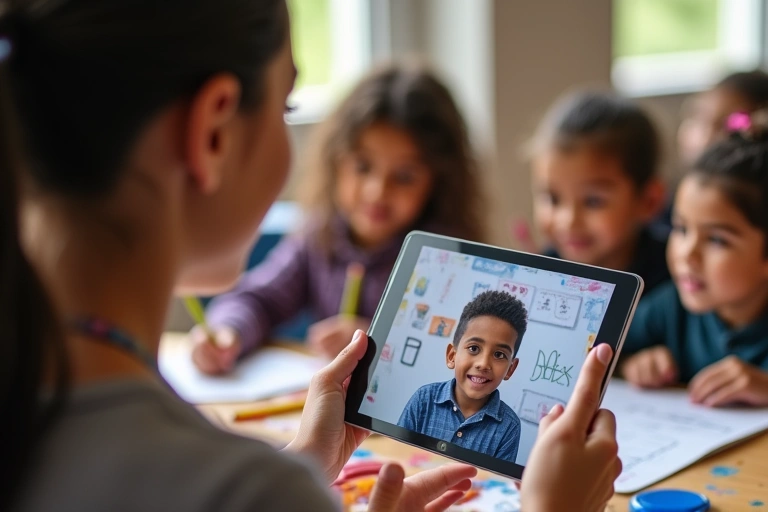
Imagine a parent receiving a short video clip during their workday. It shows their typically shy an d quiet child confidently presenting a project to their peers, a proud smile on their face. This single, thirty-second clip conveys more than a hundred written words ever could. It provides context, emotion, and an authentic glimpse into their child's progress that a simple 'gaining confidence in class' comment on a report card cannot match. This is the transformative power of video in education. By using simple and secure school communication tools, teachers can capture these invaluable moments and share them privately with parents. It could be a video of a group of students successfully conducting a science experiment, a clip of a child reading a full page for the first time, or a recording of the class choir practicing for a school event.
These aren't just updates; they are windows into a child's world, offering reassurance and fostering a profound sense of connection.
Sharing these observations does more than just delight parents; it empowers them. When a parent sees how their child interacts and learns in the classroom environment, they gain a deeper understanding of their strengths and areas for development. This shared perspective makes conversations about learning more specific, collaborative, and effective. It turns parent-teacher discussions into strategic partnerships focused on supporting the child. Furthermore, for the student, knowing that their efforts and achievements are being celebrated and shared with their family reinforces their sense of accomplishment and motivates them to engage more deeply in their learning.
Voice: Adding Nuance and Efficiency to Communication
While video excels at capturing moments, voice technology introduces a layer of personal nuance and efficiency that is often lost in text-based communication. A typed email or a message on a portal can sometimes be misinterpreted, lacking the warmth, empathy, or emphasis that the sender intended. A brief voice note, however, can convey tone and sincerity in a way that text cannot. A teacher leaving a quick, encouraging voice message for a parent about their child's excellent effort that day feels far more personal and impactful than a formal written note. It demonstrates genuine care and takes only a fraction of the time to create, a crucial factor in managing teacher workload.
This efficiency is a key benefit that modern school admin software is designed to deliver. Instead of spending hours typing detailed reports, educators can provide quick, meaningful updates that enrich the parent-teacher dialogue. This same principle extends to more formal interactions. Platforms that leverage AI to support communication are becoming indispensable. For instance, after a virtual parent-teacher meeting, an AI can automatically generate a summary of the key discussion points and agreed-upon actions. This not only provides both the teacher and the parent with a clear, concise record but also significantly reduces teacher workload related to post-meeting administration. It ensures accountability and clarity, making sure everyone is on the same page and that important next steps aren't forgotten in the hustle and bustle of daily life.
Reimagining the Parent-Teacher Conference
The traditional parents' evening format is often fraught with challenges: rigid scheduling, travel time, finding childcare, and the pressure of squeezing a meaningful conversation into a few short minutes. This model can inadvertently exclude parents who have inflexible work schedules or other commitments. Virtual parents' evenings, facilitated by integrated video conferencing, are breaking down these barriers and revolutionising this cornerstone of parent engagement. By enabling parents to meet with teachers from their home or office, schools can dramatically increase attendance and ensure that every parent has the opportunity to connect.
But the benefits go beyond mere convenience. A video meeting allows for a face-to-face connection that builds rapport and trust. Seeing a teacher's facial expressions and body language creates a more personal and empathetic exchange. When these meetings are managed through a comprehensive platform, the entire process becomes seamless. Parents can book appointments online, receive automatic reminders, and join the video call with a single click. As mentioned, the ability to receive an AI-generated summary afterwards transforms the meeting from a fleeting conversation into a documented, actionable plan. This blend of personal interaction and smart automation creates a parent-teacher conference experience that is more inclusive, efficient, and ultimately more effective in supporting student progress.
Building a Richer, More Personal Student Story
When you combine video observations, nuanced voice communications, and structured digital interactions like virtual meetings, you move away from a system of isolated updates and towards the creation of a continuous, holistic student portfolio. Each element serves as a thread in a rich tapestry that tells the story of a child's learning journey. This dynamic record showcases not just their academic achievements but also their social development, their creative expressions, their moments of resilience, and their personal growth over time. It provides a multi-faceted view that is far more insightful than a column of grades.
This comprehensive story benefits everyone. For teachers, it provides a longitudinal record that can inform their planning and interventions, helping them tailor their approach to each student's unique needs. For parents, it offers an unprecedented level of involvement and understanding, making them true partners in their child's education. And for the student, this collection of positive moments and documented progress serves as a powerful source of motivation and self-awareness. It helps them see their own journey and feel a sense of ownership over their learning. This is what a truly personal learning journey looks like—one that is visible, celebrated, and shared between school and home.
The Future of School Communication is Personal
The evolution of educational technology is steering us towards a more connected and personalised future. The integration of voice and video into daily school operations is not about adding more technology for technology's sake; it's about using it purposefully to strengthen the human connections that lie at the heart of education. By making classroom life more visible and communication more personal, we break down the walls between school and home, building a unified community dedicated to supporting every child.
As school leaders plan for the future, investing in integrated school communication tools that facilitate these rich interactions is paramount. Platforms that offer features like video observations, virtual meeting management, and smart AI summaries are no longer a luxury but an essential part of the modern school's infrastructure. They help reduce teacher workload, boost parent engagement, and, most importantly, create a more personalised, supportive, and motivating learning journey for every single student. The future of school communication is one where every child's story is told in full colour, and technology is the lens that brings it into focus.
Comments