
Supporting SEND With Standardised Documentation
The SEND Paperwork Challenge: A Familiar Story
For any school leader, teacher, or SENCO (Special Educational Needs Coordinator), the commitment to providing exceptional support for students with Special Educational Needs and Disabilities is paramount. We strive to create inclusive environments where every child can thrive. However, a significant and often overwhelming obstacle stands in our way: the sheer volume and complexity of documentation. From Individual Education Plans (IEPs) and provision maps to EHCP (Education, Health and Care Plan) reviews and daily progress notes, the administrative burden can be immense. This paperwork is not just red tape; it is the very framework of a child's support system. Yet, when managed inefficiently, it can lead to inconsistencies, communication breakdowns, and, most critically, a heavy workload that pulls dedicated staff away from direct student interaction.
The traditional approach, often involving a patchwork of Word documents, spreadsheets, and physical files, creates silos of information. A teacher's insightful observation might remain in a notebook, a crucial update from a parent might get lost in an email chain, and the SENCO might spend hours collating disparate pieces of information for a review meeting. This lack of a unified system not only drains resources but also risks creating gaps in a student's support network. When documentation isn't standardised, the quality and consistency of support can vary from one classroom to another, making it difficult to track progress accurately and ensure interventions are being implemented effectively across the school.
Why Standardisation is the Cornerstone of Effective SEND Support
Standardisation is about more than just using the same templates. It's about establishing a consistent, school-wide language and process for identifying, supporting, and reviewing the needs of students. When every member of staff is working from the same playbook, the benefits are transformative. A standardised approach ensures that information is clear, concise, and easily accessible to everyone involved in a child's education, from the headteacher to the teaching assistant and, crucially, to the parents. This consistency is the foundation upon which effective, equitable support is built, ensuring no child's needs are misunderstood or overlooked due to inconsistent record-keeping.
By creating a common framework for documentation, we empower every stakeholder to contribute meaningfully to a child's journey, transforming isolated efforts into a unified, collaborative strategy.
Implementing a standardised system fosters a culture of shared responsibility and clarity. It simplifies the process of monitoring interventions, allowing SENCOs and school leaders to get a clear, data-driven overview of what's working and what isn't. For teachers, it reduces ambiguity and saves precious time, as they no longer have to decipher different formats or hunt for information. This clarity extends to parents, who can better understand the support their child is receiving and how they can contribute from home. Ultimately, standardisation isn't about creating rigid, impersonal processes; it's about creating a reliable and robust framework that enables more personalised and effective support for every student.
Bridging the Gap with School Communication Tools
So, how can a busy school achieve this level of standardisation without adding to the administrative pile-on? The answer lies in leveraging modern technology. The right school admin software or communication platform can be the catalyst for change, moving documentation from cluttered filing cabinets and fragmented digital folders into a single, secure, and accessible hub. This is where platforms like Parent Portal become invaluable. By digitising and centralising processes, these tools don't just replicate paper forms online; they reimagine how information is collected, shared, and utilised to create a dynamic, responsive support system.
Effective parent engagement is a key factor in student success, particularly for children with SEND.
Ofsted's framework explicitly examines how well a school engages with parents to support pupils' learning and development.
A centralised digital platform provides a transparent and consistent channel for this vital communication, strengthening the home-school partnership.
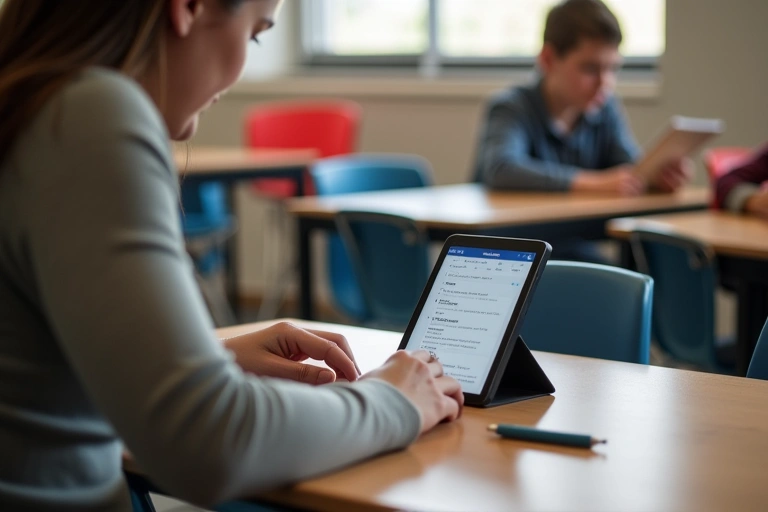
Imagine a world where a teacher can log a behavioural observation on a tablet in seconds, automatically sharing it with the SENCO and the student's parents. Picture a system where customisable digital forms for IEP reviews are sent, completed, and stored in one place, eliminating the need to chase down signatures or collate feedback manually. This is the power of integrated school communication tools. They drastically reduce teacher workload by automating repetitive tasks, streamlining workflows, and ensuring that critical information is always at the fingertips of those who need it. This shift allows educators to reclaim their time and refocus their energy on what they do best: teaching and mentoring students.
Putting Theory into Practice: SEND Support with Parent Portal
Let's move from the theoretical to the practical. A platform like Parent Portal offers a suite of interconnected features specifically designed to facilitate standardised documentation and collaborative SEND support. The Custom Form Builder is a game-changer for SENCOs. You can create digital, standardised templates for anything from initial concern forms and provision mapping to annual review documentation. These forms can be distributed to specific staff members or parents, and their responses are automatically collected and organised, creating a consistent data trail for each student.
The Student Observations feature allows teachers and TAs to capture moments of progress or challenge through photos and videos, sharing them privately and securely with parents. This provides parents with a real window into their child's school day and serves as invaluable qualitative evidence for review meetings. Furthermore, the platform's core strength lies in its Instant Communication capabilities. A SENCO can create a custom group for all parents of students with an EHCP, sharing relevant resources or reminders with a single click. This targeted messaging ensures that communication is always relevant and never overwhelming, fostering true parent engagement.
- Headteacher, Primary Academy
These features work in concert to create a holistic support ecosystem. A concern logged on a standardised form can be followed up with shared observations, and communication about progress can be managed through targeted messages, all within a single platform. This integrated approach ensures that the principles of standardisation are not just a policy on a shelf but a living, breathing part of the school's daily operations. This is the future of school administration, where technology serves not as a replacement for human interaction but as a powerful enabler of more effective and meaningful support.
Looking Ahead: EdTech, AI, and the Future of SEND
As we look towards EdTech 2025 and beyond, the role of technology in education is only set to grow. For SEND support, this is an incredibly exciting prospect. The continued development of AI-powered tools, like those in Parent Portal that allow parents to query school policies, will further enhance accessibility and reduce administrative queries. The future of school admin software is one of proactive, intelligent support. We can anticipate systems that help identify patterns in student data, suggest potential interventions, and automate reminder workflows for review deadlines, freeing up SENCOs and school leaders to be even more strategic.
Adopting a standardised, digital-first approach to documentation is the first step in preparing your school for this future. It builds the essential data infrastructure upon which these future innovations will be built. By embracing tools that promote consistency, collaboration, and efficiency today, you are not just solving current challenges; you are laying the groundwork for a more intelligent, responsive, and ultimately more human-centred approach to supporting every child with special educational needs and disabilities. The goal is simple: to use technology to amplify our capacity for care and ensure that every student has the robust, consistent support they need to succeed.
Comments