
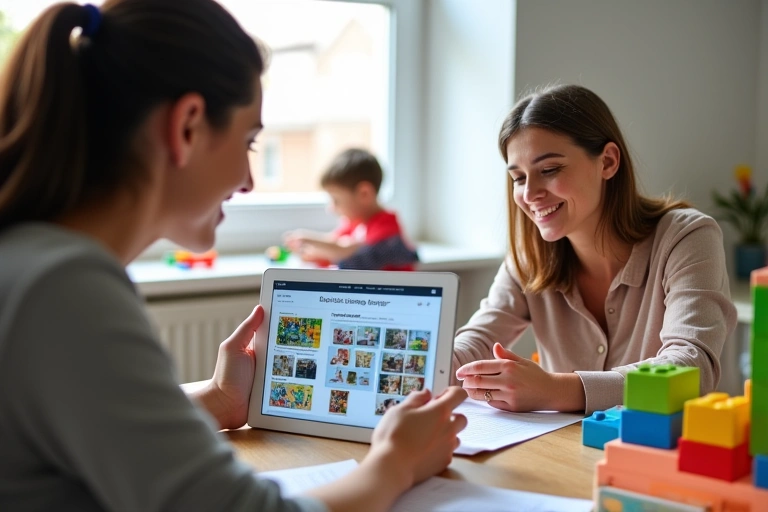
Digital Learning Journeys That Parents Actually Read
The 'Like' Isn't Enough: Rethinking Parent Engagement
In the digital age, communication between school and home has never been easier, yet it's arguably never been shallower. We meticulously capture photos of smiling children engaged in classroom activities, upload them to a gallery, and receive a flurry of 'likes' and heart emojis from parents. It feels like engagement, but is it? When a parent sees a photo of their child painting, they appreciate the glimpse into their day. But they don't see the context: the weeks of learning about colour theory, the motor skills being developed, or the proud "aha!" moment when the child finally mixed the perfect shade of green. The 'like' is an acknowledgement, not a conversation. It's time we aimed higher, moving from a culture of passive updates to one of active, meaningful partnership. We need to create digital learning journeys that parents actually read, understand, and use to support their child's education.
What is a True Digital Learning Journey?
A digital learning journey is more than a chronological feed of photos and videos. It is a curated, narrative-driven story of a student's progress over time. It’s a collection of artifacts—observations, work samples, videos of collaboration, teacher notes—that are woven together to illustrate growth, highlight strengths, and identify areas for development. Unlike a static report card, it's a living document. It captures not just the final, polished piece of work, but the messy, iterative process of learning. Think of it as a filmmaker's documentary rather than a photographer's portfolio. It shows the struggle before the breakthrough, the collaboration behind the success, and the small, incremental steps that lead to giant leaps in understanding. This is what transforms school communication from a simple broadcast into a vital tool for a holistic school-home partnership.
This narrative approach provides invaluable insight. Parents no longer just see what their child did; they understand how and why. They see their child's thinking process, their social interactions, and their emotional responses to challenges. It connects classroom activities to broader curriculum goals and personal development milestones, making the entire educational process more transparent and collaborative. By using modern school communication tools effectively, we can build these powerful narratives without adding an unmanageable burden to our already busy days.
A learning journey is not just a record of what a child has done, but a window into how they think, feel, and grow.
Successfully creating these journeys relies on selecting the right moments to share. It's about quality over quantity. Instead of sending ten photos from a single science experiment, a more effective approach is to share two photos and a short video clip accompanied by a contextual note. The first photo might show the initial setup and the students' expressions of curiosity. The video could capture a key moment of discovery or teamwork. The final photo could display the result, but the real value is in the accompanying text that explains the learning objective. A simple note like, "Today in science, we explored chemical reactions. Look at the intense focus as Maya measures the vinegar! She demonstrated great teamwork with her partner to ensure their volcano erupted successfully. This activity helped reinforce our lessons on precise measurement and observation," transforms a fun picture into a powerful learning story.
Streamlining the Story: How EdTech Reduces Teacher Workload
The immediate reaction from many educators to the idea of creating detailed learning narratives is, understandably, "I don't have time for that!" This is a valid concern. The traditional method of documenting observations, managing photos, and communicating with parents across multiple disjointed platforms is time-consuming and inefficient. This is precisely where modern, integrated school admin software becomes a game-changer. The goal of powerful EdTech in 2025 and beyond isn't to add tasks, but to consolidate and simplify them. When your observation sharing, behaviour tracking, homework management, and parent messaging all exist within a single ecosystem, you eliminate the friction of switching between apps and duplicating effort.
By integrating observations, homework, messaging, and behaviour tracking, teachers reduce app-switching and administrative overhead, allowing more focus on what matters: teaching and building relationships.
Imagine this workflow: you capture a video of a student's excellent presentation. Within the same platform, you can instantly and privately share that observation with their parents. With another click, you can award the student behaviour points for their confidence and preparation, which is also visible to the parents. If the presentation was part of a larger project, you can link the observation directly to the homework assignment, closing the loop. This seamless process turns a series of administrative chores into one fluid action. It saves time, reduces cognitive load, and ensures that the rich context of the learning moment is preserved and shared effectively. This efficiency is the key to making digital learning journeys a sustainable practice, not just another item on a teacher's endless to-do list.
From Broadcast to Dialogue: Fostering a Two-Way Street
The ultimate goal of a digital learning journey is to open a dialogue. A one-way stream of information, no matter how detailed, is still a broadcast. True engagement happens when parents feel empowered to respond, ask questions, and contribute to the narrative. An effective school communication platform facilitates this by creating a secure and direct channel for parents to comment on observations. A parent might see a note about their child struggling with fractions and be able to share that they've noticed a similar issue with recipes at home. This provides the teacher with valuable insight they would never have otherwise. It transforms the parent from a passive audience into an active partner.
This two-way communication strengthens the entire school community. Platforms that include features like suggestion hubs, where parents can submit and vote on ideas, further empower them. Perhaps a parent, inspired by their child's digital learning journey in art, suggests a community art show. This level of involvement builds trust and a shared sense of ownership over the school's success. It also provides crucial feedback for school leaders. When communication flows freely and constructively in both directions, the home-school partnership becomes a powerful force for improving student outcomes and building a positive, collaborative school culture.
Connecting the Dots: From Daily Observations to Long-Term Success
Individual learning journeys are powerful, but their collective impact is even greater. When every student has a rich, ongoing narrative of their progress, it completely changes the dynamic of more formal assessment points like parents' evenings. Meetings are no longer about revealing surprising news; they become productive conversations based on a shared understanding of the student's journey. With tools like Parent Portal's Virtual Parents' Evenings, teachers and parents can review the curated observations together, celebrating successes and strategizing support for challenges. The use of AI-generated summaries after these meetings ensures that key action points are captured and remembered by both parties.
For school leaders and administrators, this wealth of qualitative data is invaluable. It provides a real-time, ground-level view of teaching and learning across the school. It helps identify trends, showcase best practices, and inform professional development. Furthermore, by making school policies and handbooks searchable with AI, parents can get instant answers to common questions, freeing up administrative staff to focus on more complex issues. Ultimately, by investing in tools that help create and share meaningful digital learning journeys, we are not just improving parent communication—we are building a smarter, more connected, and more responsive educational ecosystem for everyone.
Comments