
From Nursery to School: Transition Records and Sharing
The Big Step: Why Nursery to School Transitions Matter
The journey from nursery to primary school is one of the most significant milestones in a young child's life. It’s a time filled with excitement, curiosity, and a little bit of apprehension for children, parents, and teachers alike. A smooth, positive transition sets the stage for future academic and social success, fostering a love of learning from day one. Conversely, a disjointed or poorly managed handover can lead to anxiety and a rocky start, with valuable information about a child's unique strengths, needs, and personality lost along the way. For decades, the process has relied on paper forms, brief conversations, and a prayer that the crucial details don't get lost in a filing cabinet. But what if there was a better way? What if reception teachers could welcome their new class already knowing the rich story of each child's learning journey? Modern school administration software is making this a reality, revolutionising how early years settings and primary schools manage this critical phase.
Breaking Free from the Paper Trail
The traditional method of creating and sharing transition records is a major source of administrative strain. Nursery keyworkers spend countless hours summarising a year's worth of observations onto standardized forms, trying to condense a vibrant, dynamic child into a few static pages. These documents are then photocopied, posted, or hand-delivered to the new school, where an equally busy reception teacher or school administrator must then attempt to digest dozens of these profiles before the chaos of September begins. This paper-based system is not just inefficient; it’s fundamentally limited. It offers a single, flat snapshot in time, often failing to capture the nuances of a child's progress, their preferred learning styles, or the specific context behind their developmental milestones. Photos are difficult to include, progress over time is impossible to visualise, and the rich, authentic moments of discovery and learning are reduced to brief, generic statements. This process doesn't just add to an already high teacher workload; it fails to do justice to the child at the centre of it all. It’s a system crying out for an upgrade.
A child is not a data point on a form, but a story waiting to be told. The best transitions happen when we can read the early chapters before writing the next one.
The goal should be to pass on a living document, a narrative of growth that provides genuine insight. This is where digital observations come into play. Instead of a single, end-of-year summary, imagine a continuous stream of evidence collected throughout the child’s time in nursery. With tools like Parent Portal, teachers can use quick voice-recorded observations, photos, and short videos to capture learning as it happens. These aren’t just cute moments; they are powerful data points. A 30-second voice note about how a child solved a puzzle, a photo of them collaborating on a building project, or a video of them confidently retelling a story provides more insight than a dozen tick-boxes on a form. This collection of micro-observations builds a longitudinal, holistic picture of the child, linked directly to EYFS and Development Matters objectives.
Creating a Seamless Digital Handover
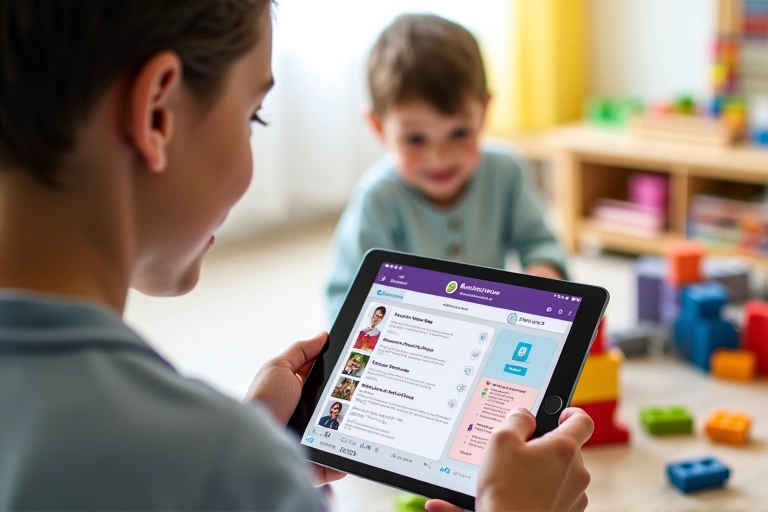
The true power of this digital approach is realised during the transition itself. Instead of a pile of paper, the reception teacher receives secure, consented access to a child's complete digital learning journey. With a platform like Parent Portal, the bridge between nursery and school is no longer a physical courier route but an instantaneous, secure data transfer. The receiving teacher can explore a rich, multi-media timeline of the child's development. They can see not just what the child achieved, but how. They can listen to voice notes to understand a child's language development, watch videos to see their social interactions, and view AI-powered progress analysis that highlights strengths and suggests next steps. This isn't just data; it's a comprehensive induction to the individual. This level of insight before the first day of term is a game-changer for planning, differentiation, and ensuring that every child feels understood and supported from the moment they walk through the classroom door. It transforms the first few weeks from a period of frantic assessment to one of focused relationship-building.
Parent Portal provides a unified system for a smooth handover:
• Student Learning Profiles: A complete digital history of observations, photos, and progress data from nursery.
• Secure Transfer: With parent consent, the entire profile is transferred from the nursery's system to the primary school's.
• AI-Powered Summaries: Automatic analysis of observation data to provide reception teachers with key insights into each child’s strengths and learning preferences.
• EYFS Tracking: Clear visibility of progress against Early Learning Goals, providing a consistent assessment framework between settings.
This seamless flow of information is a cornerstone of effective school communication tools. It ensures continuity of care and learning, making the transition feel less like a hard reset and more like the next logical step. For schools and multi-academy trusts, having a consistent system across feeder nurseries and primary schools creates an ecosystem of shared knowledge, significantly simplifying administration and raising standards across the board.
Engaging Parents as Partners in the Process
A child's transition to school is a family affair, and parent anxiety can often be higher than the child's. Keeping parents informed, involved, and confident is crucial. Effective parent engagement is not an add-on; it's essential for a successful start to school. Digital platforms provide the perfect channel for this. Throughout their time at nursery, parents can be active participants in their child's learning journey, receiving observations and updates in real-time. This builds a strong foundation of trust and communication. As the transition approaches, the school can use the same platform to share welcome packs, introduce the reception teacher through a video message, and post key dates for orientation days in the shared school calendar. This consistent communication demystifies the process for parents and makes them feel like valued partners. Furthermore, features that allow parents to add their own 'Memories & Milestones' can enrich the transition record, providing teachers with valuable insights into the child's home life and interests. This collaborative approach ensures that when the child starts school, there is already a strong, three-way partnership in place between the child, the parents, and the teacher.
- Sarah, EYFS Lead
This testimonial highlights a critical point. The adoption of advanced edtech in 2025 and beyond isn't about technology for its own sake. It is about its impact on the humans in the system. By automating and simplifying the administrative burdens of transition records, platforms like Parent Portal free up educators' most valuable resource: their time. This saved time is reinvested directly into the children. It becomes time for an extra story, a more in-depth conversation with a nervous parent, or carefully preparing a learning environment that will help a specific child to thrive. The technology handles the data so that teachers can focus on the relationships. It enhances professional judgement, it does not replace it.
The Future of Early Years Transitions is Here
Moving from nursery to 'big school' will always be a major event. But it no longer needs to be an administrative headache or a leap into the unknown. By embracing integrated digital platforms, we can create a transition process that is smoother for staff, more reassuring for parents, and ultimately, far more effective for children. Building a continuous, rich, and shareable record of a child's early years ensures that their unique story travels with them. It empowers reception teachers with the deep knowledge they need to personalise learning from day one and helps to reduce teacher workload significantly. This is more than just an operational upgrade; it's a fundamental shift towards a more connected, collaborative, and child-centred approach to early education. The paper forms and overflowing filing cabinets can finally be retired, replaced by a dynamic, insightful, and human-focused system that gives every child the seamless start they deserve.
Comments