
Setting Observation Targets: How Many Voice Notes Should Teachers Record?
The Promise and the Pressure of Modern Observation
In the fast-evolving world of education technology, few tools have promised to reduce teacher workload as compellingly as digital observation platforms. The shift from cumbersome paper trails to quick, in-the-moment recording is a welcome revolution. At the forefront are features like Parent Portal's voice-recorded observations: the ability to capture 30-60 second audio snippets of learning as it happens. It’s powerful, efficient, and provides an authentic window into a child's world. Yet, with this powerful new tool comes a new question for school leaders and teachers: how much is enough? As schools integrate these systems, the pressure to quantify can lead to setting observation targets. But are we asking the right question? This post explores how to move beyond a simple numbers game and cultivate a culture of meaningful, high-quality observation that genuinely supports teaching and learning.
Why Voice Notes are a Game-Changer for Formative Assessment
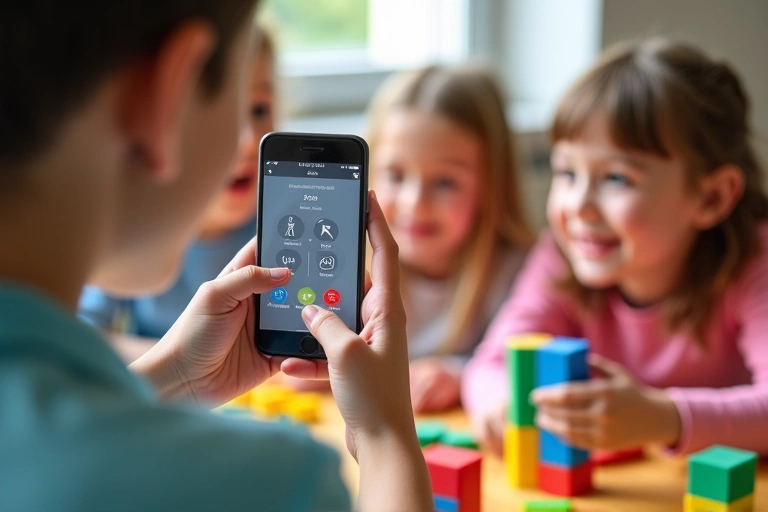
Before we can discuss quantity, we must appreciate the quality of what a voice note captures. Traditional observation methods often involve scribbling notes on a clipboard, which a teacher then has to type up later. This process is time-consuming and often misses the nuance of a learning moment. A voice note, however, is a micro-observation. It’s a teacher narrating a live event: a child successfully sounding out a tricky word for the first time, a group collaborating to build a complex structure, or a student asking a profound, insightful question. These aren’t just data points; they are stories of learning. Parent Portal enhances this by automatically transcribing the audio and allowing teachers to link it directly to EYFS or National Curriculum objectives. This transforms a fleeting moment into a permanent, searchable, and shareable piece of evidence that contributes to a rich, longitudinal picture of a child’s development without adding to the admin burden. These tools are designed to reduce teacher workload, not just shift it.
The goal isn't to document every single moment, but to capture the moments that truly document learning and progress.
The sentiment in this statement is crucial. It’s a reminder that the purpose of formative assessment isn't surveillance, but understanding. When observation becomes a box-ticking exercise, it loses all its pedagogical value and simply becomes another source of pressure for already-stretched teachers. Instead of asking “how many?”, we should be asking “how meaningful?”.
Finding the Sweet Spot: Quality Over Quantity
School leaders understandably want to ensure that new tools are being used effectively, and setting targets is a common way to measure implementation. However, a rigid target like “five observations per child, per week” can be counterproductive. It risks encouraging teachers to record for the sake of recording, leading to low-quality, superficial notes that say more about the pressure they are under than the child’s learning. The focus shifts from capturing genuine breakthroughs to simply hitting a number. This is where the promise of edtech can sour. A tool designed to liberate teachers can inadvertently become another digital chain. The real value of a platform like Parent Portal lies in its ability to support professional judgement, not replace it. The aim should be to find a ‘Goldilocks zone’: frequent enough to build a comprehensive picture, but not so frequent that it becomes a burden.
Keep it brief: 30-60 seconds is plenty to capture a key moment.
Speak clearly: Describe the context, the activity, and what the child is saying or doing.
Focus on the 'aha!': Capture breakthroughs, questions, or demonstrations of skill.
Link it later: Don't worry about tagging curriculum objectives in the moment. You can do that later in Parent Portal.
Relax: Quality beats quantity every time. Not every activity needs an observation.
So what does this sweet spot look like in practice? Many schools find success by framing it as a flexible guideline rather than a hard target. Suggesting that teachers aim for one or two high-quality voice observations per child each week provides a helpful starting point. This encourages regularity without inducing panic. It acknowledges that some weeks, centred around a particular project, might yield a wealth of observations for some children, while other weeks might be quieter. This flexibility is key to maintaining authenticity and ensuring that observations remain a tool for insight, not an instrument of compliance.
How Leaders Can Foster a Healthy Observation Culture
The responsibility for creating a positive assessment culture rests heavily with school leadership. Instead of policing numbers, leaders should focus on the impact of the observations. The question in a professional development conversation shouldn't be “Did you hit your target?”, but rather, “What did you learn from your observations this week, and how will it inform your planning for next week?” This shifts the focus from input to outcome. Modern school admin software is evolving to support precisely this. For example, Parent Portal's AI-powered progress analysis can synthesise accumulated observations, highlighting patterns, identifying strengths, and suggesting next steps for a child. School leaders can use these summaries to facilitate richer conversations about student progress, making the observation data work for the teacher, not the other way around. This approach champions the technology as a professional tool that supports teachers’ expertise and helps drive school improvement from the classroom up.
This testimonial highlights a successful cultural shift. By leveraging technology to spark professional dialogue, the school has unlocked the true potential of digital observation. It has become a cornerstone of their teaching and learning strategy, deeply integrated with everything from lesson planning to performance management, all while making teachers’ lives easier.
Beyond the Classroom: How Observations Fuel Engagement and Insight
A single voice note is a powerful asset, but its value multiplies when connected to the wider school ecosystem. These observations are not just for the teacher’s benefit. They are a vital tool for parent engagement. Sharing a short audio clip of a child excitedly explaining their science experiment or reading a sentence aloud gives parents a tangible, joyful connection to their child’s learning journey. It builds trust and creates a genuine partnership. Furthermore, this stream of evidence is invaluable when it comes to reporting. Parent Portal’s AI Report Writing Assistant can analyse a child's collection of observations to generate unique, evidence-based report comments. This saves teachers hours of work at the end of each term and ensures reports are deeply personal and reflective of the child’s actual progress. The same data prepares teachers for parents' evenings, providing a rich bank of examples to draw upon. This integrated approach shows how effective school communication tools are becoming the central nervous system of a successful school in edtech 2025.
So, What's the Magic Number?
After all this, we return to our original question. The magic number of voice observations a teacher should record is... not a number. The magic lies in the purpose and quality of each recording. The goal is to create a sustainable, insightful practice, not an unsustainable, stressful one. A healthy guideline is to aim for regular, meaningful observations—perhaps one or two per child per week—but to always prioritise the quality of the moment being captured over the quantity of files being saved. By embracing voice notes as a way to tell the story of a child’s learning, and by using the full power of platforms like Parent Portal to analyse and share these stories, schools can build a formative assessment culture that empowers teachers, delights parents, and, most importantly, helps every child to thrive.
Comments