
Voice Observation Policies: What Your School Needs to Document
The Rise of Voice Observations and the Need for Policy
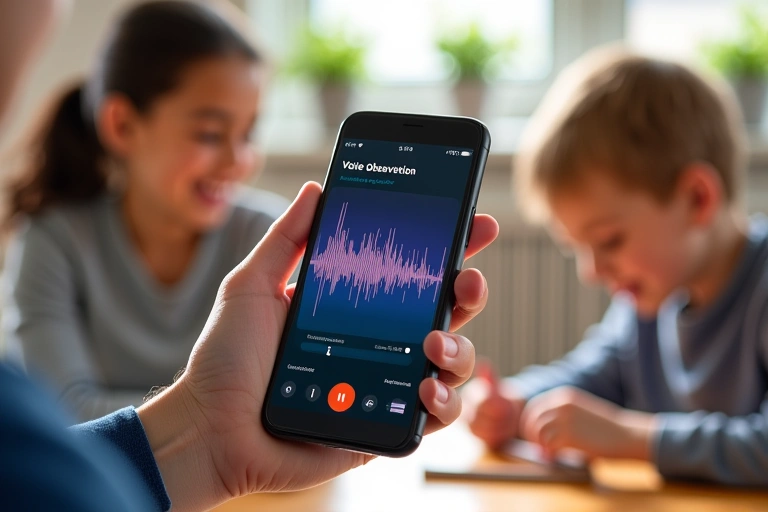
In the fast-evolving world of educational technology, tools that genuinely save time and enhance practice are worth their weight in gold. Voice-recorded observations are a prime example. For teachers, the ability to quickly capture a 30-second voice note of a child’s learning breakthrough is far more efficient than stopping to write a lengthy note. For parents, hearing a snippet of their child's progress offers a wonderfully rich and personal connection to their school day. Platforms like Parent Portal have integrated this feature seamlessly, allowing teachers to record, transcribe, and share these moments with just a few taps.
However, with great innovation comes great responsibility. The introduction of any new recording technology into the classroom, especially involving children, requires a clear and comprehensive policy. Without one, you risk inconsistency, potential misuse, and a lack of confidence from both staff and parents. A well-defined policy isn't about restricting practice; it's about enabling it safely and effectively. It provides a framework that protects everyone, ensures high-quality assessment, and demonstrates your school’s commitment to professional and secure practice.
Why Your School Needs a Voice Observation Policy
Before diving into what your policy should contain, it’s vital to understand why it’s not just a ‘nice-to-have’ but an absolute necessity. A formal, documented approach serves several critical functions. Firstly, it ensures consistency. When every teacher understands the purpose, style, and frequency of observations, you create a cohesive and equitable assessment picture across the school. Secondly, it is a cornerstone of safeguarding. Clear rules on what can and cannot be recorded, and how that data is handled, protect both children and staff. Thirdly, it guarantees GDPR compliance. Voice recordings are personal data, and your policy must outline how you will manage consent, storage, and access in line with data protection regulations. Finally, it builds parental trust. Proactively sharing your policy shows parents that you are using this powerful tool thoughtfully and professionally, strengthening the home-school partnership that is so crucial for student success.
Core Components of Your Voice Observation Policy
A strong policy is detailed yet easy to understand. It should be a practical guide for your staff, not an impenetrable legal document. Here are the key sections to include.
1. Purpose and Rationale
Start by defining the ‘why’. Your policy should clearly state the educational purpose behind using voice observations. Explain that they are a tool for formative assessment, designed to capture authentic, ‘in-the-moment’ learning that traditional methods might miss. Connect their use to your school’s broader vision for teaching and learning, whether it's fostering a deeper understanding of each child's progress through the EYFS framework or reducing teacher workload to free up more time for direct teaching. This section sets the tone, framing voice notes not as a surveillance tool, but as a professional instrument for enhancing pedagogical practice.
Capturing the fleeting, authentic moments of a child's discovery is the heart of formative assessment; technology should serve this purpose, not complicate it.
Your rationale should also highlight the benefits. For example, voice notes capture the nuance of a child's language and thought processes in a way that written text cannot. They provide an evidence-rich foundation for planning next steps, informing parents' evening conversations, and contributing to end-of-term reports—especially when supported by AI analysis tools like those in Parent Portal, which can identify patterns and suggest areas for development.
2. Procedural Guidelines for Staff
This is the practical, 'how-to' part of your policy. It should give staff clear, unambiguous instructions for recording observations. Define the ideal length (e.g., 30-60 seconds) to keep them focused and manageable. Provide guidance on what to capture: a child explaining their thinking, using new vocabulary, interacting with peers on a task, or a teacher’s own audible analysis of a learning moment. Equally important is outlining what not to record. This includes confidential conversations, behavioural incidents that should be logged elsewhere, or any negative or overly critical commentary. The focus must always remain on the learning process.
DO: Keep recordings brief (30-60 seconds).
DO: Focus on the child's learning process and use objective language.
DO: Link your observation to curriculum objectives (EYFS/KS).
DO: Review the AI transcription for accuracy before sharing.
DON'T: Record personal or sensitive conversations.
DON'T: Include other identifiable children without consent.
DON'T: Use judgmental or subjective language.
DON'T: Record in noisy environments where the audio will be unclear.
3. Safeguarding and Data Protection (GDPR)
This section is non-negotiable and will be scrutinised by governors, inspectors, and parents. Your policy must explicitly address how you will handle this sensitive data. Start with consent. Explain how and when you will obtain parental permission. This is often integrated into the annual data and media consent forms, but it must specifically mention the use of voice recordings for assessment purposes. Next, cover data storage and security. This is where choosing a platform like Parent Portal is critical. Your policy can state that all data is securely stored on UK-based servers, is fully encrypted, and complies with UK GDPR. Detail the access controls in place. For instance, only the class teacher can create an observation, which is then subject to an approval workflow before being shared with the parent. Access to the full history of a child's observations should be restricted to relevant personnel, such as the teacher, SENCo, and senior leadership team. Finally, specify your data retention policy. How long will observations be kept? Typically, they are retained as part of the student’s record and securely deleted a set period after the child leaves the school.
- Sarah Jones, Headteacher, Oakwood Primary
4. Sharing with Parents and Building Engagement
The ultimate goal of sharing observations is to strengthen parent engagement. Your policy should outline the process for this. If you use an approval workflow, as recommended, describe it. This ensures a senior leader or phase leader can review observations before they are sent, guaranteeing quality and appropriateness. This simple step is a powerful quality assurance measure that gives school leaders oversight and confidence. The policy should also set expectations around the frequency of sharing. Are parents to expect daily updates or a curated selection each week? Clarifying this prevents anxiety and manages expectations. Finally, provide guidance for parents. Encourage them to use these voice notes as conversation starters with their child, asking questions like, “Your teacher sent a lovely recording of you building today, can you tell me more about your tower?” This turns a simple observation into a meaningful dialogue, reinforcing learning at home.
A Living Document for Modern Learning
Creating a voice observation policy is a foundational step in responsibly integrating modern edtech into your school. It’s not a document to be written once and filed away. It should be a living policy, reviewed annually alongside your other safeguarding and data protection policies, and updated as technology evolves. By documenting your purpose, procedures, and safety protocols, you create a culture of trust and professionalism. You empower your teachers to use powerful school communication tools with confidence, knowing they are supported by a clear framework. Ultimately, a great policy transforms a feature like voice observation from a novelty into a cornerstone of your school's assessment, communication, and parent engagement strategy, helping you build a rich, longitudinal picture of every child’s unique learning journey.
Comments